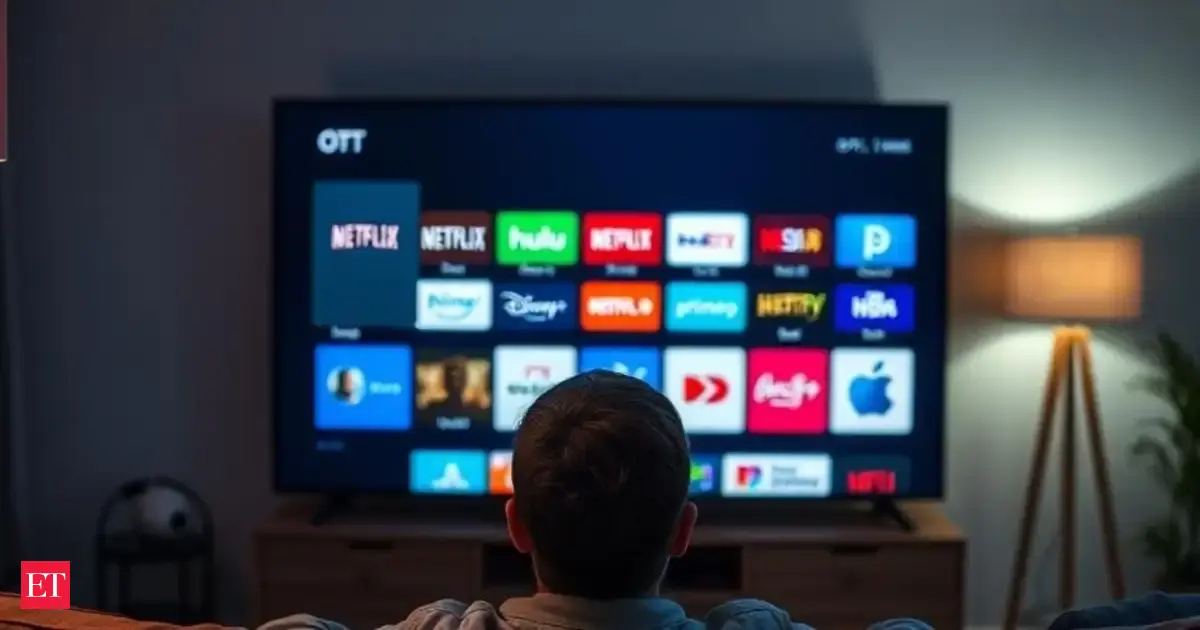

















Outside live sports, paid streaming platforms saw growth flatten as users split time between advertising-led OTT services and free short-video ecosystems such as YouTube Shorts and Instagram Reels. According to Ormax Media, India’s OTT audience universe reached 601.2 million in 2025, up 9.9% year-on-year, but slower than the 13% to 14% expansion seen over the previous two years.
Also Read: Check this for the biggest stories of 2025
Ad space in print publications grew 3% per publication in Jan–Sep 2025 compared with the same period in 2024, showing a positive trend in print advertising, according to TAM AdEx. Cars continued to be the top category with a 9% share of ad space, while the top 10 advertisers together contributed 13% of the total ad space.
Television advertising remained under pressure. Broadcast Audience Research Council data showed a decline in overall commercial time between September and November 2025, partly due to reduced FMCG spending, although categories such as auto and retail displayed festive-season strength.

WPP has forecast TV advertising revenue to dip 1.5% in 2025 to Rs 477.4 billion.
Also Read: 2025 in the rearview: A year of tumult and triumph
A Crisil study highlighted the ongoing churn in the private DTH user base, with affluent viewers moving to OTT and budget homes shifting to DD Free Dish; subscribers have declined from 72 million in FY19 to 62 million in FY24 and may fall below 51 million this fiscal.Viewing trends were mixed: while Hindi Movies and Hindi Music genres recorded marginal erosion in share, regional television strengthened, led by southern markets, whose overall share rose to 46.3% from 44.9%.
IPL 2025 delivered one of the most-watched seasons with about one billion viewers and over 840 billion minutes of watch time, while the ICC Champions Trophy outperformed the 2023 ODI World Cup, recording around 250 billion viewing minutes.
Digital platforms continued to scale, but consumption became more fragmented. YouTube (532 million), Instagram (424 million), JioHotstar (405 million) and Facebook (374 million) remained the top four digital video platforms in India, with no other service crossing 200 million users.
Meanwhile, Connected TV adoption surged sharply, with the user base rising 85% from 69.7 million in 2024 to 129.2 million in 2025, signalling India’s evolution into a two-device market rather than an exclusively smartphone-led one.
“Broadcast continues to be under stress because of changing consumer behaviour and broader macroeconomic pressures. That said, linear TV still has headroom to grow since television has not reached every household in India,” said Aditya Pittie, Managing Director, The EPIC Company.
He added that while streaming continues to expand, advertising-driven consumption is outpacing paid subscriptions. “SVOD growth has slowed and remains largely driven by cricket. AVOD will continue to thrive because there is a large audience that prefers free content. SVOD growth, in contrast, will depend on economic expansion, rising per capita income, and how inclusive content becomes.”
He also pointed to shifts in content economics. “Premium and mass content will survive, while mid-tier storytelling is getting squeezed. Short videos and micro-dramas are growing fast, but supply still lags demand. Eventually there may be a correction. Ultimately, the future belongs to strong IP that can travel across platforms.”
Analysts agree that while television remains meaningful, value creation will increasingly be digital-led. “In India, linear television continued to face structural headwinds in 2025. However, it remains a sizeable and profitable business and will continue to play a meaningful role in the near term,” said NV Capital Managing Partner Nitin Menon. “For sustained valuation growth, broadcasters will need to deepen investments in streaming. Content spending on linear TV may moderate, but any reduction will be less pronounced on digital.”