
















Belief quietly shapes behavior. A doubtful mind hesitates even when doors are open. A hopeful mind continues walking even when the road disappears for a while. This is why thought matters so deeply. The mind becomes the place where possibilities are either born or buried.
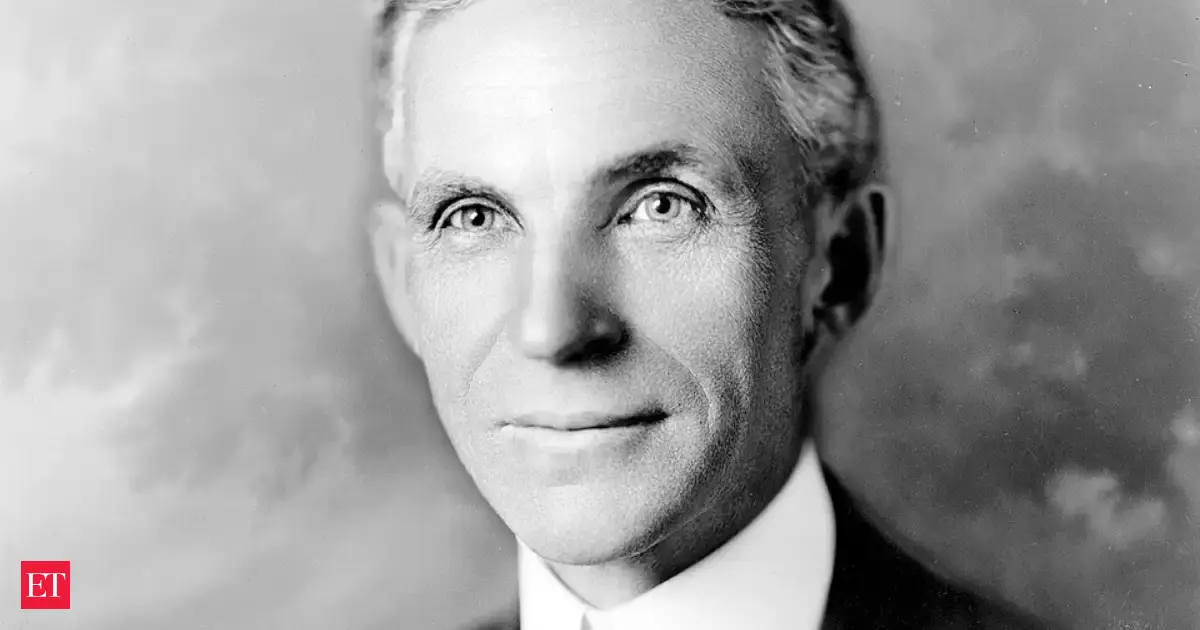
Many people spend years waiting for confidence to arrive before taking action. But confidence is rarely the beginning of transformation. More often, it is the result of moving through uncertainty without allowing fear to become identity. Henry Ford’s quote reminds us that the direction of life often follows the direction of thought.
The tragedy is not failure itself. Failure can teach, refine, and deepen wisdom. The real tragedy is convincing oneself that growth is impossible. Once the mind closes, life begins shrinking around that limitation.
Quote of the day Today: The life-changing truth hidden inside belief
Human beings often underestimate the quiet power of thought. Before actions are taken in the outer world, decisions are first made in the mind. A person who believes growth is possible keeps moving even during uncertainty, while a person consumed by doubt slowly stops trying before life has fully tested them. That is why Henry Ford’s quote continues to feel timeless. It reveals that belief is not just emotion. It becomes direction.

The quote also reminds us that the mind can either become a bridge or a prison. Fear, insecurity, and repeated self-doubt slowly shape how people see opportunities, relationships, and even themselves. Many dreams disappear not because they were impossible, but because the individual quietly accepted defeat internally. As Marcus Aurelius once suggested, life is deeply shaped by the quality of our thoughts.
At its core, this quote is not about blind positivity. It is about awareness. The stories people repeat within themselves eventually influence courage, resilience, and action. Belief alone may not guarantee success, but without belief, meaningful growth rarely begins. Sometimes the greatest transformation in life starts the moment a person changes the way they speak to their own mind.
Success quotes for today: Why the founder of Ford Motor Company’s century-old success philosophy still shapes leadership, wealth, self-belief, and modern ambition
Every human being lives through an inner conversation that never truly stops. Some people speak to themselves with patience and possibility. Others speak with constant doubt and quiet cruelty. Over time, those thoughts shape the atmosphere of the soul.
A person who constantly repeats “I cannot” slowly builds invisible walls around their own future. They stop attempting difficult things. They avoid risks. They choose comfort over growth. Not because life demanded it, but because belief quietly convinced them limitation was permanent.
Yet the opposite is also true. When someone believes change is possible, the mind begins searching for paths instead of excuses. Strength appears where weakness once lived. Courage grows through repeated effort. Even pain becomes easier to carry when hope remains alive inside the heart.
This is why wisdom traditions across history speak so deeply about thought. The quality of life is often connected to the quality of inner perception. The world outside matters, but the world within shapes how everything outside is experienced.
Meaning of the quote of the day
Henry Ford’s quote, “Whether you think you can, or you think you can’t—you’re right,” explains how deeply human belief shapes human action. The quote means that the way people think about themselves often influences what they attempt, how long they persist, and whether they give up during difficult moments. A person who believes success is possible usually keeps learning, trying, and improving, while a person who believes failure is certain often stops before reaching their true potential.
The deeper meaning of the quote is not about pretending life is easy or ignoring hardship. It is about understanding that mindset quietly controls direction. Thoughts become decisions, decisions become habits, and habits slowly shape destiny. As Marcus Aurelius believed, the mind plays a powerful role in shaping human experience. Henry Ford’s words remind people that inner belief can either open the door to growth or silently close it before life even begins to unfold.
ALSO READ: Quote of the day by Socrates: “He who is not contented with what he has, would not be contented with what he…..” — How the ancient Greek philosopher who inspired Western philosophy still explains why endless desire, not lack of success, leaves millions emotionally unfulfilled in modern life today
Henry Ford’s quote is not about arrogance
Many people misunderstand powerful quotes because modern culture often turns wisdom into shallow motivation. Henry Ford was not encouraging blind optimism or empty self-belief detached from reality. His words point toward something more grounded and more honest.
Believing you can succeed does not remove struggle. It does not erase hardship or guarantee victory. It simply keeps the mind open long enough for growth to remain possible. A hopeful person still suffers. They still fail. They still doubt themselves sometimes. But they continue moving despite uncertainty.
Real confidence is quiet. It does not shout superiority. It does not pretend perfection. It simply refuses to surrender completely to fear. That is why deeply confident people often appear calm rather than loud. They are not trying to convince the world. They have already made peace with themselves.
Henry Ford’s quote carries wisdom because it exposes how deeply human beings participate in their own becoming. The thoughts repeated daily eventually become habits, decisions, character, and destiny.
Who was Henry Ford?
Henry Ford was an American industrialist, businessman, and the founder of Ford Motor Company. He became one of the most influential figures in modern industrial history because he transformed the automobile from a luxury product into something ordinary people could afford. Before Ford, cars were expensive and mainly available to the wealthy. His vision changed transportation forever and reshaped modern manufacturing across the world.
He is best known for introducing the moving assembly line, a production system that made manufacturing faster, cheaper, and more efficient. His most famous creation, the Ford Model T, became one of the world’s first mass-produced affordable cars. Ford also became widely known for his ideas about work, productivity, innovation, and self-belief, which is why many of his quotes continue to inspire people in business, leadership, and personal growth today.
Beyond industry, Henry Ford represented the idea that persistence and vision could transform society. His thoughts on determination, discipline, and belief in human capability still remain relevant generations later, especially his famous quote: “Whether you think you can, or you think you can’t—you’re right.”
The relationship between fear and human limitation
Fear is not always dramatic. Sometimes it appears softly. It whispers instead of screams. It tells people they are too late, too broken, too ordinary, or too incapable. Over time, those whispers become internal truth if left unchallenged.
Many lives become smaller not because opportunity disappeared, but because fear slowly convinced the person to stop believing in movement. Dreams fade quietly this way. Not through sudden destruction, but through gradual surrender.
The human mind often seeks safety more than possibility. That instinct protects survival, yet it can also imprison potential. Remaining emotionally safe may protect someone from disappointment, but it also prevents transformation. Growth almost always demands uncertainty.
This is why courage matters so deeply. Courage is not the absence of fear. It is the decision that fear will not become the ruler of one’s life. Henry Ford’s words continue surviving across generations because they reveal this eternal human conflict between doubt and possibility.
Wisdom begins when self-awareness deepens
One of the most important realizations in life is understanding that thoughts are powerful, but they are not always truthful. The mind can create illusions just as easily as it creates clarity. A fearful thought is not automatically reality.
Many people live inside narratives they never consciously questioned. They inherit limitation from past experiences, failures, rejection, or criticism. Eventually, those experiences become identity. The person stops seeing themselves clearly. They begin seeing themselves only through old wounds.
Wisdom begins when someone becomes aware of this process. The moment a person notices their inner voice, transformation quietly begins. Awareness creates distance between the self and destructive thought patterns. It allows new ways of seeing life to emerge.
This is why reflection matters. Silence matters. Honest introspection matters. A distracted life rarely discovers truth because noise constantly covers the deeper voice within. Henry Ford’s quote continues resonating because it points people back toward the immense influence of inner belief.
Certain words survive because they touch something permanent inside human nature. Henry Ford’s quote continues living because every generation struggles with the same invisible battle. People still wrestle with self-doubt. They still fear failure. They still wonder whether they are capable of becoming more than their current circumstances.
Technology changes. Society changes. The human heart changes very little.
The deepest limitations are often psychological before they become external. This is why two people can stand before the same obstacle and experience completely different realities. One sees impossibility. The other sees challenge. One retreats inwardly. The other keeps searching for meaning and movement.
In the end, Henry Ford’s quote is not merely about success. It is about awareness. It reminds human beings that the stories repeated inside the mind slowly shape the boundaries of life itself. What people consistently believe about themselves often becomes the lens through which the entire world is experienced.
And perhaps that is the deepest wisdom hidden inside the quote: before life changes outwardly, something usually changes inwardly first.