














Rafal Modrzewski, CEO and co-founder of ICEYE, said that the facility will serve as the company’s primary manufacturing hub for the Asia-Pacific region, complementing its existing operations in Europe and the United States.
“There is a strong alignment between what India needs and what we offer. Globally, we are seeing two key trends: increasing defence spending and rapid adoption of space-based capabilities,” Modrzewski told PTI in an interview.
“India reflects both these trends. Countries are learning from recent conflicts that space is the next frontier for intelligence and defence. We specialise in defence and intelligence, so naturally, we see India as an important market for our solutions,” he said.
Declining to share the quantum of investment that ICEYE is looking to make in India, Modrzewski said the company is aiming to manufacture around 10 satellites in the first year and will scale it up to 20 to 40 satellites annually in the successive years.

“Investment will be significant, likely in the range of tens of millions of dollars, though exact numbers are still being finalised,” he said.
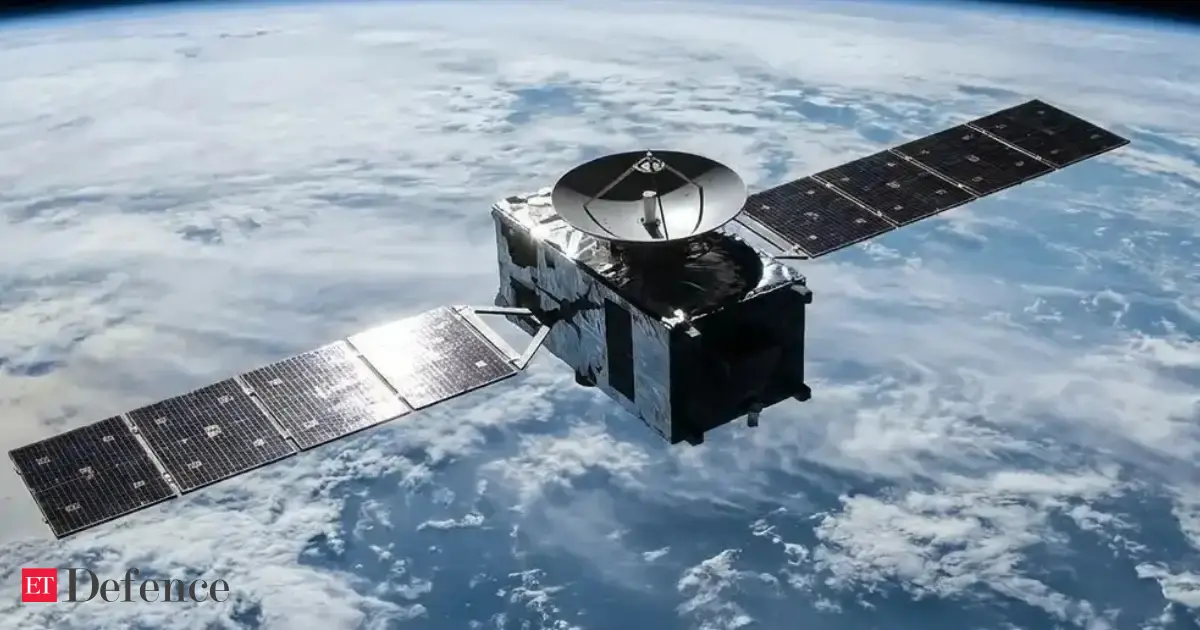
ICEYE owns the world’s most advanced SAR (synthetic aperture radar) satellite constellation and provides intelligence and surveillance services to its customers. ICEYE-built constellations serve customers in defence and intelligence, environmental monitoring, insurance and emergency management.”Yes, it is fair to say that India could become our Asia-Pacific hub, alongside Europe and the United States,” Modrzewski said.
He said the plan is to put in place a supply chain and the manufacturing facility in India within the next six to 12 months.
At present, ICEYE produces around 50 satellites annually and it plans to take the number beyond 100 annually by 2028.
“We are planning to deploy hundreds more satellites in the coming years.
“Satellites manufactured in India will serve global markets, while also supporting local demand. We are not making our India presence dependent solely on government orders. We are committed to building here regardless of the order book,” Modrzewski said.
“We already have customers in India through our existing operations. We are in active discussions with both existing and potential customers, including government stakeholders, but cannot disclose details at this stage,” he said.
Modrzewski indicated that ICEYE is holding talks with the relevant government departments on its ambitious plan.
“We are an established company and can operate independently. However, we value open dialogue and collaboration with the government, especially where there is alignment in capabilities and priorities. So far, we have not encountered any major challenges,” he said.
The ICEYE CEO also said that the company is looking at a potential collaboration in India including with satellite launch providers such as ISRO and private players, manufacturers of electronics and other components, technology partners and players in the defence ecosystem such as drones and integrated systems.