










![JMA – Ninja & Deep Jandu [Official MV] Kaptaan](https://i.ytimg.com/vi/-dsfIh319s0/maxresdefault.jpg "JMA – Ninja & Deep Jandu [Official MV] Kaptaan")



For decades, Australia has been seen as a destination offering the promise of a secure future abroad for Indian students. The plan was straightforward—get into a good university, work part-time to help pay the bills, gain local experience and, if the opportunity arose, turn that experience into a career.
But that formula is changing. Like the US, UK, and Canada, Australia has tightened its approach to international students, with changes to visa rules and migration pathways making the once-familiar study-to-work route less straightforward. The new rules are also aimed at preventing students from moving from one course to another simply to extend their stay in the country.

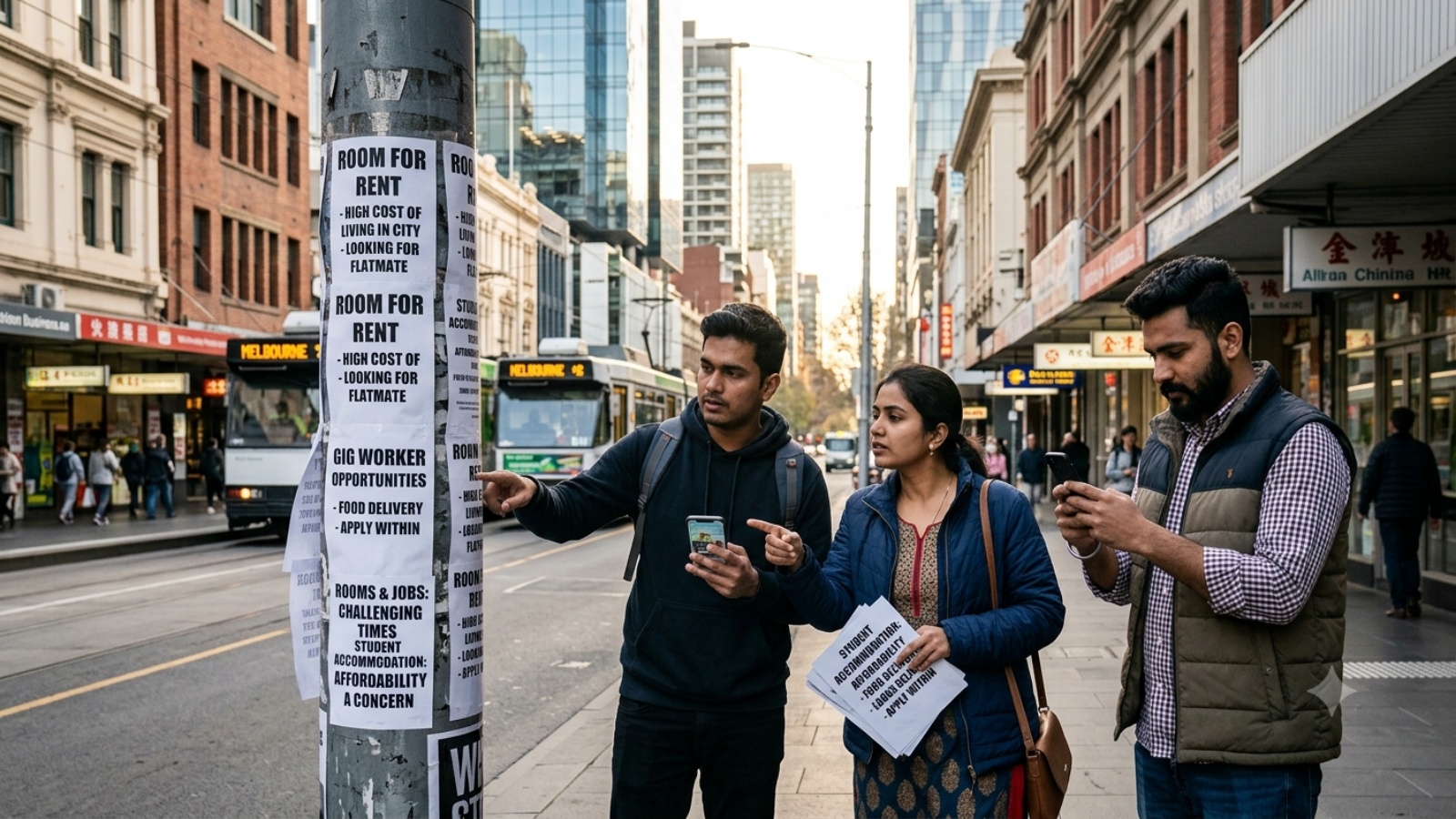
For 23-year-old Shiny (name changed) from New Delhi who arrived in Melbourne only a few months ago, that promise now feels considerably more complicated. The Delhi University graduate, who completed a liberal arts degree before moving to Australia to study social sciences, says the city is turning out to be “too expensive”, and the pressure to earn while studying has quickly become part of everyday life.
“People expect a life of comfort, but you have to work yourself to the bone,” she said, adding that they have to juggle to get gig-worker jobs that, years back, were easily available. However, with time, keeping the economic situation in mind, it has become extremely competitive.
High rent, low hopes
Indian students remain one of the largest international student groups in Australia. In the year to date through June 2026, India accounted for 16 per cent of all international students in Australia, second only to China’s 23 per cent share. Overall, 687,810 international students studied in Australia during the period, down 7 per cent from the same period in 2025.
Meanwhile, as of July 1, 2026, Australia’s national minimum wage is A$26.44 an hour. International students on the standard student visa can generally work up to 48 hours a fortnight during study periods, with unlimited hours during official course breaks.
For students trying to meet Melbourne’s costs, the hourly wage does not necessarily translate into financial security.
Story continues below this ad
Read | Australian universities urge government for cheaper housing, travel as student rents soar 40%
“Anything around A$1,000 a month for accommodation is considered relatively good,” Shiny says, adding that she pays rent above that and has just “managed to live inside city”. One of her friends lives in a small apartment affected by black mould, but he won’t mind as he lives near the campus.
Unlike a few countries that provide financial aid, Australia has limited opportunities, and many have no other option but to ask parents for money to meet expenses.
“There are no shortcuts to cut down on expenses,” she said.
Story continues below this ad
And getting enough paid work is proving difficult. “Applying for around 300 jobs and receiving only two or three callbacks is discouraging. I tried cold-emailing employers, but of no use. You will find many international students approaching shops directly and distributing resumes—at one point handing out about 50 resumes while looking for retail work.”
Australia may offer relatively high minimum wages, but international students still have to find enough hours within their visa restrictions to make that wage meaningful. The pressure is also about what comes after graduation. For students hoping to remain in Australia, Shiny says, the migration system has become more competitive. Qualifications, occupation, work experience, English-language ability, and other factors can influence future pathways.
Politics over international students
That anxiety comes at a time when Australia’s international education system is under growing political pressure. On September 14, the One Nation party announced plans for a major reduction in international student numbers and graduate migration. Universities Australia, which represents top universities in the country, has criticised the proposal, arguing that cutting international students would affect university finances, jobs, economic activity, and the supply of skilled workers.
Universities Australia Chief Executive Luke Sheehy said international education was one of Australia’s major exports and helped support jobs, universities, and the skilled workforce. The organisation has argued that Australia needs nurses, engineers, teachers, and technology workers and that international education contributes to building that workforce. Sheehy has also warned that reducing international student numbers would raise questions about how universities would replace lost revenue and fund teaching, research, and infrastructure.
Story continues below this ad
The argument sits uneasily alongside another finding in Australia’s 2026 Intergenerational Report: the country will need more skilled workers as artificial intelligence, an ageing population, the energy transition, and other economic changes reshape the workforce. The report projects university attainment to rise from about 40 per cent to 47 per cent by 2065-66—below the Australian Universities Accord’s ambition of 55 per cent of young Australians holding a university degree by 2050.
Also read | New Zealand to introduce new 6-month graduate work visa from this year: Check eligibility
It also projects Commonwealth spending on higher education and vocational education and training to decline as a share of GDP, while income support and assistance to students are projected to fall without policy change.
For international students already in Australia, the contradiction is tangible. The country says it needs skills, but the pathway to becoming part of that skilled workforce is becoming more expensive and competitive.
Story continues below this ad
In the era of polarisation
Shiny says she has also noticed a more hostile anti-immigration conversation, including anti-Indian sentiment online.
The 23-year-old sees this as part of a wider global shift, with political debates in the US influencing conversations elsewhere. “Anti-Indian online hate is a different issue,” she said, describing her perception that social media debates increasingly turn migrants, particularly brown people, into targets of blame.
Student support systems provide some assistance, but she says international students cannot always rely on them. Student unions may organise food drives or provide limited help with groceries, while postgraduate associations and other groups run volunteer programmes. But students juggling classes, jobs, and applications often have little time to participate.
There is also limited structured mentorship, she says. Universities hold events connecting students with industry, but students are often left to work out on their own how to turn their degrees into employment. That is particularly significant as Australia’s migration system becomes more selective.
IDP Education, one of the major international education organisations, says policy changes are now a normal part of the international education landscape as countries respond to changing priorities. It said international students remain important to the education ecosystem and local economies, but there is greater scrutiny of whether students are genuine applicants with a clear intention to study.
Story continues below this ad
Also Read | Safety, inclusion & cultural diversity: Why 31% of foreign students in Canada are Indian
For Australia, that is becoming a larger policy question too. The country wants more skilled workers while simultaneously debating how many international students it should admit. Universities argue that international students help supply skills and sustain the higher education system. Governments are tightening migration settings and increasing scrutiny of student pathways.
For students on the ground, the debate is less abstract. It is a weekly rent payment, a pile of unanswered job applications, a bus ride to a supermarket, a shared bedroom, and another resume sent into the system—all while trying to finish a degree that is supposed to open the door to the future.