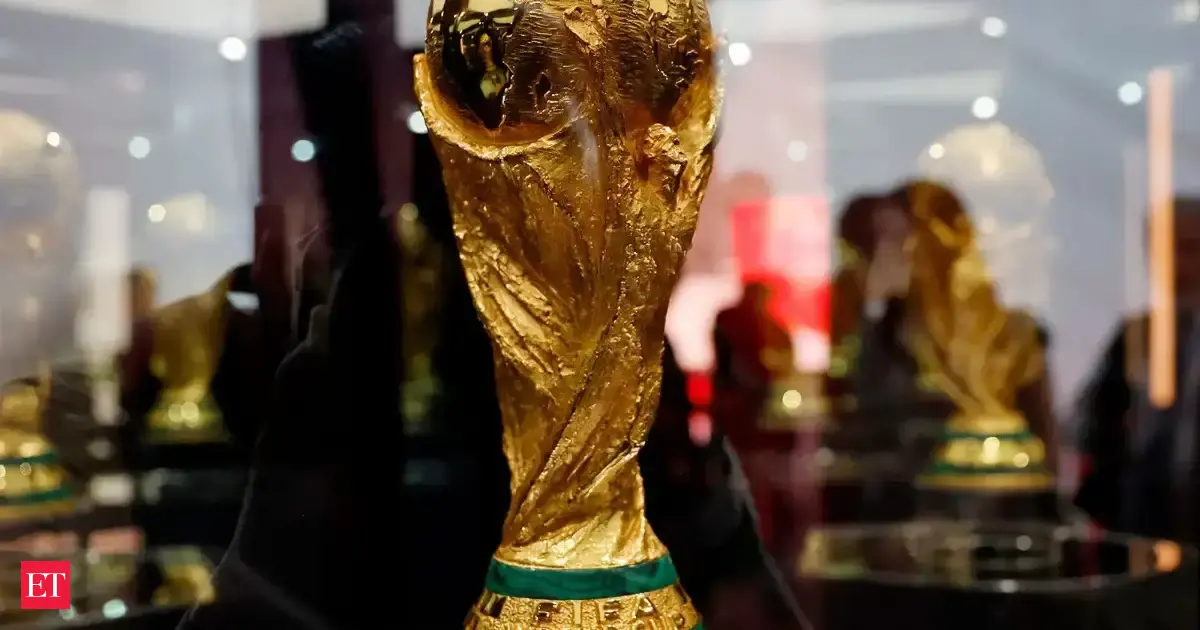

















Currently, Zee is part of bundled plans offered by Airtel, Vi and Jio. However, for the FIFA World Cup, customers will have to purchase dedicated FIFA packs. The broadcaster has launched two digital subscription plans priced at Rs 699 for three months and Rs 1,699 for a year, allowing fans to access the FIFA World Cup alongside other content on the platform.
Also Read|FIFA World Cup 2026 Schedule in Indian Time (IST) PDF: Check full fixtures, dates and kick-off timings
Industry sources said Zee is not currently pursuing telecom bundling partnerships, which typically account for 50-80% of a streaming platform’s paid subscriber base. Rival JioHotstar has relied heavily on such partnerships to scale subscriptions during marquee events like the Indian Premier League (IPL), accumulating 300 million paid subscribers for IPL 2025, largely through telco bundles.
Zee’s strategy marks a departure from the free streaming approach adopted for the 2022 FIFA World Cup by JioCinema, now part of JioHotstar, which attracted 110 million viewers across mobile and connected TV. By prioritising paid subscriptions over scale, Zee could end up with lower overall reach, potentially limiting advertising volumes.

However, industry executives say the broadcaster appears willing to accept that tradeoff at a time when advertising demand is already under pressure following heavy marketer spending on the IPL and ICC Men’s T20 World Cup.
“Zee is looking to play the subscription game since it needs sports to counter JioStar in TV distribution, although its effectiveness will only become clear over time. The biggest upside for Zee would come from ZEE5, since sports consumption is rising across both mobile and connected TV, even as it declines on linear television,” said a senior media executive.Industry experts expect the Rs 699 quarterly FIFA pack to see stronger uptake than the annual plan. With ZEE5 already driving Zee’s subscription growth, FIFA is expected to provide an additional boost.
Also read | Zee Entertainment approves Rs 2,300 crore capital raise
In a recent interview with ET, chief executive officer Punit Goenka dismissed concerns over monetisation, saying Zee was building football over multiple cycles rather than evaluating returns from a single tournament. Zee owns FIFA rights till 2034, covering 39 men’s and women’s events, with the eight-year deal estimated at $40-60 million.
While Zee has signed two sponsors and multiple spot buyers for FIFA World Cup 2026, media buyers privately admit that sponsorship outlays of up to Rs 20 crore being sought by the broadcaster are aggressive.
The concern stems largely from match timings, with most fixtures airing late at night or in the early morning for Indian audiences, although some games will also fall in prime time. Media buyers expect this to weigh on live viewership while boosting demand for highlights and catch-up viewing.
“FIFA World Cup has its own strong following in India. It is a good bet for certain categories of brands, but timings remain the biggest challenge. The outlays being sought by Zee are also aggressive, and deals are likely to close at significantly lower levels,” said a senior media buyer, requesting anonymity.
The FIFA World Cup 2026 will be held from June 11 to July 19 across the US, Canada and Mexico.
Advertising inventory may receive some support this time, with FIFA mandating three-minute hydration and cooling breaks during matches, creating additional ad windows. Even so, the broader advertising market remains soft after substantial spending on marquee cricket properties in the first half of the year.
Zee is selling television and digital inventory together and expects an omni-channel unique reach of 264 million, including more than 91 million through linear TV, 80+ million via OTT, 35+ million through connected TV and 90+ million across social media.
For Zee Entertainment, FIFA will also serve as a key test for its sports brand, Unite8. However, viewership is expected to remain below the previous edition because of unfavourable timings for Indian audiences.
Football attracted 300 million TV and digital viewers in 2025 but remains a niche sport centred on premium metro audiences and strong pockets such as West Bengal, Kerala, Goa and the Northeast. That audience profile is reflected in Zee’s advertiser mix, which includes Mahindra, Diageo, Apple, Pernod Ricard and Mondelez.
The broadcaster also expects FIFA to strengthen the appeal of ZEE5, although retaining subscribers after the tournament may prove difficult given its limited sports portfolio beyond ILT20.
Much of the customer acquisition during the tournament is expected to come from core football fans, who may not remain on the platform once the event concludes because Zee lacks other major football properties.
“Currently, they are not pursuing telecom deals. However, as the tournament progresses, they may look at partnerships with telcos since that would bring in significantly more subscribers than direct acquisition alone,” said an industry executive tracking the development.
The FIFA acquisition could also provide temporary support to Zee’s television subscription business, which has remained flat amid the continued decline in India’s pay-TV universe to 84 million households.
Entertainment broadcasters such as Zee have faced resistance from cable and DTH operators, which are reluctant to agree to annual subscription fee increases as subscriber bases shrink. The pressure has intensified because of JioStar’s dominance in television distribution through marquee cricket properties such as the IPL, ICC and BCCI rights.
According to WPP Media, cricket cornered nearly 90% of sports advertising spends worth $2 billion, leaving limited budgets for non-cricket sports properties.
To strengthen its sports presence, Zee has launched four channels under the Unite8 brand. Unlike Star Sports and Sony Sports, which price channels at the TRAI-mandated upper cap of Rs 19 for bouquet inclusion, Zee has priced Unite8 Sports more aggressively and bundled them into base packs, although distribution executives said nationwide seeding will take time.
A Zee spokesperson said the company believes sports such as football have immense untapped potential in India, and marquee properties like the FIFA World Cup play an important role in unlocking that opportunity.
Incidentally, Zee chose not to launch the channels under its parent brand, opting instead for the Unite8 identity to appeal to younger viewers who may not have strong affinity with the Zee brand. A significant portion of football fans falls within the 15-40 age group.