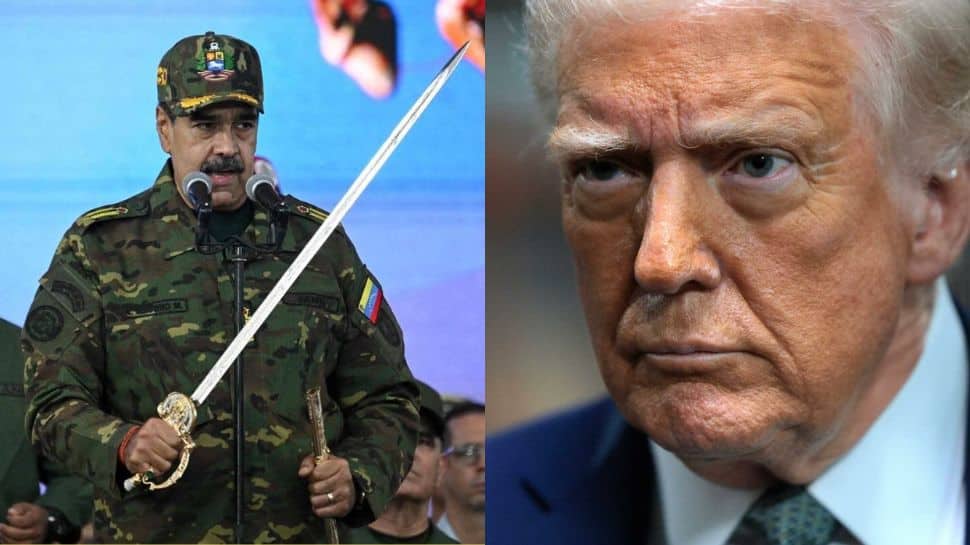




















Why would the United States risk international condemnation, potential military escalation, and accusations of illegal regime change to arrest the sitting leader of a sovereign nation?
ALSO READ |US Attack Venezuela Live Updates| MEA Issues Advisory For Indian Nationals
That question surged into focus on Saturday after reports claimed that US special operations forces detained Venezuelan President Nicolas Maduro and First Lady Cilia Flores, transferring them to US custody to face long-standing narcoterrorism charges.
Add Zee News as a Preferred Source

Washington’s official rationale centered on law enforcement: executing a federal warrant accusing Maduro of overseeing a state-sponsored cocaine trafficking network.
Yet, analysts argue that the scale of the alleged operation and the risks involved point to motives beyond mere criminal prosecution.
Experts assess the Venezuela crisis and US intervention as stemming from interconnected factors: economic collapse, geopolitical rivalries, authoritarian repression, and strategic resource control.
Venezuela Crisis
Venezuela’s economy remains deeply impaired as of early 2026. Hyperinflation, a GDP contraction exceeding 70 percent since 2013, oil production falling below 400,000 barrels per day, and the emigration of more than eight million citizens persist despite limited market reforms.
Much of this economic condition of Venezuela’s economy traces back to policies introduced under former President of Venezuela Hugo Chavez. As in 1999, Chavez expanded state control over industry, implemented sweeping nationalizations, and financed extensive social programs almost entirely through oil revenues. Massive subsidies for fuel, food, and housing drained fiscal reserves, while currency controls and monetary expansion fueled inflation. Nationalization of millions of hectares of farmland further weakened domestic food production, accelerating shortages and mass migration under Maduro’s presidency.