














India
oi-Saumya Joshi

At
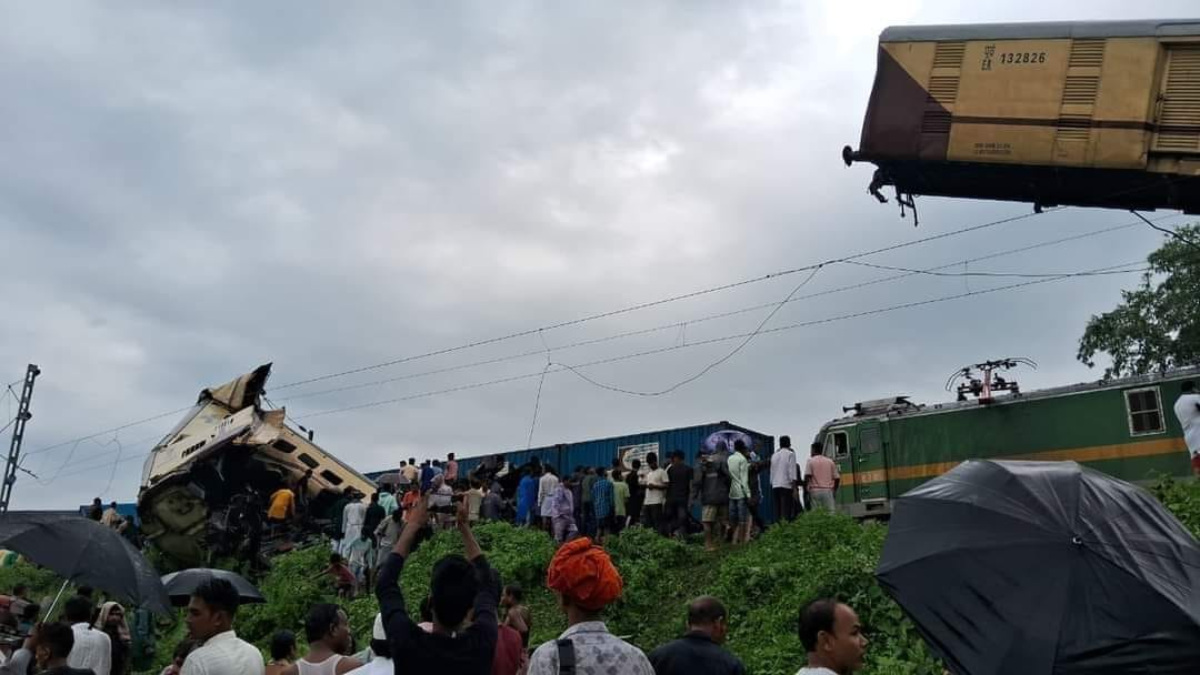
least
five
passengers
have
been
killed
and
30
others
injured
after
the
Kanchanjunga
Express
was
struck
from
behind
by
a
goods
train
in
New
Jalpaiguri,
West
Bengal,
on
Monday.
According
to
sources,
at
least
two
bogies
of
the
Kanchanjunga
Express
were
derailed
in
the
collision.
“It
has
been
reported
that
five
passengers
have
lost
their
lives,
and
20-25
individuals
have
sustained
injuries
in
the
accident.
The
situation
is
grave.
The
collision
occurred
when
the
Kanchenjunga
Express
was
hit
by
a
goods
train,”
stated
Abhishek
Roy,
Additional
SP
of
Darjeeling
Police,
to
ANI.

The
accident
occurred
approximately
11
kilometres
from
New
Jalpaiguri
station
in
north
Bengal,
a
major
hub
in
the
Northeast
Frontier
Railway
zone
of
eastern
and
northeastern
India.
The
Kanchanjunga
Express,
travelling
from
Agartala
to
Sealdah
station
in
Kolkata,
experienced
the
collision
at
around
8:30
am.
“Rescue
operations
have
commenced,
and
injured
passengers
are
being
transported
to
hospitals,”
confirmed
a
railway
official
stationed
at
NJP.

Express
Train
Accident
Video:
First
Visuals
From
West
Bengal
Kanchanjunga
Express
Collision:
What
Was
The
Cause?
“Initially,
it
seems
that
the
goods
train
passed
the
signal
and
collided
with
the
rear
section
of
the
Kanchanjungha
train,”
the
official
mentioned,
with
additional
information
that
“railway
board
officials
are
overseeing
the
situation
from
the
war
room,”
as
reported
by
Hindustan
Times.
Could
Kavach
Avoid
Kanchanjunga
Express
Collision?
The
Kavach
system,
known
as
“armour”
or
“shield”
in
Hindi,
is
one
of
the
advanced
safety
systems
–
Safety
Integrity
Level
4
(SIL-4)
–
being
deployed
by
the
Indian
Railways
to
enhance
safety
in
train
operations
and
achieve
the
goal
of
zero
accidents
annually.
Designed
by
the
Research
Designs
&
Standards
Organisation
(RDSO)
of
the
Ministry
of
Railways,
Kavach
consists
of
on-board
equipment
installed
on
locomotives,
and
track-side
components,
and
operates
on
a
wireless
network.
Its
primary
objectives
include
the
prevention
of
collisions
and
automatic
activation
of
the
braking
system
in
critical
situations,
such
as
approaching
collisions,
red
light
violations
by
pilots,
or
exceeding
permissible
speed
limits,
as
reported
by
PTI.
Additionally,
Kavach
facilitates
emergency
SOS
messages,
automatic
whistling
when
approaching
level
crossings,
and
reduces
locomotive
speed
to
30
km
per
hour
upon
entering
loop
lines.
The
system
also
features
real-time
information
display
including
speed,
location,
distance
to
upcoming
signals,
signal
types,
and
distress
messages
from
pilots
or
stations.
Radio-frequency
identification
(RFID)
tags
are
embedded
in
track
segments,
assigning
unique
IDs
to
each
section
to
determine
train
direction
and
speed.
Sensors
are
strategically
placed
on
locomotives
to
transmit
data
to
the
Stationary
TCAS
unit
at
stations
via
ultra-high
frequency
(UHF)
radio
antennas.
In
case
of
conflicting
signals,
the
Stationary
TCAS
unit
prioritizes
the
most
restrictive
conditions,
automatically
adjusting
train
movement.
If
two
trains
approach
each
other
on
the
same
track,
SOS
signals
are
dispatched
to
both
with
visual
and
auditory
alerts,
bringing
them
to
a
halt
to
maintain
a
safe
distance
of
at
least
300
meters,
as
reported
by
The
Print.
Future
plans
include
centralised
monitoring
of
TCAS
systems
and
implementation
of
additional
fail-safe
and
backup
security
measures
to
prevent
collisions,
as
outlined
in
an
official
document
released
by
Indian
Railways
on
the
Kavach
system.

Minister
Ashwini
Vaishnaw
Reacts
On
West
Bengal
Train
Mishap
Indian
Railways’ Kavach
System:
Enhancing
Safety
Across
the
Network
Indian
Railways
is
preparing
to
issue
tenders
for
the
installation
of
Kavach,
the
indigenously
developed
anti-train
collision
system,
across
10,000
kilometres.
According
to
senior
officials
briefed
on
the
matter,
tenders
will
be
phased
in
two
to
three
phases,
with
consideration
given
to
new
vendors
to
expedite
installation
processes.
Quadrant
Future
Tech
and
Siemens
are
being
considered
alongside
existing
vendors
like
Kernex,
Medha,
and
HBL
PowerSystems,
as
reported
by
the
Businessline.
The
installation
will
utilize
LTE
(long-term
evolution)
technology,
with
KEC
International
already
implementing
Kavach
over
117
kilometres.
Current
tenders
cover
approximately
6,000
kilometres,
with
preparatory
work
underway
for
an
additional
6,000
kilometres.
The
estimated
cost
for
trackside
equipment
provision
is
about
₹50
lakh
per
kilometre
while
equipping
locomotives
with
Kavach
costs
₹70
lahks
each.
Kavach
Implementations
Across
Eastern
and
North
Western
Railways
Eastern
Railway
officials
have
progressed
significantly
in
implementing
Kavach
along
the
Howrah-Chhota
Ambana
section,
covering
150
out
of
260
route
kilometres.
Trials
have
been
conducted,
and
infrastructure
development
continues
from
Howrah
to
Mankar,
including
Barddhaman,
with
ongoing
progress
between
Waria
and
Chhota
Ambana.
Moreover,
46
locomotives
of
Eastern
Railway
are
already
equipped
with
anti-train
collision
prevention
devices,
as
reported
by
Business
Today.
Meanwhile,
North
Western
Railway
has
awarded
tenders
worth
₹426
crores
for
1,600
kilometres,
slated
for
completion
by
2025.
Additionally,
South
Central
Railways
have
successfully
implemented
Kavach
across
1,465
kilometres,
reflecting
the
system’s
comprehensive
adoption
and
integration
into
national
railway
safety
protocols.