






• Latest
  • Trending
  • All
Is This The Solution To Your Long-Term Weight Loss & BMI Control? What’s Japan’s ‘Hara Hachi Bu’? | Lifestyle News

Is This The Solution To Your Long-Term Weight Loss & BMI Control? What’s Japan’s ‘Hara Hachi Bu’? | Lifestyle News

7 months ago
Tata Trusts board meets ahead of key Tata Sons board meeting | Business News

Tata Trusts board meets ahead of key Tata Sons board meeting | Business News

1 hour ago
Apple WWDC 2026 LIVE | iPhone-maker announces Siri AI powered by the new Apple Intelligence

Apple WWDC 2026 LIVE | iPhone-maker announces Siri AI powered by the new Apple Intelligence

4 hours ago
India’s Q4 FY26 Current Account Surplus Driven by Services Exports, Remittances

India’s Q4 FY26 Current Account Surplus Driven by Services Exports, Remittances

5 hours ago
PIO Nithya Raman surges into LA Mayoral runoff spot, triggering Trump fury over another ‘stolen’ election

PIO Nithya Raman surges into LA Mayoral runoff spot, triggering Trump fury over another ‘stolen’ election

7 hours ago
Israel Halted Strikes On Iran At Trump’s Behest, But Gives No Guarantee On Lebanon | World News

Israel Halted Strikes On Iran At Trump’s Behest, But Gives No Guarantee On Lebanon | World News

7 hours ago
Sunil Gavaskar rejects Gautam Gambhir’s ‘transition’ theory, sees bigger India concern despite Afghanistan win

Sunil Gavaskar rejects Gautam Gambhir’s ‘transition’ theory, sees bigger India concern despite Afghanistan win

7 hours ago
Curry Barker, Kane Parsons and a quick history of YouTube creators reshaping modern horror 

Curry Barker, Kane Parsons and a quick history of YouTube creators reshaping modern horror 

7 hours ago
Brothers face off at 2026 FIFA World Cup

Brothers face off at 2026 FIFA World Cup

8 hours ago
Indian Stock Market Slumps: Sensex Dips 719 Points Amid Global Tensions, Oil Price Spike & Tech Sell-off

Indian Stock Market Slumps: Sensex Dips 719 Points Amid Global Tensions, Oil Price Spike & Tech Sell-off

8 hours ago
WhatsApp Says Spyware Maker NSO Group Is Still Targeting Its Users

WhatsApp Says Spyware Maker NSO Group Is Still Targeting Its Users

8 hours ago
Winning is always good but India wouldn’t read too much into the only Test against Afghanistan

Winning is always good but India wouldn’t read too much into the only Test against Afghanistan

9 hours ago
TMC’s numbers game: How many MPs, MLAs turned against Mamata — and will it boost BJP’s strength in Parliament?

TMC’s numbers game: How many MPs, MLAs turned against Mamata — and will it boost BJP’s strength in Parliament?

9 hours ago
Monday, June 8, 2026
  • PRESS RELEASE
  • ADVERTISE
  • CONTACT
  • Game
India News Online
  • Home
  • News
    • India
    • Punjab
    • International
    • Entertainment
  • Hindi News
  • Politics
  • Health
  • Business
  • Sports
  • Technology
  • Lifestyle
  • Video
    • All
    • Hindi Songs
    • Punjabi Songs
    पियवा किसनवा 90’S Old Hindi Songs🥰 90s Love Song😍 Udit Narayan, Alka Yagnik, Kumar Sanu songs Hindi

    पियवा किसनवा 90’S Old Hindi Songs🥰 90s Love Song😍 Udit Narayan, Alka Yagnik, Kumar Sanu songs Hindi

    90s Bollywood Wedding Songs | Evergreen Bollywood Hits | Shadi Song | Sadabahar Hindi Songs Jukebox

    90s Bollywood Wedding Songs | Evergreen Bollywood Hits | Shadi Song | Sadabahar Hindi Songs Jukebox

    आज तो बाल बाल बच गया😄90’S Old Hindi Songs🥰 90s Love Song😍 Udit Narayan, Alka Yagnik, Kumar Sanu song

    आज तो बाल बाल बच गया😄90’S Old Hindi Songs🥰 90s Love Song😍 Udit Narayan, Alka Yagnik, Kumar Sanu song

    भाभी ने बचाई ननद की जान 😆 90’S Old Hindi Songs 🥺90s Love Song 😍Udit Narayan, Alka Yagnik, Kumar

    भाभी ने बचाई ननद की जान 😆 90’S Old Hindi Songs 🥺90s Love Song 😍Udit Narayan, Alka Yagnik, Kumar

    When Online Love Becomes Real💞Chinese mix Hindi Songs💞Cin Klip💞Chinese Drama💞Korean Mix Hindi Songs

    When Online Love Becomes Real💞Chinese mix Hindi Songs💞Cin Klip💞Chinese Drama💞Korean Mix Hindi Songs

    Cold Rude boy falling for cute girl 💕 korean mix hindi songs 💞 Chinese mix hindi songs

    Cold Rude boy falling for cute girl 💕 korean mix hindi songs 💞 Chinese mix hindi songs

    90s हिंदी सदाबहार गीत | 90’s Romantic Hindi Songs | 90’s सदाबहार फिल्मी गाने | 90’s Bollywood Songs

    90s हिंदी सदाबहार गीत | 90’s Romantic Hindi Songs | 90’s सदाबहार फिल्मी गाने | 90’s Bollywood Songs

    90’S Old Hindi Songs🥰 90s Love Song😍 Udit Narayan, Alka Yagnik, Kumar Sanu songs Hindi Jukebox

    90’S Old Hindi Songs🥰 90s Love Song😍 Udit Narayan, Alka Yagnik, Kumar Sanu songs Hindi Jukebox

    90’s हिंदी गाने | 90’s Evergreen Songs | 90s सदाबहार गाने | Hindi Gana | 90’s Hit Songs | Durga Boss

    90’s हिंदी गाने | 90’s Evergreen Songs | 90s सदाबहार गाने | Hindi Gana | 90’s Hit Songs | Durga Boss

  • Travel
  • Game
No Result
View All Result
India News
No Result
View All Result
Home Lifestyle

Is This The Solution To Your Long-Term Weight Loss & BMI Control? What’s Japan’s ‘Hara Hachi Bu’? | Lifestyle News

by India News Online Team
November 5, 2025
in Lifestyle
0
Is This The Solution To Your Long-Term Weight Loss & BMI Control? What’s Japan’s ‘Hara Hachi Bu’? | Lifestyle News
Share on FacebookShare on TwitterShare on Email


Last Updated:November 05, 2025, 14:22 IST

Unlike diets that focus on restriction or rules, ‘Hara Hachi Bu’ is more of a mindful habit than a regimen. It does not count calories, require apps, meal plans, nutrition charts

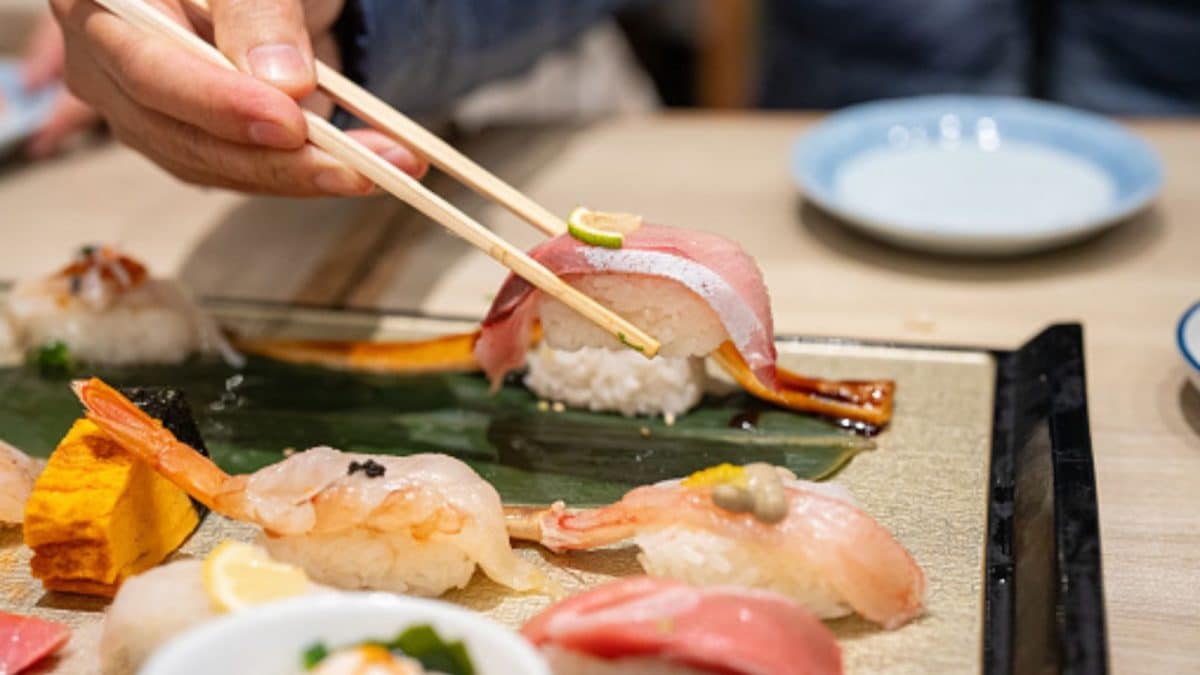
Researchers believe this calorie moderation, without deprivation, keeps metabolism stable, supports a healthy weight, and reduces inflammation. (Getty Images)

Researchers believe this calorie moderation, without deprivation, keeps metabolism stable, supports a healthy weight, and reduces inflammation. (Getty Images)

In a world obsessed with diet trends — from intermittent fasting to keto and calorie tracking — a quiet, centuries-old Japanese philosophy offers a radically simple alternative. It does not involve measuring carbs, skipping meals, or counting macros. It is about stopping when you are 80% full.

This ancient eating practice, known as ‘Hara Hachi Bu’, has been a way of life for some of the world’s longest-living people. It originated in Okinawa, a Japanese island famous for its exceptional number of centenarians — people who live beyond 100 years.

As scientists search for the secrets behind longevity, the Okinawan approach to eating has drawn global attention. Could ‘Hara Hachi Bu’ hold the key not just to living longer, but also to maintaining a healthier body weight and a calmer relationship with food?

What Does ‘Hara Hachi Bu’ Mean?

The phrase ‘Hara Hachi Bu’ roughly translates to “eat until you are eight parts full.” It is a mindful eating guideline rooted in Confucian teaching, encouraging moderation, balance, and respect for the body.

Unlike modern diets that prescribe what and when to eat, Hara Hachi Bu focuses on how you eat. The rule is simple: “Stop eating when you’re 80% full.”

In practice, it means putting down your chopsticks or fork when you feel comfortably satisfied, not stuffed. The idea is that you give your body time to recognise fullness before you have overeaten.

Understanding The Okinawan Connection

Okinawa, an island in southern Japan, has been extensively studied as part of the world’s ‘Blue Zones’ — regions where people live significantly longer and healthier lives. Along with a strong sense of community and daily physical activity, Hara Hachi Bu is one of the central lifestyle habits credited with their remarkable health.

Okinawans traditionally consume around 1,800 calories per day, compared to the 2,100–2,500 typical in Western countries. Despite eating less, they enjoy one of the highest life expectancies in the world and the lowest rates of obesity, diabetes, and heart disease.

Researchers believe this calorie moderation, without deprivation, keeps metabolism stable, supports a healthy weight, and reduces inflammation. Combined with a plant-rich diet full of vegetables, soy, and seaweed, Hara Hachi Bu may be a key reason Okinawans age so gracefully.

Data shows only 3% to 4% of the Japanese population is obese, in contrast to the UK’s 25.9% and India’s 180 million.

What Is The Science Behind Stopping At 80%?

What is so special about 80%? Why not just eat until you feel full?

The answer lies in biology and timing. When you eat, your stomach sends signals of fullness to your brain through hormones like leptin. But that communication takes time — usually around 15 to 20 minutes.

If you eat quickly, you may consume more than your body needs before the brain has time to register satiety. By stopping early, you allow your body to “catch up,” preventing overeating and the sluggish, bloated feeling that often follows large meals.

Several studies have shown that calorie moderation, even without extreme restriction, can improve metabolic health, lower cholesterol, reduce blood sugar levels, and even slow aging at the cellular level.

What Makes ‘Hara Hachi Bu’ Different From Other Diets?

Unlike diets that focus on restriction or rules, ‘Hara Hachi Bu’ is more of a mindful habit than a regimen. It does not eliminate food groups or count calories. It does not require apps, meal plans, or nutrition charts.

Instead, it builds self-awareness — a habit of tuning into hunger and satisfaction cues rather than external signals like portion size or time of day.

Here’s how it works in practice:

  1. Stop Eating At 80% Fullness

The core idea is to put your utensils down when you feel satisfied, not stuffed. You might still feel like you could eat more, but not enough to feel hungry again soon. The goal is comfort, not excess.

  1. Eat Slowly And Mindfully

‘Hara Hachi Bu’ encourages slowing down your eating pace — chewing thoroughly, pausing between bites, and giving your body time to recognise satisfaction. This 20-minute window allows hunger hormones to balance naturally.

  1. Listen To Your Body

Rather than eating based on the clock or portion size, the practice is about listening to your internal cues. Am I still hungry? Do I feel nourished? Am I eating out of boredom, stress, or habit?

  1. Practice Gratitude

Okinawans traditionally begin their meal with the phrase “Hara hachi bu ni isshou kenmei” — roughly meaning “I will eat until I am 80% full, and I will do my best.” Many also express gratitude before meals, which shifts attention towards appreciation rather than indulgence.

This blend of mindfulness, moderation, and gratitude makes ‘Hara Hachi Bu’ as much a philosophy of living as it is an eating habit.

How It Affects Weight, BMI, And Health

Recent studies support what Okinawans have known intuitively for centuries: eating slightly less can have profound long-term health effects.

  1. Lower Calorie Intake

By naturally limiting intake to about 80% of fullness, people consume fewer calories without consciously dieting. Over time, this can lead to gradual, sustainable weight loss and lower body fat.

  1. Reduced Risk of Obesity & Weight Gain

Researchers tracking Okinawan elders have found that their lower daily calorie intake corresponds with lower average BMI and minimal age-related weight gain.

  1. Improved Metabolism

A moderate calorie deficit improves insulin sensitivity, helping stabilise blood sugar levels and reducing the risk of Type 2 diabetes.

  1. Better Digestion

Stopping before feeling stuffed allows the stomach to process food efficiently. Overeating slows digestion, leading to fatigue, acidity, and bloating — symptoms rarely reported among traditional Okinawan populations.

  1. Longevity Benefits

Caloric moderation is one of the few lifestyle factors shown to extend lifespan in multiple animal studies. Scientists believe it reduces oxidative stress and inflammation — both linked to aging and chronic disease.

How Hara Hachi Bu Focuses On Conscious Eating

Hara Hachi Bu is not about eating less — it is about eating consciously. In the modern world, we are surrounded by cues that push us to eat more: oversized portions, screens, stress, and convenience food.

By introducing mindfulness, the practice helps you become aware of why and how you are eating. This, in turn, promotes a healthier emotional relationship with food.

Mindful eaters often report feeling more satisfied with smaller portions, enjoying food more, and experiencing fewer cravings. The act of slowing down creates space for the body to catch up with the mind, and vice versa.

How To Try ‘Hara Hachi Bu’ In Everyday Life

You don’t need to live in Okinawa or follow a Japanese diet to adopt this principle. Here’s how to bring Hara Hachi Bu into your routine:

  • Start small. For your next meal, aim to stop just before you feel full. Notice the sensation of being comfortably satisfied.
  • Eat without distractions. Put away your phone or TV. Focus on flavour, texture, and aroma.
  • Use smaller plates. Studies show that portion size subconsciously influences how much we eat. Smaller plates make smaller portions feel adequate.
  • Pause halfway. Halfway through your meal, stop for a moment. Ask yourself if you are still hungry or eating out of habit.
  • Chew thoroughly. Slowing down increases satiety and aids digestion.
  • End with gratitude. Take a breath, appreciate the meal, and notice how your body feels.

With practice, these small actions can reprogram your eating behaviour, not by force, but through awareness.

Is This The Key To Long-Term Weight Management?

While Hara Hachi Bu is not a weight-loss programme, it naturally leads to better weight control over time. Unlike restrictive diets, it is sustainable for life because it is flexible and intuitive.

You can eat any cuisine, follow any meal plan, and still apply the principle of eating to 80% fullness. The practice also reduces the stress and guilt associated with dieting — two factors that often lead to rebound weight gain.

In essence, Hara Hachi Bu is a behavioural solution to overeating rather than a biological one. It trains your brain to stop before excess, helping maintain a stable BMI and reducing long-term weight creep — the slow annual gain many adults experience.

Cultural Wisdom Meets Modern Science

What is remarkable about Hara Hachi Bu is that it aligns closely with modern nutritional science, despite originating centuries before calorie charts existed.

Nutrition experts these days recommend similar strategies: eat mindfully, avoid emotional eating, chew slowly, and stop before feeling stuffed. Yet many people still eat until they are uncomfortably full — often because speed, stress, or distraction override natural hunger signals.

In Okinawa, meals are smaller, slower, and social. People eat sitting down, often in groups, with conversation and gratitude forming part of the ritual. The act of eating becomes an experience rather than an automatic habit.

What Other Countries Can Follow?

In many modern cultures, eating is rushed — squeezed between meetings, commutes, or screens. Food is abundant, but time is scarce. Hara Hachi Bu offers a way to reclaim that balance.

It is a reminder that the secret to health is not found in complicated diets or expensive supplements, but in ancient simplicity — eating with intention, gratitude, and moderation.

For Indians, the idea resonates deeply with traditional wisdom. Ayurveda too stresses eating until the stomach is three-quarters full — a striking parallel to ‘Hara Hachi Bu’. Both stress, digestion, mindfulness, and gratitude as keys to vitality.

What Experts Say

Modern dietitians often praise Hara Hachi Bu for its psychological and physiological balance. Instead of triggering the deprivation mindset common in dieting, it nurtures a sense of respect for the body.

“This idea teaches each Japanese generation that our portion size is small,” said Asako Miyashita in the Women’s Health report, as quoted by The Economic Times. She is a registered dietitian nutritionist (RDN) who grew up in Japan.

Dietician Kouka Webb, who was raised by the principle, said she finds herself more aware of what she eats. By following this practice, people may start getting more satisfaction from their meals.

By consistently eating slightly less, the body learns efficiency, using energy better, storing less fat, and processing nutrients more smoothly. Over time, this contributes not just to a healthy weight but also to better metabolic and cardiovascular health.

The principle can even be paired with existing health practices like intermittent fasting, Ayurvedic timing of meals, or portion control — enhancing rather than replacing them.

What To Conclude

Hara Hachi Bu isn’t a quick fix. It’s not about fasting, restriction, or eliminating favorite foods. It’s about awareness and restraint — two qualities often missing in modern eating habits.

In Okinawa, people who practice this approach don’t view it as dieting; it’s simply a way of respecting the body’s needs. They eat what they love, but never to excess — and they do so with gratitude.

In a time when obesity, diabetes, and lifestyle diseases are on the rise, perhaps it’s time to return to this ancient wisdom. The secret to longevity might not be a superfood or a supplement. It could simply be knowing when to stop.

Shilpy Bisht

Shilpy Bisht

Shilpy Bisht, Deputy News Editor at News18, writes and edits national, world and business stories. She started off as a print journalist, and then transitioned to online, in her 12 years of experience. Her prev…Read More

Shilpy Bisht, Deputy News Editor at News18, writes and edits national, world and business stories. She started off as a print journalist, and then transitioned to online, in her 12 years of experience. Her prev… Read More

First Published:

November 05, 2025, 14:21 IST

News lifestyle Is This The Solution To Your Long-Term Weight Loss & BMI Control? What’s Japan’s ‘Hara Hachi Bu’?
Disclaimer: Comments reflect users’ views, not News18’s. Please keep discussions respectful and constructive. Abusive, defamatory, or illegal comments will be removed. News18 may disable any comment at its discretion. By posting, you agree to our Terms of Use and Privacy Policy.

This ancient eating practice, known as ‘Hara Hachi Bu’, has been a way of life for some of the world’s longest-living people. It originated in Okinawa, a Japanese island famous for its exceptional number of centenarians — people who live beyond 100 years.

As scientists search for the secrets behind longevity, the Okinawan approach to eating has drawn global attention. Could ‘Hara Hachi Bu’ hold the key not just to living longer, but also to maintaining a healthier body weight and a calmer relationship with food?

What Does ‘Hara Hachi Bu’ Mean?

The phrase ‘Hara Hachi Bu’ roughly translates to “eat until you are eight parts full.” It is a mindful eating guideline rooted in Confucian teaching, encouraging moderation, balance, and respect for the body.

Unlike modern diets that prescribe what and when to eat, Hara Hachi Bu focuses on how you eat. The rule is simple: “Stop eating when you’re 80% full.”

In practice, it means putting down your chopsticks or fork when you feel comfortably satisfied, not stuffed. The idea is that you give your body time to recognise fullness before you have overeaten.

Understanding The Okinawan Connection

Okinawa, an island in southern Japan, has been extensively studied as part of the world’s ‘Blue Zones’ — regions where people live significantly longer and healthier lives. Along with a strong sense of community and daily physical activity, Hara Hachi Bu is one of the central lifestyle habits credited with their remarkable health.

Okinawans traditionally consume around 1,800 calories per day, compared to the 2,100–2,500 typical in Western countries. Despite eating less, they enjoy one of the highest life expectancies in the world and the lowest rates of obesity, diabetes, and heart disease.

Researchers believe this calorie moderation, without deprivation, keeps metabolism stable, supports a healthy weight, and reduces inflammation. Combined with a plant-rich diet full of vegetables, soy, and seaweed, Hara Hachi Bu may be a key reason Okinawans age so gracefully.

Data shows only 3% to 4% of the Japanese population is obese, in contrast to the UK’s 25.9% and India’s 180 million.

What Is The Science Behind Stopping At 80%?

What is so special about 80%? Why not just eat until you feel full?

The answer lies in biology and timing. When you eat, your stomach sends signals of fullness to your brain through hormones like leptin. But that communication takes time — usually around 15 to 20 minutes.

If you eat quickly, you may consume more than your body needs before the brain has time to register satiety. By stopping early, you allow your body to “catch up,” preventing overeating and the sluggish, bloated feeling that often follows large meals.

Several studies have shown that calorie moderation, even without extreme restriction, can improve metabolic health, lower cholesterol, reduce blood sugar levels, and even slow aging at the cellular level.

What Makes ‘Hara Hachi Bu’ Different From Other Diets?

Unlike diets that focus on restriction or rules, ‘Hara Hachi Bu’ is more of a mindful habit than a regimen. It does not eliminate food groups or count calories. It does not require apps, meal plans, or nutrition charts.

Instead, it builds self-awareness — a habit of tuning into hunger and satisfaction cues rather than external signals like portion size or time of day.

Here’s how it works in practice:

  1. Stop Eating At 80% Fullness

The core idea is to put your utensils down when you feel satisfied, not stuffed. You might still feel like you could eat more, but not enough to feel hungry again soon. The goal is comfort, not excess.

  1. Eat Slowly And Mindfully

‘Hara Hachi Bu’ encourages slowing down your eating pace — chewing thoroughly, pausing between bites, and giving your body time to recognise satisfaction. This 20-minute window allows hunger hormones to balance naturally.

  1. Listen To Your Body

Rather than eating based on the clock or portion size, the practice is about listening to your internal cues. Am I still hungry? Do I feel nourished? Am I eating out of boredom, stress, or habit?

  1. Practice Gratitude

Okinawans traditionally begin their meal with the phrase “Hara hachi bu ni isshou kenmei” — roughly meaning “I will eat until I am 80% full, and I will do my best.” Many also express gratitude before meals, which shifts attention towards appreciation rather than indulgence.

This blend of mindfulness, moderation, and gratitude makes ‘Hara Hachi Bu’ as much a philosophy of living as it is an eating habit.

How It Affects Weight, BMI, And Health

Recent studies support what Okinawans have known intuitively for centuries: eating slightly less can have profound long-term health effects.

  1. Lower Calorie Intake

By naturally limiting intake to about 80% of fullness, people consume fewer calories without consciously dieting. Over time, this can lead to gradual, sustainable weight loss and lower body fat.

  1. Reduced Risk of Obesity & Weight Gain

Researchers tracking Okinawan elders have found that their lower daily calorie intake corresponds with lower average BMI and minimal age-related weight gain.

  1. Improved Metabolism

A moderate calorie deficit improves insulin sensitivity, helping stabilise blood sugar levels and reducing the risk of Type 2 diabetes.

  1. Better Digestion

Stopping before feeling stuffed allows the stomach to process food efficiently. Overeating slows digestion, leading to fatigue, acidity, and bloating — symptoms rarely reported among traditional Okinawan populations.

  1. Longevity Benefits

Caloric moderation is one of the few lifestyle factors shown to extend lifespan in multiple animal studies. Scientists believe it reduces oxidative stress and inflammation — both linked to aging and chronic disease.

How Hara Hachi Bu Focuses On Conscious Eating

Hara Hachi Bu is not about eating less — it is about eating consciously. In the modern world, we are surrounded by cues that push us to eat more: oversized portions, screens, stress, and convenience food.

By introducing mindfulness, the practice helps you become aware of why and how you are eating. This, in turn, promotes a healthier emotional relationship with food.

Mindful eaters often report feeling more satisfied with smaller portions, enjoying food more, and experiencing fewer cravings. The act of slowing down creates space for the body to catch up with the mind, and vice versa.

How To Try ‘Hara Hachi Bu’ In Everyday Life

You don’t need to live in Okinawa or follow a Japanese diet to adopt this principle. Here’s how to bring Hara Hachi Bu into your routine:

  • Start small. For your next meal, aim to stop just before you feel full. Notice the sensation of being comfortably satisfied.
  • Eat without distractions. Put away your phone or TV. Focus on flavour, texture, and aroma.
  • Use smaller plates. Studies show that portion size subconsciously influences how much we eat. Smaller plates make smaller portions feel adequate.
  • Pause halfway. Halfway through your meal, stop for a moment. Ask yourself if you are still hungry or eating out of habit.
  • Chew thoroughly. Slowing down increases satiety and aids digestion.
  • End with gratitude. Take a breath, appreciate the meal, and notice how your body feels.

With practice, these small actions can reprogram your eating behaviour, not by force, but through awareness.

Is This The Key To Long-Term Weight Management?

While Hara Hachi Bu is not a weight-loss programme, it naturally leads to better weight control over time. Unlike restrictive diets, it is sustainable for life because it is flexible and intuitive.

You can eat any cuisine, follow any meal plan, and still apply the principle of eating to 80% fullness. The practice also reduces the stress and guilt associated with dieting — two factors that often lead to rebound weight gain.

In essence, Hara Hachi Bu is a behavioural solution to overeating rather than a biological one. It trains your brain to stop before excess, helping maintain a stable BMI and reducing long-term weight creep — the slow annual gain many adults experience.

Cultural Wisdom Meets Modern Science

What is remarkable about Hara Hachi Bu is that it aligns closely with modern nutritional science, despite originating centuries before calorie charts existed.

Nutrition experts these days recommend similar strategies: eat mindfully, avoid emotional eating, chew slowly, and stop before feeling stuffed. Yet many people still eat until they are uncomfortably full — often because speed, stress, or distraction override natural hunger signals.

In Okinawa, meals are smaller, slower, and social. People eat sitting down, often in groups, with conversation and gratitude forming part of the ritual. The act of eating becomes an experience rather than an automatic habit.

What Other Countries Can Follow?

In many modern cultures, eating is rushed — squeezed between meetings, commutes, or screens. Food is abundant, but time is scarce. Hara Hachi Bu offers a way to reclaim that balance.

It is a reminder that the secret to health is not found in complicated diets or expensive supplements, but in ancient simplicity — eating with intention, gratitude, and moderation.

For Indians, the idea resonates deeply with traditional wisdom. Ayurveda too stresses eating until the stomach is three-quarters full — a striking parallel to ‘Hara Hachi Bu’. Both stress, digestion, mindfulness, and gratitude as keys to vitality.

What Experts Say

Modern dietitians often praise Hara Hachi Bu for its psychological and physiological balance. Instead of triggering the deprivation mindset common in dieting, it nurtures a sense of respect for the body.

“This idea teaches each Japanese generation that our portion size is small,” said Asako Miyashita in the Women’s Health report, as quoted by The Economic Times. She is a registered dietitian nutritionist (RDN) who grew up in Japan.

Dietician Kouka Webb, who was raised by the principle, said she finds herself more aware of what she eats. By following this practice, people may start getting more satisfaction from their meals.

By consistently eating slightly less, the body learns efficiency, using energy better, storing less fat, and processing nutrients more smoothly. Over time, this contributes not just to a healthy weight but also to better metabolic and cardiovascular health.

The principle can even be paired with existing health practices like intermittent fasting, Ayurvedic timing of meals, or portion control — enhancing rather than replacing them.

What To Conclude

Hara Hachi Bu isn’t a quick fix. It’s not about fasting, restriction, or eliminating favorite foods. It’s about awareness and restraint — two qualities often missing in modern eating habits.

In Okinawa, people who practice this approach don’t view it as dieting; it’s simply a way of respecting the body’s needs. They eat what they love, but never to excess — and they do so with gratitude.

In a time when obesity, diabetes, and lifestyle diseases are on the rise, perhaps it’s time to return to this ancient wisdom. The secret to longevity might not be a superfood or a supplement. It could simply be knowing when to stop.

img

Stay Ahead, Read Faster

Scan the QR code to download the News18 app and enjoy a seamless news experience anytime, anywhere.

QR Code

login


Source link

Tags: BMIcontrolHachiHaraJapanslifestylelongtermLossNewssolutionWeightWhats
Share200Tweet125Send

Related Posts

Sunil Gavaskar rejects Gautam Gambhir’s ‘transition’ theory, sees bigger India concern despite Afghanistan win
Lifestyle

Sunil Gavaskar rejects Gautam Gambhir’s ‘transition’ theory, sees bigger India concern despite Afghanistan win

June 8, 2026
Now, ad hoc employee’s role at KGMU HRF Store under scanner
Lifestyle

Now, ad hoc employee’s role at KGMU HRF Store under scanner

June 8, 2026
This One Pilates Exercise Can Give You A Flat Stomach And A Snatched Waist | Health and Fitness News
Lifestyle

This One Pilates Exercise Can Give You A Flat Stomach And A Snatched Waist | Health and Fitness News

June 7, 2026
Why Diamonds Always Come In Velvet Boxes Has More Science Behind It Than You Think
Lifestyle

Why Diamonds Always Come In Velvet Boxes Has More Science Behind It Than You Think

June 6, 2026
Load More
  • Trending
  • Comments
  • Latest
9 Festivals to Celebratein August in India

9 Festivals to Celebratein August in India

August 8, 2025
Corruption cases against govt officials: SC bats for striking balance | Latest News India

Corruption cases against govt officials: SC bats for striking balance | Latest News India

August 5, 2025
Guru Randhawa – SIRRA ( Official Video )

Guru Randhawa – SIRRA ( Official Video )

July 1, 2025
Baharon Phool Barsao – Suraj – Rajendra Kumar, Vyjayanthimala – Old Hindi Songs

Baharon Phool Barsao – Suraj – Rajendra Kumar, Vyjayanthimala – Old Hindi Songs

0
Phool Maangu Na Bahaar Maangu – Video Song | Raja | Madhuri Dixit & Sanjay Kapoor

Phool Maangu Na Bahaar Maangu – Video Song | Raja | Madhuri Dixit & Sanjay Kapoor

0
Dil Ka Rishta Song – Aishwarya Rai,Arjun Rampal, Alka Yagnik,Udit Narayan,Kumar Sanu, Nadeem-Shravan

Dil Ka Rishta Song – Aishwarya Rai,Arjun Rampal, Alka Yagnik,Udit Narayan,Kumar Sanu, Nadeem-Shravan

0
Tata Trusts board meets ahead of key Tata Sons board meeting | Business News

Tata Trusts board meets ahead of key Tata Sons board meeting | Business News

June 8, 2026
Apple WWDC 2026 LIVE | iPhone-maker announces Siri AI powered by the new Apple Intelligence

Apple WWDC 2026 LIVE | iPhone-maker announces Siri AI powered by the new Apple Intelligence

June 8, 2026
India’s Q4 FY26 Current Account Surplus Driven by Services Exports, Remittances

India’s Q4 FY26 Current Account Surplus Driven by Services Exports, Remittances

June 8, 2026
India News Online

24x7 Online News From India
India News Online is your news, entertainment, music fashion website. We provide you with the latest breaking news and videos straight from the entertainment industry.

Categories

  • Business
  • Entertainment
  • Health
  • Hindi News
  • Hindi Songs
  • India
  • International
  • Lifestyle
  • Panjab
  • Politics
  • Punjabi Songs
  • Sports
  • Technology
  • Travel
  • Uncategorized
No Result
View All Result

Recent Posts

  • Tata Trusts board meets ahead of key Tata Sons board meeting | Business News
  • Apple WWDC 2026 LIVE | iPhone-maker announces Siri AI powered by the new Apple Intelligence
  • India’s Q4 FY26 Current Account Surplus Driven by Services Exports, Remittances
  • Home
  • Disclaimer
  • DMCA
  • Privacy Policy
  • Cookie Privacy Policy
  • Terms and Conditions
  • Contact

Copyright © 2021 - India News Online.

No Result
View All Result
  • Home
  • News
    • India
    • Punjab
    • International
    • Entertainment
  • Hindi News
  • Politics
  • Health
  • Business
  • Sports
  • Technology
  • Lifestyle
  • Video
  • Travel
  • Game

Copyright © 2021 - India News Online.