









![JMA – Ninja & Deep Jandu [Official MV] Kaptaan](https://i.ytimg.com/vi/-dsfIh319s0/maxresdefault.jpg "JMA – Ninja & Deep Jandu [Official MV] Kaptaan")






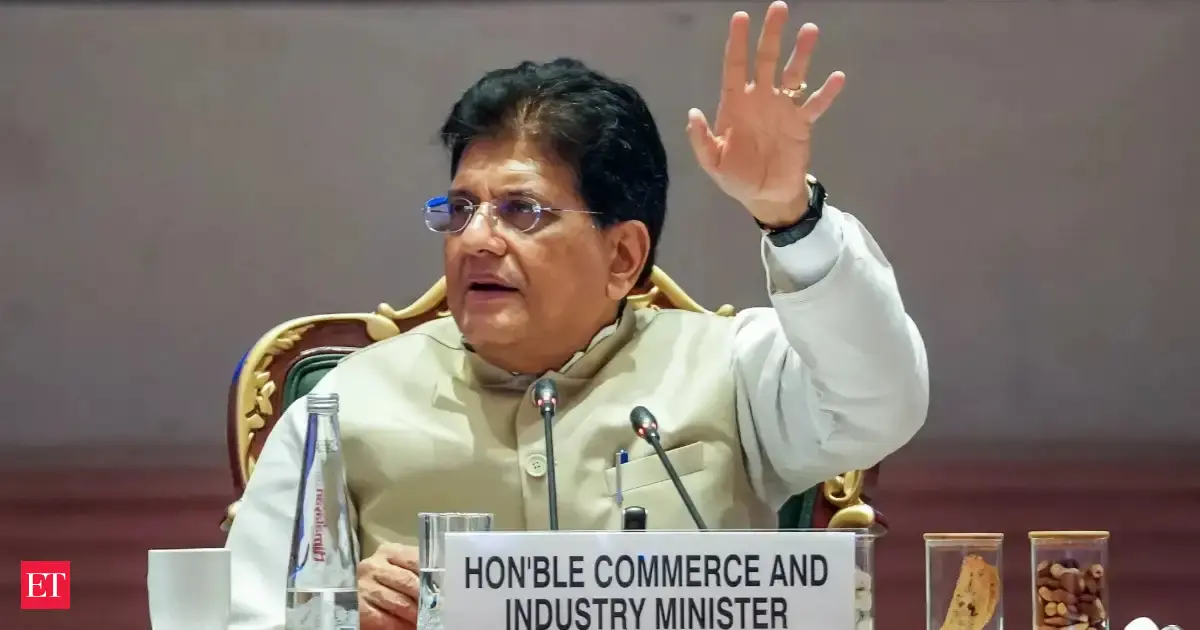
At two events of the healthcare and pharmaceutical industries, he said that domestic firms should bring technology partnerships, encourage joint ventures, and invite global innovators and large pharma companies to India.
“From BIS (Bureau of Indian Standards), we are willing to support 100% cost of the best testing equipment.
The government of India will fund the acquisition of testing equipment…demand from us, there is no proposal from you. And we’ll set up the most modern labs,” Goyal said. He also called for improving design, copyrights, patent laws, and the intellectual property right ecosystem so that internationally people come to India and enable it to harness its cost edge to emerge as a global hub of medical innovation. “We must develop a critical component ecosystem by strengthening our domestic capabilities with high quality. We must create shared testing infra facilities where these equipment can be tested, benchmarked to the best in the world, certified and demonstrated to global customers,” Goyal said, calling for bringing technology partnerships, joint ventures.
He called upon insurers and health-tech companies to build products and platforms that make the patient journey more seamless, and ensure timely reimbursements. He suggested industry co-design, co-develop licence wherever required and look for joint R&D centres with other countries, and train and certify caregivers and develop a skilled workforce capable of providing healthcare of international standards.

Encouraging more hospitals to publish honest and transparent treatment packages, Goyal said that hospitals must follow ethical practices and never attempt to cheat patients, as one wrong action can lead to loss of goodwill, business and credibility for India. He suggested local hospitals establish tie-ups with hospitals globally, and ensure that only the National Accreditation Board for Hospitals & Healthcare Providers-enabled, verified and panelled hospitals are allowed to treat patients coming from abroad.
He insisted that quality healthcare cannot be different for Indians and foreigners.
To attract foreign patients, he suggested creating a pool of interpreters for patients arriving from different countries and speaking different languages, so that they have greater confidence and communication between patients and the medical system becomes easier.