













![JMA – Ninja & Deep Jandu [Official MV] Kaptaan](https://i.ytimg.com/vi/-dsfIh319s0/maxresdefault.jpg "JMA – Ninja & Deep Jandu [Official MV] Kaptaan")



NEW DELHI:The stage is set for a Friday night blockbuster at the Asian Games that the entire hockey fraternity has been waiting for.
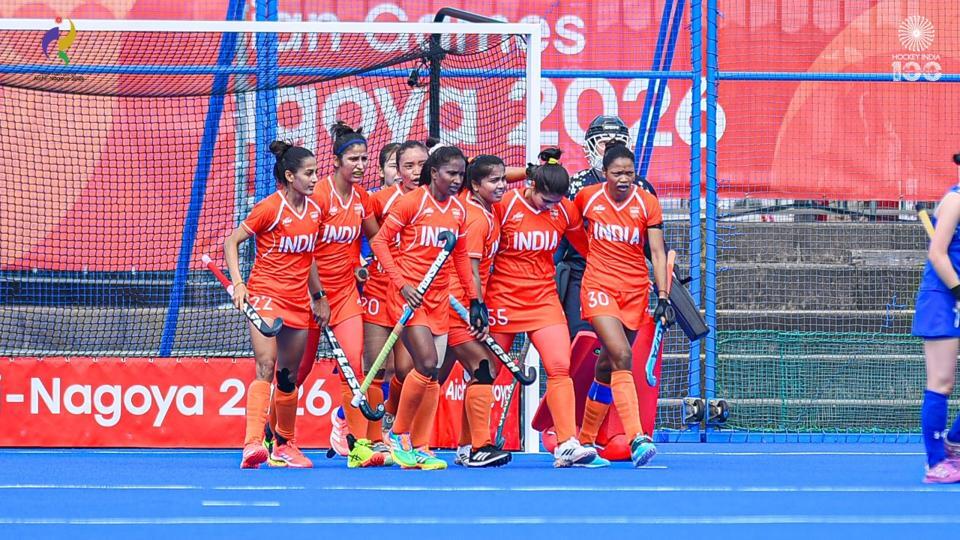
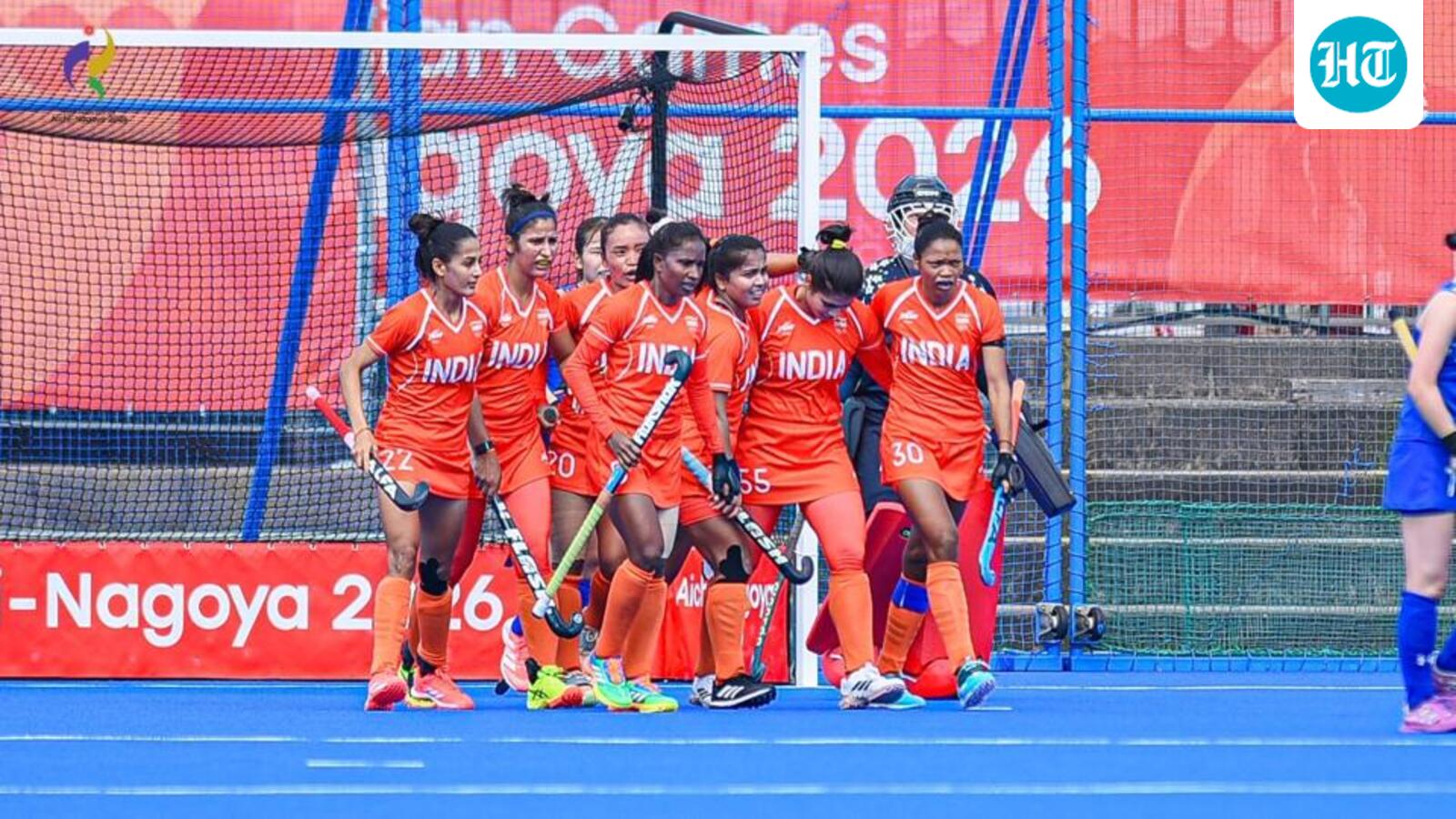
When India take the turf at the Gifu Prefectural Green Stadium against China in the women’s hockey final, it will be the culmination of a rivalry that has become the most compelling narrative in the continent.
Ever since India’s pulsating 2-2 draw at the World Cup in August against the Asian Games champions, this rematch has felt inevitable. Now, with a gold medal and a ticket to the 2028 Los Angeles Olympics on the line, an unbeaten and confident India will look to bring out their tactical best against the heavyweights of continental hockey.
Make no mistake, this China are a different beast compared to any other team India have faced until now at the Asian Games. After a spectacular silver medal finish at the 2024 Paris Olympics, China are operating at the peak of their powers.
They didn’t just reach the Olympics final, they pushed the seemingly invincible Netherlands to the brink, losing only in a heartbreaking penalty shootout.
Under the guidance of head coach Alyson Anna, the Australian hockey legend, China have built an aura of invincibility, pairing their traditional athletic endurance with an airtight, European-style, defensive structure.
On any given day, one might expect China to dictate terms. But India’s crucial draw against them at the World Cup seemed to have breached that psychological barrier while demonstrating their revival, making them believe victory is achievable.
That result proved to a catalyst for captain Salima Tete and her squad. It ignited a historic run in the Netherlands and Belgium where India hammered South Africa and held 2016 Olympic champions England to a 0-0 stalemate.
Aside from a hard-fought 0-2 defeat to the Dutch—their only loss of the campaign—India were impeccable. They held a top-tier Australia to another 0-0 draw before dispatching a powerhouse like Germany 3-1 in the playoff to finish fifth, their best World Cup result since the inaugural edition in 1974.
They have carried that momentum into the Asian Games. Cruising past early opponents, India have looked at the top of their game. Even when Japan in the group stage and South Korea in the semi-finals mounted some resistance, the Sjoerd Marijne-coached outfit simply shifted gears, showcasing a mentality to find a way through.
Friday’s final will be a tactical chess match between Dutch and Australian coaching minds who know the global game intimately, Marijne and Annan.
The Aussie coach has transformed the China’s defence into a fortress, organising her squad into a compact and highly disciplined block that chokes space and relentlessly forces turnovers. Breaking down this ‘Great Wall’ will require patience, precision and tactical smartness from India.
To successfully counter China, Marijne’s plan must revolve around bypassing the congested central channels. If India attempt to carry the ball through the middle, they will play into China’s pressing traps.
Instead, India must rely on rapid, lateral ball circulation across the backline to stretch the Chinese structure, and wait for the right moments to launch quick, attacks down the flanks. Using the baseline to penetrate the striking circle will be crucial to shake up the Chinese defence.
This is where captain Salima’s pace and spatial awareness become India’s assets. She will need to act as the primary disruptor, breaking the first line of Chinese press with quick transitions and driving runs. Her ability to transition from defence into attack quickly can catch the Chinese midfield before they can set off.
The Indian forwardline has been exceptional. They must continue to be clinical inside the attacking 25-yard area. Against a defence like China’s, manufacturing open-play goals will be difficult to say the least.
Hence, converting penalty corners (PC) could prove the ultimate difference-maker. This is where drag-flicker Deepika Sehrawat can make the difference. She has been in red-hot form, consistently firing with precision from both batteries, leading the scoring charts with 21 goals.
Her ability to disguise her release angles and generate power makes her one of India’s primary assets. If the Indian forwards can force foot fouls inside the circle, Deepika has the firepower to tilt the scoreboard.
The head-to-head record over the last five matches reads four wins for China and just one draw. On paper, China are the outright favourites.
The World Cup draw in August has changed the dynamic of this rivalry. It proved that India have the ability and belief to go toe-to-toe with the best.