












India and South Korea have come a long way since the establishment of their diplomatic ties. The official relationship of both countries is now half a century old as they continue to cooperate in various fields of culture, technology, business, defence, etc., making their connection more robust and dynamic. Both India and South Korea celebrate August 15 as Independence Day. India gained independence from the British in 1947 and Korea was liberated from Japanese rule in 1945. However, they could only establish a full diplomatic relation (ambassadorial level) in 1973, roughly 25 years after Independence. The relationship could not bloom well as their ties were mired in ideological and structural roadblocks.
Historically speaking, the ancient annals of Korea such as Samguk Yusa (Memorabilia of the Three Kingdoms) hint at a much older connection with India. It presents the story of Princess Heo Hwang-ok (Suriratna) of the Ayuta (Ayodhya) kingdom, who married King Suro of the Kaya kingdom, in Southeastern Korea. Although some historians believe that Ayuta may represent the Ayutthaya Kingdom of Thailand, there still exists research to prove the historical connection between India and Korea. “The tombs of King Kim Suro and Queen Heo are located in Gimhae city…enduring the symbols of Indian heritage such as stone carvings of pairs of fish on the doorframe,” mentions Ambassador Skand Ranjan Tayal in his book India and the Republic of Korea Engaged Democracies (2015) In 2022, UP Chief Minister Yogi Adityanath also inaugurated the Queen Heo Memorial Park during Deepavali celebrations in Ayodhya. The memorial portrays the journey of Princess Suriratna to become Queen Heo Hwang-ok and depicts the historical connection of both countries.
There is also a mutual love for each other’s culture. In September 2022, commenting on cultural exchange between India and South Korea (for a student-led magazine, Ytharth), Dr Sonu Trivedi, the former Director of Swami Vivekananda Cultural Centre, Embassy of India, Seoul, said, “Popular movies like Three Idiots, My Name is Khan, Tare Zameen Par, and Guzaarish have attracted many young Koreans” towards Bollywood. She also mentioned that the “soft power of both India and Korea in terms of Yoga, Buddhism, Bollywood, culture, cuisine, and K-wave… has deepened people-to-people ties and has bridged human connection.” On the Indian side, the astounding popularity of K-dramas and movies like Descendants of the Sun, Squid Game, Guardian: The Lonely and Great God, Train to Busan, and Parasite have helped promote Korean culture among Indians, leading to a rise of Korean language learners in India. As per a report by Netflix, the Indian viewership of K-dramas on Netflix increased more than 370% between 2019 and 2020.
Setting a milestone in their relationship, both countries are celebrating the 50th anniversary of India-South Korea diplomatic relations in 2023. Nonetheless, India and South Korea did not establish direct diplomatic engagements until the 1960s. Unlike contemporary times and despite a probable historical and cultural connection, both countries could not engage in trade or cultural links for nearly two decades after gaining Independence. Both countries have gone through colonialism. The commonalities in their experience of the freedom struggle should have brought them closer sooner. However, due to initial differences during the Cold War era between India and South Korea and structural reasons, both countries underwent a slow and challenging journey in establishing diplomatic ties.
The contrasting worldviews of Prime Minister Nehru and President Syngman Rhee initially hindered the development of meaningful relations between India and South Korea. Nonetheless, after the overthrow of the Rhee regime in April 1960, India established Consular Level diplomatic relations with South Korea in 1962 followed by Ambassador Level relations in 1973.
Dr. Sudhakar Vaddi, Assistant Professor, at the Centre for East Asian Studies, Jawaharlal Nehru University, talked about India’s involvement in international politics and the Korean War (1950-53). He mentioned, “India’s involvement in the Korean peninsula was not a sudden phenomenon. Both countries had been watching each other since their colonial times. For instance, Mahatma Gandhi’s principles of non-violence and truth encouraged many Koreans during their freedom struggle. Cho Man-Sik, known as the Gandhi of Korea, was also influenced by Gandhiji during his anti-Japanese struggle and self-strengthening movement.” Dr. Vaddi further elaborated, “During the Korean War, India opted for a neutral stance which offended the South Korean President Syngman Rhee.” He explained, “President Rhee was not happy with India’s position at the United Nations regarding the Korean issue. President Rhee saw India as a pro-communist nation and also objected to India’s recommendations on the Prisoners of War (POWs) issue.”
India played the role of peacemaker in the Korean peninsula and aimed to unify Korea with the consent of the Korean people. In 1964, Biswamohan Misra from Ravenshaw College (Cuttack), wrote in The Indian UN Policy during the Korean Crisis (1964), “The Korean issue was the first major international pre-occupation of India. The newly emergent Indian dominion, suffering from the evil effects of the Partition, could not have stood helplessly when Korea was divided and dragged to the vortex strategy of the Cold War.” Furthermore, Nehru’s vision of ‘Asianism’ i.e., Asians determining their fate without the interference of the Western nations played a significant role in engaging India with Korea. Thus, during the Korean War, the Indian troops arrived in Korea without any political interests. India was only responsible for medical aid, facilitation of PoWs, and cooperating for a peaceful solution.
However, due to India’s neutral position and closeness with the People’s Republic of China (PRC), President Rhee objected to India’s recommendations repeatedly. President Rhee was a pro-US, hard-core anti-communist leader. He wanted to unify Korea by force, which had even the US concerned. Due to India’s neutrality in the Korean War, President Rhee did not permit the Indian peace keeping force to enter and threatened to oppose their landing with armed forces. During a radio interview, President Rhee said, “We do not regard India as neutral. We regard India’s Premier Nehru more as a friend of communism than democracy. We will resist the landing of Communist or pro-Communist forces anywhere in our territory” (Indian Daily Mail, 7 June 1953).
India also criticised President Rhee for sabotaging the attempts to end the war. PM Nehru stated, “Support of any regime of President Syngman Rhee means support of the very thing the United Nations is against” (Indian Daily Mail, 13 June 1952). The Indian Congress party leaders blamed President Rhee’s attitude and the South Korean government for violating the terms of peace agreement and for demanding the continuation of the Korean War (Indian Daily Mail, 6 July 1953).
Due to Rhee’s attitude, India did not recognise the South Korean government but decided to cooperate on the unification of Korea. Tayal wrote in his book, “In 1950, India concluded that the recognition of the Republic of Korea (ROK) would merely involve India in a controversy…within the limits of a Cold War. India was also mindful of the fact that the recognition of Korea would further strain relations with Communist China.” India was the first non-communist country to recognise the PRC in 1950.
38th Parallel and opposing interests
The Korean War was set against the backdrop of the Cold War, where the US and the USSR clashed over spreading democracy or communism in a third country. Nevertheless, the seeds of division of the Korean peninsula were sown already in 1945, when the USA and the USSR chose the 38th parallel of latitude as a convenient borderline for their military occupation.
The US occupied southern Korea to promote democracy and the Soviet troops occupied the northern part to encourage the creation of a pro-soviet government. India, holding a neutral stance, was appointed as the Chairman of the United Nations Temporary Commission on Korea (UNTCOK) in 1948.
The UNTCOK was responsible for supervising and holding free elections and assisting in the withdrawal of occupying forces in Korea. The US wanted to hold an election in two separate zones of Korea under the supervision of external forces whereas the USSR expected an independent effort by Koreans after the withdrawal of foreign troops. However, India recommended for a single election under the supervision of the UNTCOK. In 1948, KPS Menon (Indian Chairman of the UNCTOK), clarified that India saw Korea as one and indivisible and stated that “our commission does not recognize the 38th Parallel.” But, India had to support the US resolution later.
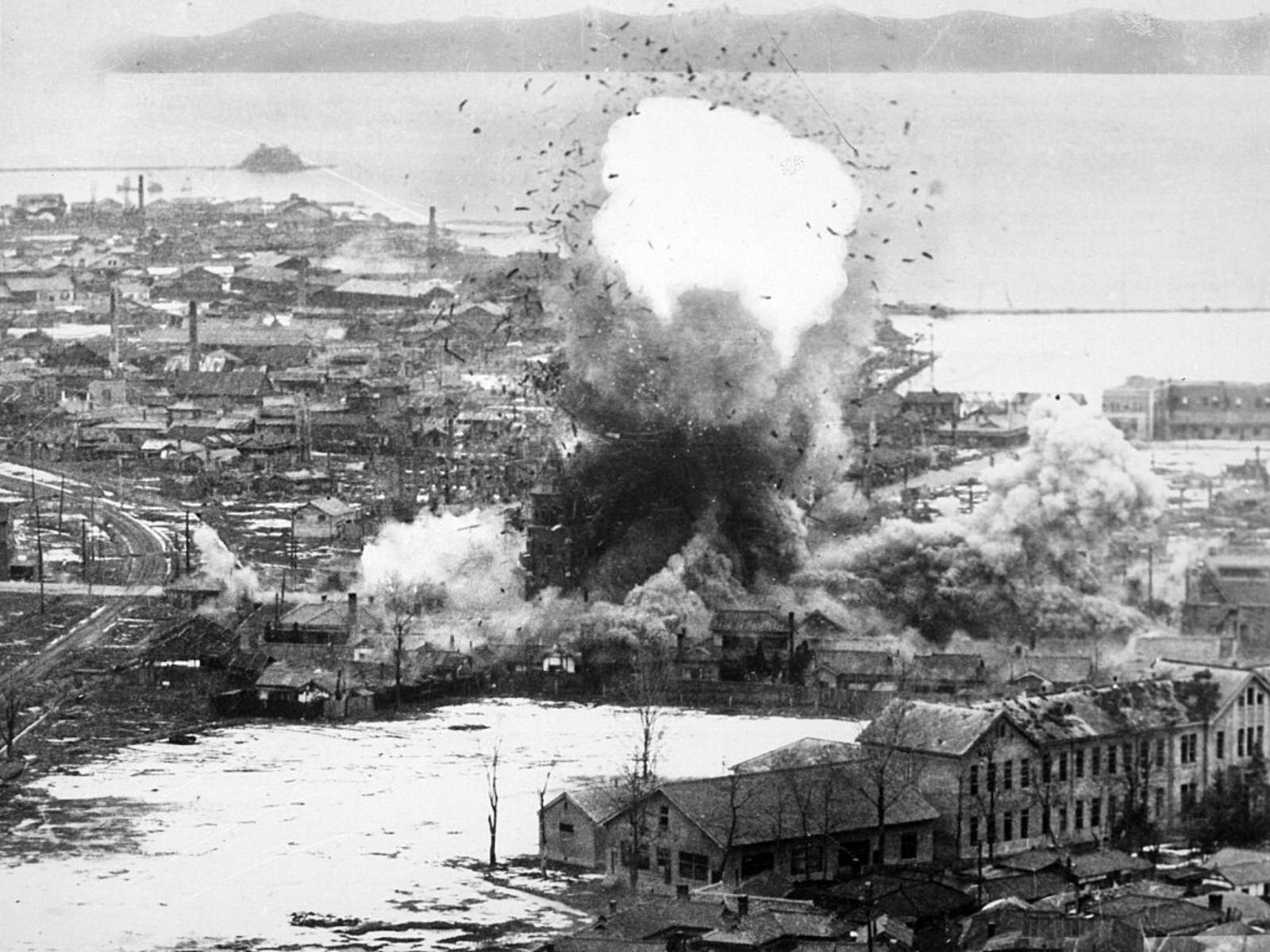 Bombing of Wonson in North Korea. The Korean War was fought between North Korea and South Korea between 1950 and 1953
Historian David W. Kim, an Associate Professor of Asian History at Kookmin University (Seoul) wrote in A South Asian Neutral Power in the UN: India’s Peacekeeping Mission on the Korean Peninsula (1947-1955) that, “The US proposal of separate election and recognition of the government in the southern part of Korea was approved by the Interim Committee without the agreement of the USSR and their bloc nations.”
As per Biswamohan Misra, India would have “preferred if the elected leader of South Korea held a discussion with the political leader of North Korea for an all-Korean government.” However, Jae-Suk Jung (then-PhD Scholar at Yonsei University, 2009) held in Portrait of Other and Self-portrait of the Newborn Republic Of Korea-focused on recognition of India (2009), that South Koreans did not like India’s suggestions. “Apart from believing that India had a pro-communist policy, many Koreans saw [India] as less civilised despite being an international leader for decolonisation.” The division of India and Pakistan in 1947 was perceived negatively by the Koreans. The Cold War background along with India’s proximity to the communist PRC intensified President Rhee’s distrust towards India.
PM Nehru and President Rhee had different views regarding the unification of Korea. In 1950, India voted in favour of Resolution 82, which mandated that North Korea should withdraw from the 38th Parallel – latitude 38° N that in East Asia roughly demarcates North Korea and South Korea. However, India abstained from voting for Resolution 83 which called on member states of the UN to give military assistance to South Korea. Nonetheless, India along with six other countries sent medical aid. According to Robert Barnes’ (Senior Lecturer in History at York St John University) “between the Blocs-India, the UN, and Ending the Korean War,” PM Nehru “adamantly opposed the crossing of the 38th Parallel and using force to achieve unification.” On the other hand, Misra held that “as per President Rhee, there was no 38th Parallel and he wanted Korea to be unified by the force of arms.” This statement was resented by PM Nehru.
“India did not have any diplomatic relations till the change of new government in South Korea due to President Sygnman Rhee’s attitude towards India,” stated Kuri Sravan Kumar, a PhD scholar in the Department of East Asian Studies at the University of Delhi. President Rhee did not like India’s approach regarding the repatriation of Prisoners of War (POWs). India chaired the Neutral Nations Repatriation Commission (NNRC) along with the Custodial Force of India (CFI) and others. But President Rhee saw the CFI as a threat to the anti-communist POWs. Kumar elaborated that the tension between President Rhee and PM Nehru continued even after the 1953 Armistice. “President Rhee objected to India’s participation in the 1954 Geneva Political Conference on the Korean issue and thus, India was not invited. Moreover, President Rhee’s attitude towards India on public platforms was not tolerated by Indian leaders, diplomats, and soldiers. In response, PM Nehru also expressed his concerns over President Rhee’s attitude in public meetings, which further froze the India -South Korea relations from 1954 to 1960.”
Overcoming the structural reasons and establishment of ties
In addition to the opposing stances of the Indian and South Korean leaders, there were some structural reasons which kept India and South Korea apart from each other till the 1960s.
After Independence, both nations were also occupied with their nation-building processes. Sandip Kumar Mishra, Associate Professor, at the Centre for East Asian Studies, Jawaharlal Nehru University elaborated on the causes of lukewarm relations between India and South Korea. “South Korea and India were structurally positioned differently. South Korea was a close ally of the US, while India was a leader of the Non-Aligned Movement (NAM). Furthermore, India favoured democratic socialism whereas South Korea was against all kinds of Left ideologies.”
Mishra further explained that the “different nature of economic models also obstructed the development of official relations. During the 1960s, South Korea pursued a strategy of economic growth driven by exports, actively seeking both natural resources and foreign markets. However, India’s socialist economic framework and closed market economy could not attract South Korea.” Thus, there was a lack of economic and political precedence for deeper relations between both the countries.
Nonetheless, Tayal stated in his book, “In the 1960s, India and South Korea perceived a common adversary in China”, which “kindled an interest in the two countries to take a fresh look at each other.” India had border issues with China and South Korea was an anti-communist nation. Anti-Chinese sentiments established a common platform for both nations.
Also, South Korea, under the authoritarian leadership of President Park Chung- Hee “was rapidly transforming into an industrial economy and Korean Chaebols (conglomerates) started to establish their global business empires.” This provided an incentive for South Korea to move closer to India. By the 1960s, India under PM Nehru gained expertise in formulating Five-Year Plans, which led Korean Brigadier-General Kim Jung Moo and his party to visit India to study the actual operation of planning and budgeting of the Government of India in 1962. Later, South Koreans visited India to study India’s Five-year plans and organisational set-up and functions of the Planning Commission.
India still wanted to treat the two Koreas equally. As mentioned by Tayal in his book India and the Republic of Korea Engaged Democracies, in 1961, “an agreement was reached by the Government of India with both ROK and DPRK to establish consular relations at the level of consul-general.”
In 1972, South Korea also gave up its Hallstein Doctrine, which represented South Korea as the sole representative of the entire Korean Peninsula. The two Koreas took steps to reduce their hostilities and released a Joint Statement for improving relations between both Koreas on July 4, 1972.
The smoothening of relations between North and South Korea along with Détente between the US and the USSR provided India with an opportunity to improve relations with both Koreas. On December 10, 1973, India decided to establish full diplomatic relations with North and South Korea.
During the period of 1975-80, India’s relations with South Korea did not progress much. Both India and South Korea were facing political turmoil due to events like the Emergency period (1975-77) under PM Indira Gandhi and the assassination of President Park Chung-hee in 1979. Nevertheless, in India and the Republic of Korea: A Growing Strategic Partnership, Tayal and Mishra wrote, “With the collapse of the Soviet Union and the end of the Cold War, India realigned its policy perspectives to converge US interests in Asia. This made it easier for both India and South Korea to forge common political and strategic positions on various issues of regional politics.” India initiated its ‘Look East’ policy in the early 1990s, under which PV Narasimha Rao became the first Indian Prime Minister to visit South Korea in 1993. In response to that, President Kim Young-sam visited India in 1996 and decided to establish a Joint Commission at the level of Foreign Ministers.
Strengthening of ties
Although India and South Korea had a gradual and challenging beginning, their progress in bilateral relations is commendable.
India and South Korea have found a common ground in security-related issues. India has condemned North Korea missile tests and has supported a peaceful reunification. Also, India’s relations with North Korea soured due to the North Korea-Pakistan nuclear nexus. According to M.S. Pratibha (Associate Fellow at the East Asia Centre in MP-IDSA), Pakistan purchased ‘Nodong’ missiles (rechristened as Ghauri Missiles) in exchange for nuclear-related technology in the 1990s. In 1999, India confiscated a North Korean ship ‘MV Ku Wol San’ at Kandla port, which was carrying missile components for Pakistan.
Similarly, India’s rising tensions with China and South Korea, getting caught in the US-China rivalry have established commonalities. China is one the biggest trading partners of South Korea. However, South Korea’s security alliance with the US and maintenance of US troops on South Korean soil have created a dilemma for South Korea. When South Korea tilts heavily towards the US, it faces economic ramifications from China (THAAD issue in 2017). To lessen its economic dependence on China, South Korea has deepened its ties with other regional players in Southeast Asia and South Asia via New Southern Policy. Both South Korea and India have come together to deter China’s growing influence. Indo-Pacific is one the regions, where both countries are cooperating along with the US. While South Korea is building partnerships in the Indo-Pacific, it cannot risk to label itself as anti-China. Before cooperating in the Indo-Pacific, both the countries need to also prioritise their national interests and thus take a balanced approach.
India-Korea relations acquired a new momentum in the mid-2000s. In India-South Korea Strategic Partnership: Towards a New Horizon, (2022) Jojin V. John listed four important characteristics of the relations. The characteristics included consolidation of political relations through frequent high-level visits, expansion of bilateral agenda beyond commercial and economic ties to include defence, security, science, and technology, deepening of economic relations, and recognition of the strategic value of the relationship. During this period, India and South Korea signed the CEPA (Comprehensive Economic Partnership Agreement) in 2009 and the Strategic Partnership Agreement in 2010. In 2014, India upgraded the Look East Policy into the Act East Policy, which later converged with South Korea’s New Southern Policy. The convergence provided both countries with opportunities to work closely in the post-pandemic era.
The bilateral relations have led to the opening of new avenues for India-South Korea collaboration. Both countries are bringing the Indian and Korean start-up ecosystems closer. To facilitate such cooperation, the Korea Trade-Investment Promotion Agency (KOTRA) and Invest India jointly agreed to launch the one-stop startup platform called ~[India-Korea Startup] Hub in 2018.
Most Read
South Africa vs Australia Highlights, World Cup 2023 Semi-Final: Australia to play the WC final against India after close shave against South Africa at Eden
Tiger 3 box office collection day 4: Salman Khan-starrer records 50% dip, earns Rs 169.5 cr in India
Also, major Korean conglomerates such as Samsung, LG, and Hyundai Motors have already penetrated significantly into the Indian market. For example, in 2018, Samsung opened the world’s largest mobile factory in Noida, Uttar Pradesh, which was inaugurated by Prime Minister Narendra Modi and Former South Korean President Moon Jae-in. The two countries are also strengthening their defence partnership.
In January 2023, the Indian Ministry of Defence began the procurement of 100 more K9-Vajra tracked, self-propelled howitzers. The howitzers are domestically produced by Larsen and Toubro (L&T), a Mumbai-based multinational conglomerate, which began manufacturing K9-Vajra after a technology transfer from South Korea’s Hanwha Corporation. Additionally, both countries are actively promoting educational exchanges. In India, esteemed institutions like JNU, Delhi University, and Jamia Millia Islamia provide courses on the Korean Language and Korean Studies. Similarly, South Korea’s Hankuk University of Foreign Studies and Busan University of Foreign Studies have departments dedicated to Indian Studies.
India and South Korea embarked on their diplomatic journey at a slow and strenuous pace. Both countries had to overcome historical misunderstandings, geopolitical challenges, and geographical distance. Although it took both of them about two decades after Independence to establish diplomatic ties, their current relationship reflects the feasibility of thriving in the dynamic and challenging international situation. To maintain the relationship, both countries need to increase awareness and build trust in each other through cooperation in various fields. At the G7 summit in May 2023, Prime Minister Narendra Modi and President Yoon Suk Yeol discussed various opportunities for working together in the fields of defence, IT, trade and investment. A mutual interest in building partnerships between hardware companies, the Artificial Intelligence Market, the 5G network, biotechnology, railways, robotics, cyber security, and sharing knowledge on science and technology can also be seen between the two.