


















![Asla – Watan Sahi [Official MV] Latest Punjabi Song – K Million Music](https://i.ytimg.com/vi/sCuLojys0n4/maxresdefault.jpg "Asla – Watan Sahi [Official MV] Latest Punjabi Song – K Million Music")

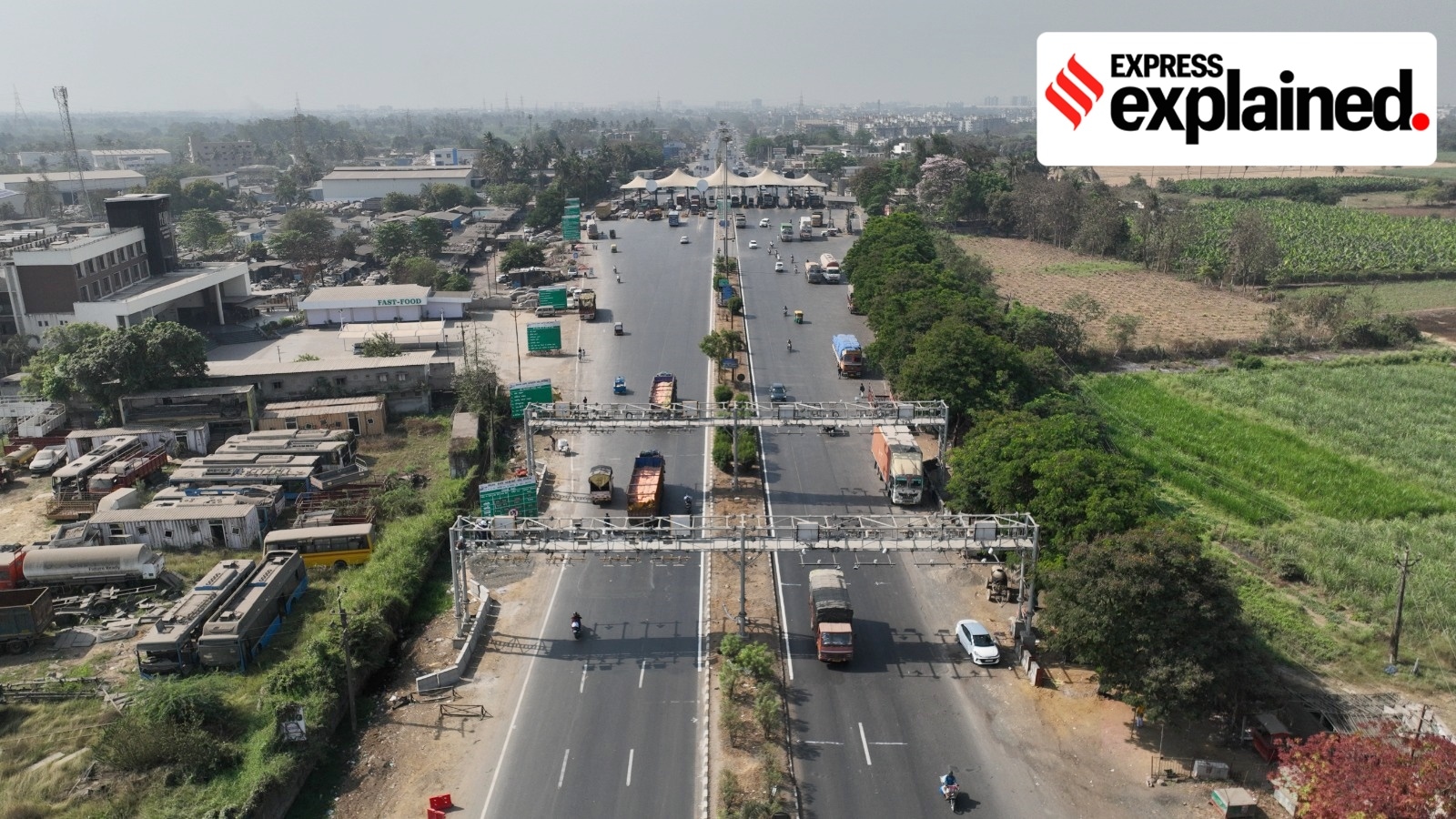
In a significant move, the National Highway Authority of India (NHAI) on Friday (May 1) operationalised India’s first Multi-Lane Free Flow (MLFF) barrier-less tolling system at the Choryasi toll plaza on the Surat–Bharuch section of NH-48 in Gujarat. Choryasi ranks among the top 10 toll plazas in the country in user fee collection.
This marks a major milestone in India’s electronic toll collection (ETC) infrastructure, which started in 2014. Currently, vehicles have to stop at the fee plaza to pay the user fee.
The MLFF system removes the need for boom barriers and vehicles to stop for toll collection. Instead, high-performance Radio Frequency Identification (RFID) readers and Automatic Number Plate Recognition (ANPR) cameras read the FASTag and Vehicle Registration Number (VRN).
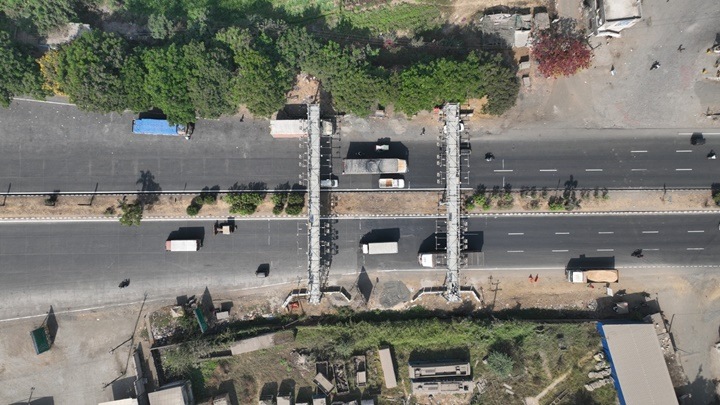 The Choryasi toll.
The new system is expected to reduce travel time, decongest highways (especially near toll plazas), improve fuel efficiency and lower vehicular emissions.
Implementation by ICICI
ICICI Bank has developed the Choryasi toll collection system. An agreement between Indian Highways Management Company Limited (IHMCL) — NHAI’s tolling implementation agency — and the bank was signed last year in August. A senior IHMCL official said that the government did not have to incur any expenditure on the project.
“The cost of the project is being met through the banks under the OpEx (operating expenditure) model, like a pay-as-you-go system. With this, the manpower will reduce, and a share of the toll will go to the banks against project expenditure,” said the official.
A few meters away from the old toll plaza, four large gantries or frame structures have been installed on both sides of the six-lane highway. Sixteen high-quality cameras have been installed.
Story continues below this ad
“This is the upgradation of the existing system. The normal RFID reader could fetch FASTag details at a vehicle speed of 10-12 kmph. Here, the reader is much more advanced and can capture details at a very fast speed,” said the official.
Road to MLFF
The NHAI took a series of decisions that created an enabling platform for the rollout of MLFF. This was done to create a robust legal framework so that commuters do not find loopholes to avoid toll charges.
One of the earliest decisions was mandating the use of High Security Registration Plates (HSRP). This was to ensure that specially designed ANPR cameras can read number plates. The other key decision was “One Vehicle, One FASTag”. It stopped the usage of a single FASTag for multiple vehicles or linking multiple FASTags to a particular vehicle.
The NHAI and Ministry of Road Transport and Highways (MoRTH) recently took two key decisions in the run-up to the implementation of MLFF in Choryasi.
Story continues below this ad
In March, MoRTH issued new National Highway Fee rules to deal with cases of unpaid user fees, meaning the vehicle passed the toll but did not pay. It says that in such cases, commuters will have to pay double the applicable toll amount at the respective toll plaza. However, if it is paid within 72 hours, only the original user fee will apply.
An e-notice will be issued with the vehicle details, the date and location of occurrence and the user fee payable. The rules also provide for a grievance redressal mechanism, where a vehicle owner/driver dissatisfied with the e-notice can challenge it within 72 hours. If the challenge is not disposed of within five days by the tolling agency, the claim for the unpaid user fee shall lapse.
The rules also paved the way for integrating the National Electronic Toll Collection system with the National Vehicle Registry (VAHAN) for enforcement measures and the realisation of unpaid user fees.
Apart from this, last month, NHAI issued a direction to all FASTag-issuing banks to immediately validate VRNs or license plate numbers linked to the FASTags they have issued. The agency also directed banks to blacklist FASTags found linked to incorrect or invalid VRNs.
Story continues below this ad
The direction was issued because, in the absence of human intervention in the toll deduction system in MLFF at the toll gate, a mismatch in the VRN linked to the FASTag could see commuters pass without paying the fee.
MLFF to come to other plazas
The IHMCL has awarded the MLFF contract for more toll plazas. These are Gharaunda on NH-44 in Haryana, Boariach on NH-48 in Gujarat; Daulatpura, Manoharpura and Shahjahanpur on NH-48 in Rajasthan; Mundaka on UER-II in Delhi; Nemili and Chenasamudram on NH-48 and Paranur on NH-45 in Tamil Nadu; Kasepalli, Amakathadu and Marur on NH-44 in Andhra Pradesh, Chalakwadi and Hiwargaon Pavsa on NH-50 in Maharashtra, and Badarpur Faridabad on NH-19 in Haryana. Further, bids have been invited for an additional 108 fee plazas.
A senior IHMCL official said that the government has planned to implement MLFF at over 200 toll plazas every year: “There are around 800 publicly funded toll plazas. Our priority is to first implement the system at these places. Now the tenders are also being awarded in bundles. All four-lane and above highways will have the MLFF system.”
According to the Economic Survey 2025-26, the MLFF is projected to be implemented across all four-lane and above national highways and expressways by March 2029. Currently, there are around 1,100 user fee plazas or toll plazas across the country, out of which over 450 toll plazas were constructed in the last five years.