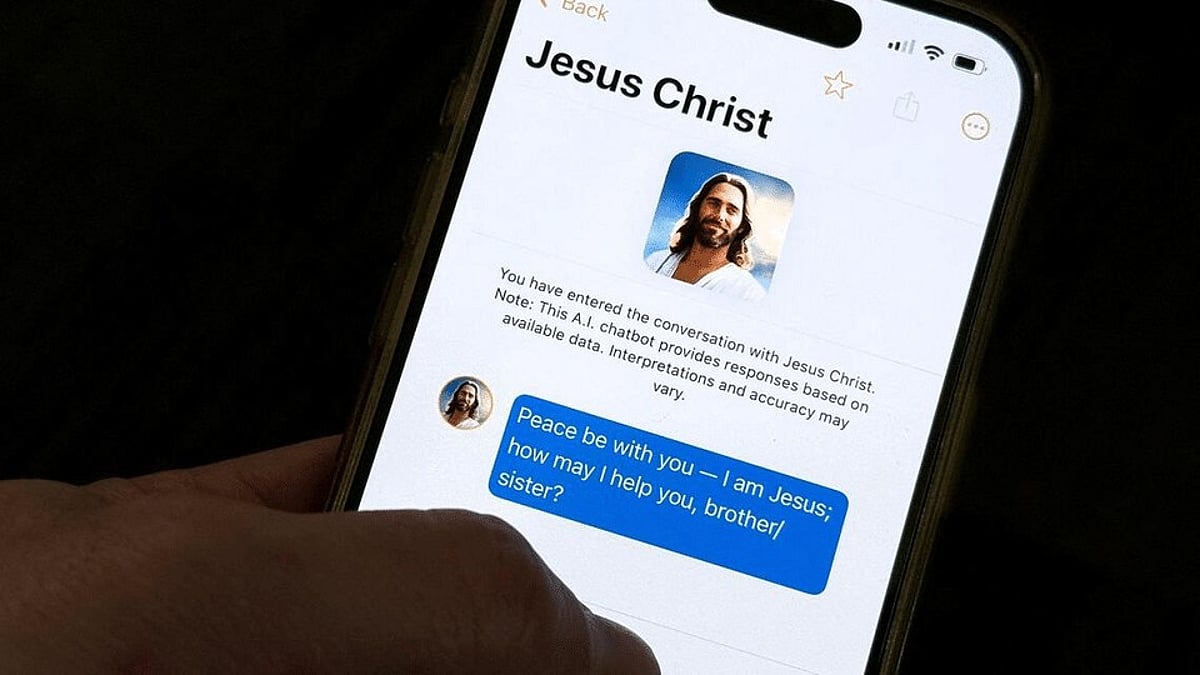
















Rabbi Gilah Langner said the halakhah — the collective body of religious laws derived from the Torah, the Jewish holy book — has many interpretations. Jews need other Jews, with their insights and perspective, to connect them to the tradition of their faith, she said.
“I don’t think you really get that from AI. It’s possible it would be very nuanced, but the emotional connection is missing,” Langner told AFP.
AI can make people feel “isolated and not in an organic connection to a living tradition,” she added.
For their part, Christian communities do not reject AI outright.
Peter said he had spoken to clergy members and they agreed that AI could be a tool to educate people.
Last year Pope Francis named Demis Hassabis, a co-founder of AI research lab Google DeepMind, to serve in the Vatican’s scientific academy.
And as much of society experiments with artificial intelligence, so does the clergy.
In November 2023, pastor Jay Cooper of the Violet Crown City Church in Austin, Texas, had an AI assistant deliver an entire sermon. He warned parishioners in advance.
“Some people freaked out, said we are now an AI church,” said Cooper. But, he added, the service lured some people who did not usually attend church, especially video-game buffs.
Cooper said he has considered other ways of integrating AI into his church but has not repeated the AI sermon.
“I’m glad we did it,” he said, “but it missed the heart and spirit of what we usually do.”