









![JMA – Ninja & Deep Jandu [Official MV] Kaptaan](https://i.ytimg.com/vi/-dsfIh319s0/maxresdefault.jpg "JMA – Ninja & Deep Jandu [Official MV] Kaptaan")



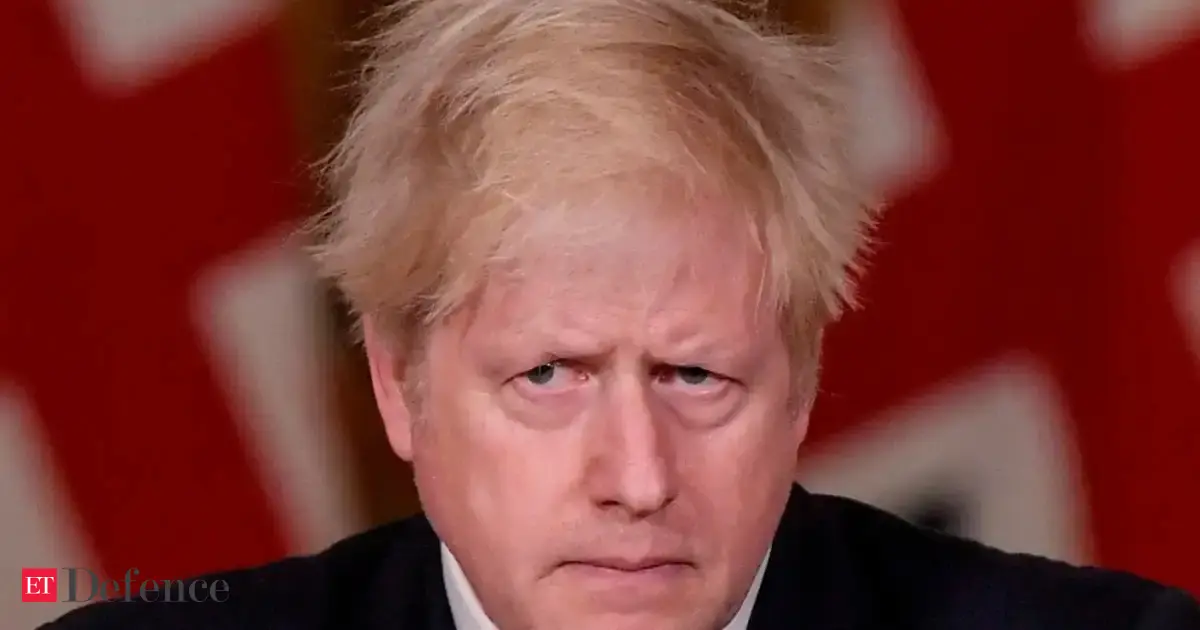
Speaking at the Economic Times World Leaders Forum, Johnson said the UK should have questioned US President Donald Trump, his planners and the Pentagon about the objectives of the war before the conflict escalated.
Also Read: Trump calls Strait of Hormuz ‘American territory’, warns Iran over nuclear arms
“Someone should have interrogated the United States, if not President Trump, his planners, the Pentagon. What is the objective of this war?” Johnson said.
He argued that Britain, as one of Washington’s closest allies, should have sought clarity on the US strategy and its plans in the event of Iran closing the Strait of Hormuz.

“And we are your number one ally, right? We’re your feeder circadians. We’re we’re your loyal hedge person,” Johnson said.
“What do you want us to do to help you achieve your your objectives? And what are those objectives? And by the way, what are you going to do if they close the Straits of Hormuz?”Johnson said Britain’s intelligence agencies had the expertise to identify the risks and potentially prevent the situation from reaching its current state.
“I really think we could have averted an obvious, obvious trap,” he said.
Johnson: UK should have warned government
The former British prime minister questioned why the UK’s security services had not briefed the government about the risks of the US military strategy.
“But why, why, why, why weren’t our security services briefing the government that the US is about to walk into a terrible trap?” he asked.
Johnson said the UK had made a mistake by failing to do more before the conflict escalated.
Also Read: Iran vows ‘devastating’ response as US threatens toughest ever economic hit
“I think the UK could have played a stronger role in trying to stop this mistake,” he said, adding that Britain now needed to “back up” after going down what he repeatedly described as a “cul-de-sac”.
His comments come amid continued uncertainty over the Strait of Hormuz, a crucial global energy route that has been at the centre of the US-Iran conflict. The waterway normally handles a significant share of global oil and LNG shipments, making any prolonged disruption a major concern for energy markets and countries such as India.
Johnson backs India-US-UK coordination
Johnson also made a direct pitch for closer coordination between India, the US and the UK, saying the three countries should work together to find a way out of the crisis.
“I think India is going through a very good period under very strong and stable leadership, and that’s a good thing,” he said.
He described the US as the world’s hegemonic power and said he would prefer Washington to retain that role over China.
“But the world needs leadership too, and for better or worse, America is the hegemon, and I frankly much rather have America as the hegemon than anybody else, apart from the UK.”
Johnson said India should be part of efforts to resolve the crisis, including finding ways to reopen the Strait of Hormuz, reduce oil prices and restore shipping.
“That’s what we’ve got to do, and I think probably that goes for India too,” he said.
He called for the US, UK and India to consult each other and coordinate their plans.
“But the way to do it is by sticking together, and that means the U.S., U.K., India consulting each other, concerting our plans, working out how to get the world out of this mess, get the price of oil down, get the ships moving,” Johnson said.
He also called for alternative logistical arrangements, including pipelines and other routes that could reduce dependence on the Strait of Hormuz.
“Look, we’ve got to have a logistical alternative for the Straits of Hormuz,” he said.
Johnson questions Iran regime-change strategy
Johnson said he supported efforts to prevent Iran from developing nuclear weapons and curb its support for militant groups, but criticised the strategy used to pursue regime change.
“I think in principle it’s a good idea to stop them getting a nuclear weapon,” he said.
He also said he supported efforts to stop Iran from supporting militant groups across the Middle East.
However, Johnson questioned whether military action from the air could achieve the goal of changing Iran’s government.
“It was totally deranged to think that you could change the regime in Iran from the air,” he said.
“Did we learn nothing from 2003?”
Johnson said any political change in Iran ultimately had to come from within the country.
“Change has got to come from within Iran,” he said, adding that the Iranian people “need to be encouraged to change”.
Johnson says Trump is consultative
Asked whether Trump was likely to change course and whether he was receptive to advice from allies, Johnson described the US president as highly consultative.
“Yeah. Look, I think he is. Yes, Donald Trump is a deeply consultative type of person,” Johnson said.
He recalled instances when Trump had personally called him to seek his opinion.
“I mean, honestly, I’ve been shocked. I’ve been lying comatose in hotels in Miami when he rang me up and asked my opinion on something,” he said.
Johnson said he believed Prime Minister Narendra Modi was similarly aware of Trump’s willingness to listen to people he considers friends.
“He loves to hear from his friends and to get advice,” Johnson said.
Johnson nevertheless said he regretted that Britain had not done more to influence the US strategy.
“I really, really regret it,” he said.