





• Latest
  • Trending
  • All
Trump Called Netanyahu ‘Crazy’. Is A New Rift Emerging In The US-Israel Alliance? | Explainers News

Trump Called Netanyahu ‘Crazy’. Is A New Rift Emerging In The US-Israel Alliance? | Explainers News

3 weeks ago
Air India flight briefly enters Pakistan airspace near Amritsar, probe on

Air India flight briefly enters Pakistan airspace near Amritsar, probe on

2 hours ago
Row in Bengal over proposal to drop eggs from mid-day meal scheme: ‘Imposing vegetarianism’

Row in Bengal over proposal to drop eggs from mid-day meal scheme: ‘Imposing vegetarianism’

3 hours ago
Indian Women’s Hockey: World Cup Prepares Team For Asian Games Olympic Qualifier

Indian Women’s Hockey: World Cup Prepares Team For Asian Games Olympic Qualifier

3 hours ago
4 dead in Batala land dispute as man kills 3, ends life

4 dead in Batala land dispute as man kills 3, ends life

4 hours ago
Union minister Ravneet Bittu apologises to Punjab SC panel, ordered to visit 4 shrines

Union minister Ravneet Bittu apologises to Punjab SC panel, ordered to visit 4 shrines

5 hours ago
Infrastructure And Intelligence: Indias Twin Global Engines, Says Adani Chairman

Infrastructure And Intelligence: Indias Twin Global Engines, Says Adani Chairman

5 hours ago
Udhayanidhi Stalin takes ‘divorce’ swipe at CM Vijay over farmers’ protest remarks: ‘A wife looking for a husband’

Udhayanidhi Stalin takes ‘divorce’ swipe at CM Vijay over farmers’ protest remarks: ‘A wife looking for a husband’

6 hours ago
UN Women Flags AI Gender Bias, Digital Violence, and Exclusion Risks

UN Women Flags AI Gender Bias, Digital Violence, and Exclusion Risks

7 hours ago
U.N. nuclear agency boss signals that inspectors will visit Iran’s nuclear sites

U.N. nuclear agency boss signals that inspectors will visit Iran’s nuclear sites

8 hours ago
Hackers Claim To Have 200,000 Files From Apple’s India Supplier, Tata Confirms Breach

Hackers Claim To Have 200,000 Files From Apple’s India Supplier, Tata Confirms Breach

9 hours ago
Indian Student Barred From US Flight In Amsterdam, Sent Back After F-1 Visa Was Revoked | World News

Indian Student Barred From US Flight In Amsterdam, Sent Back After F-1 Visa Was Revoked | World News

11 hours ago
Standoff resolved as Nihangs vacate Uttarakhand gurdwara

Standoff resolved as Nihangs vacate Uttarakhand gurdwara

12 hours ago
Wednesday, June 24, 2026
  • PRESS RELEASE
  • ADVERTISE
  • CONTACT
  • Game
India News Online
  • Home
  • News
    • India
    • Punjab
    • International
    • Entertainment
  • Hindi News
  • Politics
  • Health
  • Business
  • Sports
  • Technology
  • Lifestyle
  • Video
    • All
    • Hindi Songs
    • Punjabi Songs
    4×4 | Gulab Sidhu | Mandy Takhar | Latest Punjabi Songs 2026 | New Punjabi Songs 2026

    4×4 | Gulab Sidhu | Mandy Takhar | Latest Punjabi Songs 2026 | New Punjabi Songs 2026

    पियवा किसनवा 90’S Old Hindi Songs🥰 90s Love Song😍 Udit Narayan, Alka Yagnik, Kumar Sanu songs Hindi

    पियवा किसनवा 90’S Old Hindi Songs🥰 90s Love Song😍 Udit Narayan, Alka Yagnik, Kumar Sanu songs Hindi

    Sadabahar Hindi Songs Collection | 90s Hits Hindi Song |90s Evergreen Hindi Love Songs Audio Jukebox

    Sadabahar Hindi Songs Collection | 90s Hits Hindi Song |90s Evergreen Hindi Love Songs Audio Jukebox

    90s Bollywood Wedding Songs | Evergreen Bollywood Hits | Shadi Song | Sadabahar Hindi Songs Jukebox

    90s Bollywood Wedding Songs | Evergreen Bollywood Hits | Shadi Song | Sadabahar Hindi Songs Jukebox

    आज तो बाल बाल बच गया😄90’S Old Hindi Songs🥰 90s Love Song😍 Udit Narayan, Alka Yagnik, Kumar Sanu song

    आज तो बाल बाल बच गया😄90’S Old Hindi Songs🥰 90s Love Song😍 Udit Narayan, Alka Yagnik, Kumar Sanu song

    मां से होशियारी🙏90’S Old Hindi Songs🥺90s Love Song😍Udit Narayan, Alka Yagnik, Kumar Sanu songs Hindi

    मां से होशियारी🙏90’S Old Hindi Songs🥺90s Love Song😍Udit Narayan, Alka Yagnik, Kumar Sanu songs Hindi

    भाभी ने बचाई ननद की जान 😆 90’S Old Hindi Songs 🥺90s Love Song 😍Udit Narayan, Alka Yagnik, Kumar

    भाभी ने बचाई ननद की जान 😆 90’S Old Hindi Songs 🥺90s Love Song 😍Udit Narayan, Alka Yagnik, Kumar

    When Online Love Becomes Real💞Chinese mix Hindi Songs💞Cin Klip💞Chinese Drama💞Korean Mix Hindi Songs

    When Online Love Becomes Real💞Chinese mix Hindi Songs💞Cin Klip💞Chinese Drama💞Korean Mix Hindi Songs

    Cold Rude boy falling for cute girl 💕 korean mix hindi songs 💞 Chinese mix hindi songs

    Cold Rude boy falling for cute girl 💕 korean mix hindi songs 💞 Chinese mix hindi songs

  • Travel
  • Game
No Result
View All Result
India News
No Result
View All Result
Home News International

Trump Called Netanyahu ‘Crazy’. Is A New Rift Emerging In The US-Israel Alliance? | Explainers News

by India News Online Team
June 3, 2026
in International
0
Trump Called Netanyahu ‘Crazy’. Is A New Rift Emerging In The US-Israel Alliance? | Explainers News
Share on FacebookShare on TwitterShare on Email


Last Updated:June 03, 2026, 15:35 IST

Trump-Netanyahu relationship has become unpredictable despite their history together. Personal chemistry alone may no longer be sufficient to overcome growing strategic differences

font
new share icon

new whatsapp icon

Trump, however, appears increasingly focused on a broader regional strategy that extends beyond Israel’s immediate security concerns.

Trump, however, appears increasingly focused on a broader regional strategy that extends beyond Israel’s immediate security concerns.

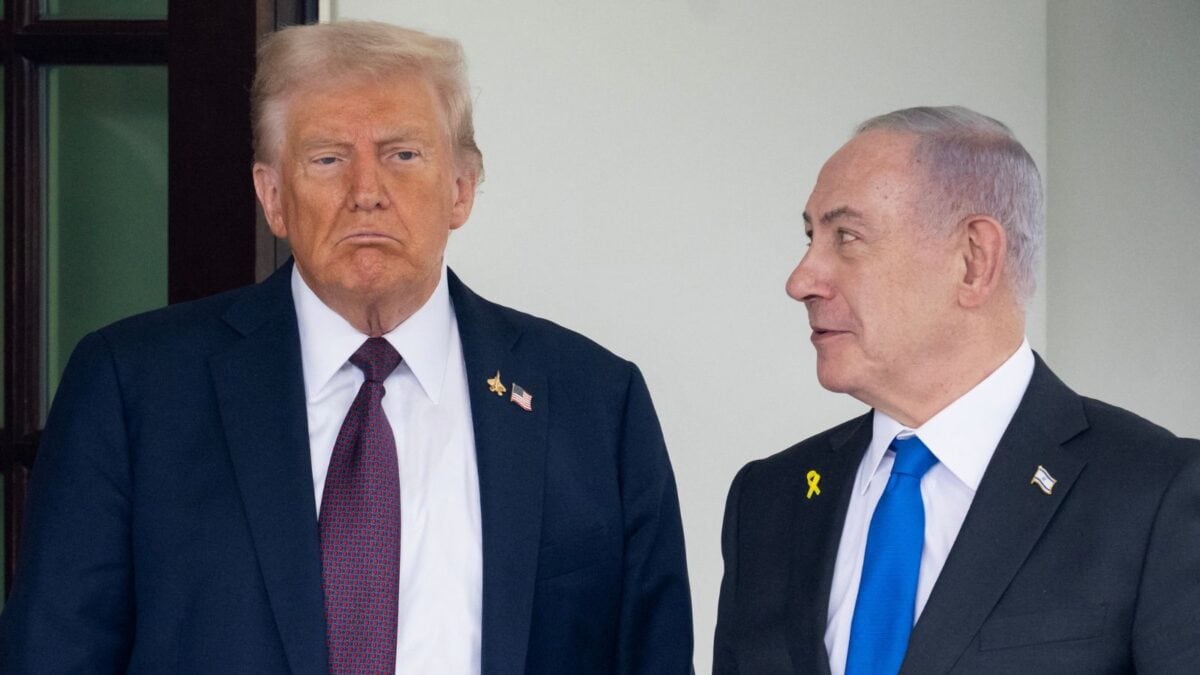
US President Donald Trump’s reported anger at Israeli Prime Minister Benjamin Netanyahu over a major military escalation in Lebanon and its potential damage to Washington’s ongoing negotiations with Iran underscores the increasingly shaky ties between the two allies.

Trump accused Netanyahu of being ungrateful and called him “crazy”. At one point during a 15-minute call with Netanyahu, Trump asked the Israeli PM, “What the f*** are you doing?”

The Islamic Revolutionary Guard Corps said in a statement that Iran “considers crossing the red lines in Lebanon and Gaza to mean direct war.”

The Trump-Netanyahu episode raises questions about whether the relationship between the two leaders is entering a more difficult phase, and whether a widening gap between the US-Israeli strategic priorities could reshape the future of the alliance.

What Happened Between Trump And Netanyahu?

The latest tensions emerged after Israeli military operations in Lebanon raised fears of a wider regional conflict. According to reports, Trump expressed frustration with Netanyahu after Israeli actions threatened to escalate fighting at a time when Washington was attempting to prevent another major war in the Middle East.

ABC News reported that Trump was so angered by the developments that he personally intervened to prevent further escalation, reflecting growing concern within the White House about the possibility of a broader conflict.

Netanyahu later released a statement after the Monday’s call. “I spoke with President Trump this evening and told him that if Hezbollah does not stop attacking our cities and citizens, Israel will attack terror targets in Beirut,” he said. “Our position remains the same. At the same time, the IDF will continue to operate as planned in southern Lebanon,” Netanyahu stressed.

The episode was significant because it publicly highlighted disagreements between two leaders often portrayed as close political allies.

Israel’s Channel 12 said there was a misunderstanding between the two leaders: “Trump felt Netanyahu implied the war was continuing at full intensity, while Netanyahu felt Trump implied a total ceasefire,” wrote Amit Segal, the channel’s chief political analyst, citing a close aide to Netanyahu, as quoted by Guardian.

“There was a little glitch today, but I turned that one around very quickly, as you probably noticed earlier,” Trump later told ABC News.

Since the outbreak of the Gaza war in October 2023, fears have persisted that fighting could expand beyond Israel and Hamas to include Hezbollah in Lebanon and potentially Iran itself.

Such a conflict would be far more dangerous than previous regional confrontations. Hezbollah possesses an extensive missile arsenal, while Iran remains the most powerful adversary Israel faces in the region. For Washington, preventing that scenario has become a strategic priority.

Why Is Trump Confronting Netanyahu?

The disagreement appears to stem from differing priorities rather than a breakdown in the relationship itself.

Netanyahu’s government continues to view Iran and its network of regional allies as the primary threat to Israel’s security. From Jerusalem’s perspective, military pressure remains a necessary tool for deterrence.

Trump, however, appears increasingly focused on a broader regional strategy that extends beyond Israel’s immediate security concerns.

According to NPR, the Trump-Netanyahu relationship has always been more complicated than it appears publicly. The two leaders have worked together closely for years and share many political objectives. Trump recognised Jerusalem as Israel’s capital during his first term and brokered the Abraham Accords, which normalised relations between Israel and several Arab states.

Yet the relationship has also experienced moments of tension. Trump has previously criticised Netanyahu when he believed Israeli actions conflicted with American interests or political goals.

The latest dispute suggests that Washington may increasingly view regional stability as equally important as supporting Israeli military objectives.

According to NPR, when the war began, both Trump and Netanyahu wanted Iran’s Islamic government toppled and its nuclear programme completely dismantled. “But now Trump is clearly focused on a deal, one that would involve a lot of compromises… it would leave the regime in place. He still opposes Iran’s nuclear programme but appears willing to negotiate that after the war ends.”

Is This A Temporary Disagreement Or A Deeper Shift?

Most analysts believe that the US-Israel alliance could be under threat. The US remains Israel’s largest military partner and diplomatic backer. American military aid, intelligence cooperation and political support continue to form the foundation of Israel’s security architecture.

However, the current tensions may signal Washington’s willingness to place limits on Israeli military actions when broader American interests are at stake.

According to analysts cited by France 24, the Trump-Netanyahu relationship has become increasingly unpredictable despite the leaders’ long history together. Personal chemistry alone may no longer be sufficient to overcome growing strategic differences.

A pew survey published on April 7 found that 60% of Americans hold an unfavourable view of Israel, up from 53% just a year earlier. Only 37% said they viewed Israel favourably. Even more troubling is the trajectory. Since 2022, favourable views of Israel have fallen by roughly 20 points.

The survey also found out that roughly 70% of respondents under the age of 50 were not in the favour of Israel.

Another poll by Gallup showed a similar trend right before the war broke out in late February. For the first time in 25 years of polling, more Americans said they sympathised with the Palestinians than with the Israelis.

The key issue is that the US and Israel do not always define success in the same way.

Israel’s leadership often prioritises immediate security threats and military deterrence. Washington, by contrast, must balance Israel’s security concerns against a much wider set of interests that include energy markets, regional alliances, relations with Gulf states and global economic stability. As those interests diverge, friction becomes more likely.

How Has Netanyahu’s Relations Been With US Presidents?

Netanyahu’s relationship with US presidents has often been turbulent despite the strength of the US-Israel alliance. Since first becoming prime minister in 1996, he has worked with five US presidents and frequently clashed with them over key policy issues.

His difficult relationship with then-President Bill Clinton became evident early on. After their first meeting in 1996, Clinton reportedly remarked, “Who’s the f***ing superpower here?”, reflecting frustration with Netanyahu’s approach.

Netanyahu also had strained ties with Barack Obama, largely over Iran. The Israeli leader strongly opposed the 2015 Iran nuclear deal and took the extraordinary step of addressing the US Congress to lobby against it. Invited by Republican leaders, Netanyahu used the speech to criticise the agreement, deepening political divisions in Washington. Many Democrats viewed the move as interference in US domestic politics. Then-Vice President Joe Biden and dozens of lawmakers skipped the address.

Although Biden and Netanyahu have known each other for decades, their relationship has often been marked by mistrust, with Biden publicly questioning Netanyahu’s intentions at times.

Donald Trump, meanwhile, aligned closely with Netanyahu on Iran. Trump made opposition to the nuclear deal a central campaign issue, withdrew the US from the agreement in 2018 and remains a vocal critic of it. Even so, recent disagreements over regional conflicts suggest that personal ties do not always translate into policy alignment.

What The New Israeli-US Relations Could Mean For The World?

Without Israeli alignment, US Middle East policy could pivot. Washington pursues direct, independent negotiations with regional powers like Iran, as seen in the push for Straits of Hormuz stability and truces with Hezbollah. By decoupling its strategy from Jerusalem, the US prioritises its own economic recovery and the prevention of broader regional escalation.

Israel faces immediate diplomatic pressure and growing international isolation. Deprived of the US diplomatic shield, the Israeli government struggles to manage multiple open conflict fronts in Gaza, Lebanon, and Iran. This loss of unquestioned American backing emboldens international bodies and European nations to press harder for strict ceasefire conditions and long-term peace frameworks.

The rift heavily influences Israeli domestic politics, leaving the country deeply polarised regarding its reliance on Washington. Political challengers argue that allowing the US to dictate national security reduces Israel to a “client state”, while others point to the international fallout as a failure of Netanyahu’s governance. This pressure greatly accelerates calls for new elections and an entirely new government strategy.

Regional players like Saudi Arabia and the UAE no longer require an American-Israeli security consensus for cooperation. Instead, they pursue independent economic and diplomatic de-escalation strategies. This creates a newly fragmented security environment where Gulf nations manage ties with both Washington and Tehran directly, without having to navigate a US-Israeli bloc.

For India, the most immediate concern is energy security. India imports more than 85% of its crude oil requirements, with a substantial portion coming from West Asia. Any escalation involving Iran, Israel or Lebanon could push global oil prices higher, increasing India’s import bill and potentially fuelling domestic inflation.

India also has a large diaspora spread across Gulf countries and the wider Middle East. Its long-term geopolitical interests are tied to regional stability. New Delhi has invested in partnerships with Israel, the UAE, Saudi Arabia and other regional powers. Escalating conflict would complicate these relationships and potentially slow connectivity initiatives that are central to India’s economic ambitions.

Handpicked stories, in your inbox

A newsletter with the best of our journalism

About the Author

Shilpy Bisht

Shilpy Bisht

Shilpy Bisht is a News Editor at News18, where she leads the English app operations. She writes on world affairs, health, AI, career, business, and issues affecting women and children. A former print …Read More

News explainers Trump Called Netanyahu ‘Crazy’. Is A New Rift Emerging In The US-Israel Alliance?
Disclaimer: Comments reflect users’ views, not News18’s. Please keep discussions respectful and constructive. Abusive, defamatory, or illegal comments will be removed. News18 may disable any comment at its discretion. By posting, you agree to our Terms of Use and Privacy Policy.

Trump accused Netanyahu of being ungrateful and called him “crazy”. At one point during a 15-minute call with Netanyahu, Trump asked the Israeli PM, “What the f*** are you doing?”

The Islamic Revolutionary Guard Corps said in a statement that Iran “considers crossing the red lines in Lebanon and Gaza to mean direct war.”

The Trump-Netanyahu episode raises questions about whether the relationship between the two leaders is entering a more difficult phase, and whether a widening gap between the US-Israeli strategic priorities could reshape the future of the alliance.

What Happened Between Trump And Netanyahu?

The latest tensions emerged after Israeli military operations in Lebanon raised fears of a wider regional conflict. According to reports, Trump expressed frustration with Netanyahu after Israeli actions threatened to escalate fighting at a time when Washington was attempting to prevent another major war in the Middle East.

ABC News reported that Trump was so angered by the developments that he personally intervened to prevent further escalation, reflecting growing concern within the White House about the possibility of a broader conflict.

Netanyahu later released a statement after the Monday’s call. “I spoke with President Trump this evening and told him that if Hezbollah does not stop attacking our cities and citizens, Israel will attack terror targets in Beirut,” he said. “Our position remains the same. At the same time, the IDF will continue to operate as planned in southern Lebanon,” Netanyahu stressed.

The episode was significant because it publicly highlighted disagreements between two leaders often portrayed as close political allies.

Israel’s Channel 12 said there was a misunderstanding between the two leaders: “Trump felt Netanyahu implied the war was continuing at full intensity, while Netanyahu felt Trump implied a total ceasefire,” wrote Amit Segal, the channel’s chief political analyst, citing a close aide to Netanyahu, as quoted by Guardian.

“There was a little glitch today, but I turned that one around very quickly, as you probably noticed earlier,” Trump later told ABC News.

Since the outbreak of the Gaza war in October 2023, fears have persisted that fighting could expand beyond Israel and Hamas to include Hezbollah in Lebanon and potentially Iran itself.

Such a conflict would be far more dangerous than previous regional confrontations. Hezbollah possesses an extensive missile arsenal, while Iran remains the most powerful adversary Israel faces in the region. For Washington, preventing that scenario has become a strategic priority.

Why Is Trump Confronting Netanyahu?

The disagreement appears to stem from differing priorities rather than a breakdown in the relationship itself.

Netanyahu’s government continues to view Iran and its network of regional allies as the primary threat to Israel’s security. From Jerusalem’s perspective, military pressure remains a necessary tool for deterrence.

Trump, however, appears increasingly focused on a broader regional strategy that extends beyond Israel’s immediate security concerns.

According to NPR, the Trump-Netanyahu relationship has always been more complicated than it appears publicly. The two leaders have worked together closely for years and share many political objectives. Trump recognised Jerusalem as Israel’s capital during his first term and brokered the Abraham Accords, which normalised relations between Israel and several Arab states.

Yet the relationship has also experienced moments of tension. Trump has previously criticised Netanyahu when he believed Israeli actions conflicted with American interests or political goals.

The latest dispute suggests that Washington may increasingly view regional stability as equally important as supporting Israeli military objectives.

According to NPR, when the war began, both Trump and Netanyahu wanted Iran’s Islamic government toppled and its nuclear programme completely dismantled. “But now Trump is clearly focused on a deal, one that would involve a lot of compromises… it would leave the regime in place. He still opposes Iran’s nuclear programme but appears willing to negotiate that after the war ends.”

Is This A Temporary Disagreement Or A Deeper Shift?

Most analysts believe that the US-Israel alliance could be under threat. The US remains Israel’s largest military partner and diplomatic backer. American military aid, intelligence cooperation and political support continue to form the foundation of Israel’s security architecture.

However, the current tensions may signal Washington’s willingness to place limits on Israeli military actions when broader American interests are at stake.

According to analysts cited by France 24, the Trump-Netanyahu relationship has become increasingly unpredictable despite the leaders’ long history together. Personal chemistry alone may no longer be sufficient to overcome growing strategic differences.

A pew survey published on April 7 found that 60% of Americans hold an unfavourable view of Israel, up from 53% just a year earlier. Only 37% said they viewed Israel favourably. Even more troubling is the trajectory. Since 2022, favourable views of Israel have fallen by roughly 20 points.

The survey also found out that roughly 70% of respondents under the age of 50 were not in the favour of Israel.

Another poll by Gallup showed a similar trend right before the war broke out in late February. For the first time in 25 years of polling, more Americans said they sympathised with the Palestinians than with the Israelis.

The key issue is that the US and Israel do not always define success in the same way.

Israel’s leadership often prioritises immediate security threats and military deterrence. Washington, by contrast, must balance Israel’s security concerns against a much wider set of interests that include energy markets, regional alliances, relations with Gulf states and global economic stability. As those interests diverge, friction becomes more likely.

How Has Netanyahu’s Relations Been With US Presidents?

Netanyahu’s relationship with US presidents has often been turbulent despite the strength of the US-Israel alliance. Since first becoming prime minister in 1996, he has worked with five US presidents and frequently clashed with them over key policy issues.

His difficult relationship with then-President Bill Clinton became evident early on. After their first meeting in 1996, Clinton reportedly remarked, “Who’s the f***ing superpower here?”, reflecting frustration with Netanyahu’s approach.

Netanyahu also had strained ties with Barack Obama, largely over Iran. The Israeli leader strongly opposed the 2015 Iran nuclear deal and took the extraordinary step of addressing the US Congress to lobby against it. Invited by Republican leaders, Netanyahu used the speech to criticise the agreement, deepening political divisions in Washington. Many Democrats viewed the move as interference in US domestic politics. Then-Vice President Joe Biden and dozens of lawmakers skipped the address.

Although Biden and Netanyahu have known each other for decades, their relationship has often been marked by mistrust, with Biden publicly questioning Netanyahu’s intentions at times.

Donald Trump, meanwhile, aligned closely with Netanyahu on Iran. Trump made opposition to the nuclear deal a central campaign issue, withdrew the US from the agreement in 2018 and remains a vocal critic of it. Even so, recent disagreements over regional conflicts suggest that personal ties do not always translate into policy alignment.

What The New Israeli-US Relations Could Mean For The World?

Without Israeli alignment, US Middle East policy could pivot. Washington pursues direct, independent negotiations with regional powers like Iran, as seen in the push for Straits of Hormuz stability and truces with Hezbollah. By decoupling its strategy from Jerusalem, the US prioritises its own economic recovery and the prevention of broader regional escalation.

Israel faces immediate diplomatic pressure and growing international isolation. Deprived of the US diplomatic shield, the Israeli government struggles to manage multiple open conflict fronts in Gaza, Lebanon, and Iran. This loss of unquestioned American backing emboldens international bodies and European nations to press harder for strict ceasefire conditions and long-term peace frameworks.

The rift heavily influences Israeli domestic politics, leaving the country deeply polarised regarding its reliance on Washington. Political challengers argue that allowing the US to dictate national security reduces Israel to a “client state”, while others point to the international fallout as a failure of Netanyahu’s governance. This pressure greatly accelerates calls for new elections and an entirely new government strategy.

Regional players like Saudi Arabia and the UAE no longer require an American-Israeli security consensus for cooperation. Instead, they pursue independent economic and diplomatic de-escalation strategies. This creates a newly fragmented security environment where Gulf nations manage ties with both Washington and Tehran directly, without having to navigate a US-Israeli bloc.

For India, the most immediate concern is energy security. India imports more than 85% of its crude oil requirements, with a substantial portion coming from West Asia. Any escalation involving Iran, Israel or Lebanon could push global oil prices higher, increasing India’s import bill and potentially fuelling domestic inflation.

India also has a large diaspora spread across Gulf countries and the wider Middle East. Its long-term geopolitical interests are tied to regional stability. New Delhi has invested in partnerships with Israel, the UAE, Saudi Arabia and other regional powers. Escalating conflict would complicate these relationships and potentially slow connectivity initiatives that are central to India’s economic ambitions.

img

Stay Ahead, Read Faster

Scan the QR code to download the News18 app and enjoy a seamless news experience anytime, anywhere.

QR Code

login


Source link

Tags: AlliancecalledCrazyEmergingExplainersNetanyahuNewsRiftTrumpUSIsrael
Share198Tweet124Send

Related Posts

Row in Bengal over proposal to drop eggs from mid-day meal scheme: ‘Imposing vegetarianism’
International

Row in Bengal over proposal to drop eggs from mid-day meal scheme: ‘Imposing vegetarianism’

June 24, 2026
U.N. nuclear agency boss signals that inspectors will visit Iran’s nuclear sites
International

U.N. nuclear agency boss signals that inspectors will visit Iran’s nuclear sites

June 24, 2026
Indian Student Barred From US Flight In Amsterdam, Sent Back After F-1 Visa Was Revoked | World News
International

Indian Student Barred From US Flight In Amsterdam, Sent Back After F-1 Visa Was Revoked | World News

June 24, 2026
stoic thought of the day: Stoic Thought of the Day: ‘It is in no man’s power to have whatever he wants…’- thought-provoking lessons on contentment, resilience, inner peace, and stoic wisdom by the Stoic philosopher
International

stoic thought of the day: Stoic Thought of the Day: ‘It is in no man’s power to have whatever he wants…’- thought-provoking lessons on contentment, resilience, inner peace, and stoic wisdom by the Stoic philosopher

June 23, 2026
Load More
  • Trending
  • Comments
  • Latest
9 Festivals to Celebratein August in India

9 Festivals to Celebratein August in India

August 8, 2025
Corruption cases against govt officials: SC bats for striking balance | Latest News India

Corruption cases against govt officials: SC bats for striking balance | Latest News India

August 5, 2025
Guru Randhawa – SIRRA ( Official Video )

Guru Randhawa – SIRRA ( Official Video )

July 1, 2025
Baharon Phool Barsao – Suraj – Rajendra Kumar, Vyjayanthimala – Old Hindi Songs

Baharon Phool Barsao – Suraj – Rajendra Kumar, Vyjayanthimala – Old Hindi Songs

0
Phool Maangu Na Bahaar Maangu – Video Song | Raja | Madhuri Dixit & Sanjay Kapoor

Phool Maangu Na Bahaar Maangu – Video Song | Raja | Madhuri Dixit & Sanjay Kapoor

0
Dil Ka Rishta Song – Aishwarya Rai,Arjun Rampal, Alka Yagnik,Udit Narayan,Kumar Sanu, Nadeem-Shravan

Dil Ka Rishta Song – Aishwarya Rai,Arjun Rampal, Alka Yagnik,Udit Narayan,Kumar Sanu, Nadeem-Shravan

0
Air India flight briefly enters Pakistan airspace near Amritsar, probe on

Air India flight briefly enters Pakistan airspace near Amritsar, probe on

June 24, 2026
Row in Bengal over proposal to drop eggs from mid-day meal scheme: ‘Imposing vegetarianism’

Row in Bengal over proposal to drop eggs from mid-day meal scheme: ‘Imposing vegetarianism’

June 24, 2026
Indian Women’s Hockey: World Cup Prepares Team For Asian Games Olympic Qualifier

Indian Women’s Hockey: World Cup Prepares Team For Asian Games Olympic Qualifier

June 24, 2026
India News Online

24x7 Online News From India
India News Online is your news, entertainment, music fashion website. We provide you with the latest breaking news and videos straight from the entertainment industry.

Categories

  • Business
  • Entertainment
  • Health
  • Hindi News
  • Hindi Songs
  • India
  • International
  • Lifestyle
  • Panjab
  • Politics
  • Punjabi Songs
  • Sports
  • Technology
  • Travel
  • Uncategorized
No Result
View All Result

Recent Posts

  • Air India flight briefly enters Pakistan airspace near Amritsar, probe on
  • Row in Bengal over proposal to drop eggs from mid-day meal scheme: ‘Imposing vegetarianism’
  • Indian Women’s Hockey: World Cup Prepares Team For Asian Games Olympic Qualifier
  • Home
  • Disclaimer
  • DMCA
  • Privacy Policy
  • Cookie Privacy Policy
  • Terms and Conditions
  • Contact

Copyright © 2021 - India News Online.

No Result
View All Result
  • Home
  • News
    • India
    • Punjab
    • International
    • Entertainment
  • Hindi News
  • Politics
  • Health
  • Business
  • Sports
  • Technology
  • Lifestyle
  • Video
  • Travel
  • Game

Copyright © 2021 - India News Online.