















Tata Group’s retail arm Trent, encompassing popular brands like Westside and Zudio, is poised for significant expansion, with chairman Noel N Tata expressing strong confidence in achieving a ten-fold revenue milestone and venturing into international markets.
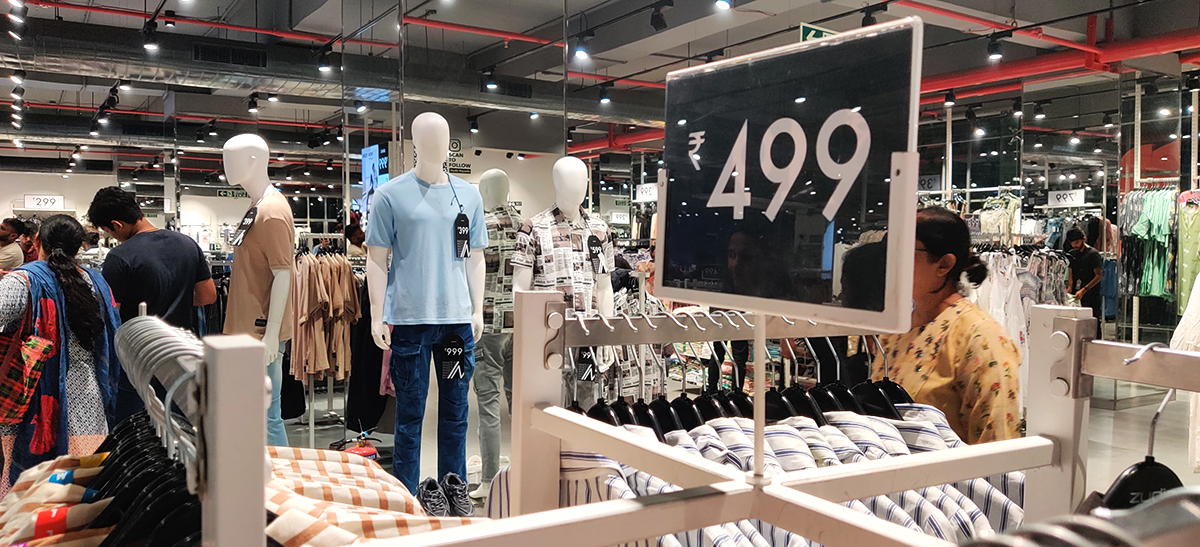
Photograph: Ashish Narsale/Rediff
Key Points
- Trent aims to achieve a ten-fold increase in revenue, building on its current 2.5x growth since Noel Tata’s 2023 vision.
- The company plans to expand its homegrown brands like Westside and Zudio into international markets, aligning with India’s export objectives.
- Trent’s growth strategy is anchored in a multi-brand approach, creating distinct propositions for diverse customer needs in India and globally.
- Despite significant expansion, chairman Noel Tata believes Trent is still in the early phase of its growth journey, with substantial opportunities ahead.
- Trent’s journey began 25 years ago with the transition from Lakme into fashion retail, evolving into a portfolio of successful brands.
Tata Group retail firm Trent remains in the early phase of its growth journey despite rapid expansion in recent years, said its chairman Noel N Tata, exuding confidence that the company would achieve its ambitious target of becoming ten times bigger in revenue terms in the “not-so-distant future”.
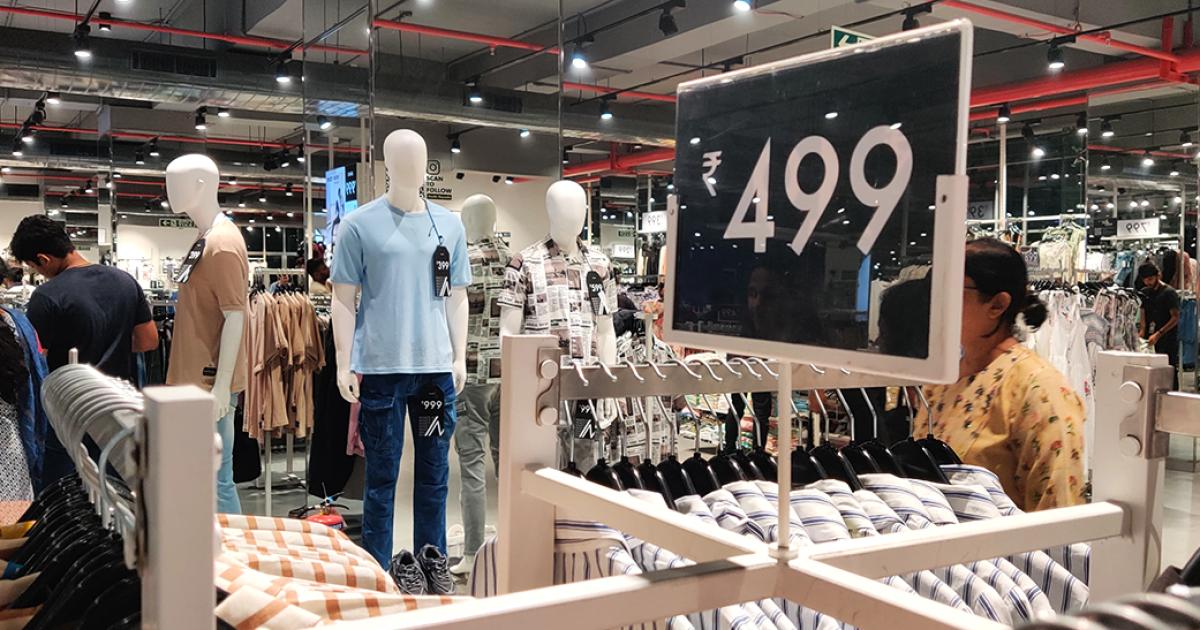
Trent owns lifestyle and fashion department store chain Westside, value-fashion chain Zudio and hypermarket Star Bazaar.
Tata, in Trent’s latest annual report also said its future growth will continue to be anchored in building distinct, well-defined propositions across categories, while also aiming to take homegrown brands to international markets.
Ambitious Revenue Targets
Referring to his remarks at Trent’s 2023 shareholders’ meeting, Tata said he had envisioned the company becoming ten times larger in terms of revenues with commensurate profitability.
“Since then, the revenue and profitability run rate have grown by over 2.5 times. Given all this, I am confident that we will reach the milestone I had referenced in the not-so-distant future,” said Noel Tata, who is also Chairman of Tata Trusts.
In FY26, Trent’s revenue from operations was Rs 19,701 crore, and it operated 1,286 stores with a total retail area of 17.7 million square feet across 321 cities.
Global Aspirations and Multi-Brand Strategy
Tata also underscored Trent’s global ambitions, saying it would be “enormously satisfying” to build brands from India that achieve relevance across international markets.
He said the company should aspire to generate material revenues from overseas markets, aligning with the country’s broader objective of increasing value-added exports.
“We should aspire boldly, execute with perseverance and celebrate the pride of brands built ground up from India,” he said.
The journey of Trent which began 25 years ago by opening its first store of Westside Commercial Street in Bengaluru to over 1,200 stores, has been of steady evolution, said Tata.
This was also supported by the emergence of strong growth engines such as value fashion format Zudio and grocery retail chain Star.
“I have long believed that Trent is not intended to be defined by a single brand, but rather by a portfolio of brands.
“In a diverse and evolving market like India as well as globally, it is unlikely that any one brand can capture a dominant share of the lifestyle space,” he said.
Instead, Trent’s approach has been to create distinct, well-defined propositions that cater to different customer needs and occasions.
“This multi-brand strategy will continue to guide our future,” he said.
Early Phase of Growth
Tata said the company is well-positioned to build on its existing platform, supported by a strong ecosystem and a clear sense of purpose.
“Given the significant opportunities that remain ahead and the growing strength of Trent’s platform, I believe we are still at an early phase of our growth journey,” he said.
Reflecting on Trent’s evolution, he said the company’s journey began as a “thoughtful transition from Lakme into the fashion retail space” and has since grown into a “meaningful business”.
He recalled early discussions with his mother, Simone Tata, around reshaping Lakme’s direction, guided by an aspiration to create products and experiences that people “truly love and desire” while remaining rooted in Tata values.
“It is deeply satisfying to see that, in many ways, this aspiration has come to fruition through Trent’s progress over the past two and a half decades,” he said.
The Tata Group sold Lakme to FMCG major Hindustan Unilever (HUL) in the late 1990s.