













In the last five months, Harita Bhadra scripted a couple of personal best timings and snapped up two Asian Games medals in her first international competition outside the United Kingdom, where she spent three years as a student-athlete.
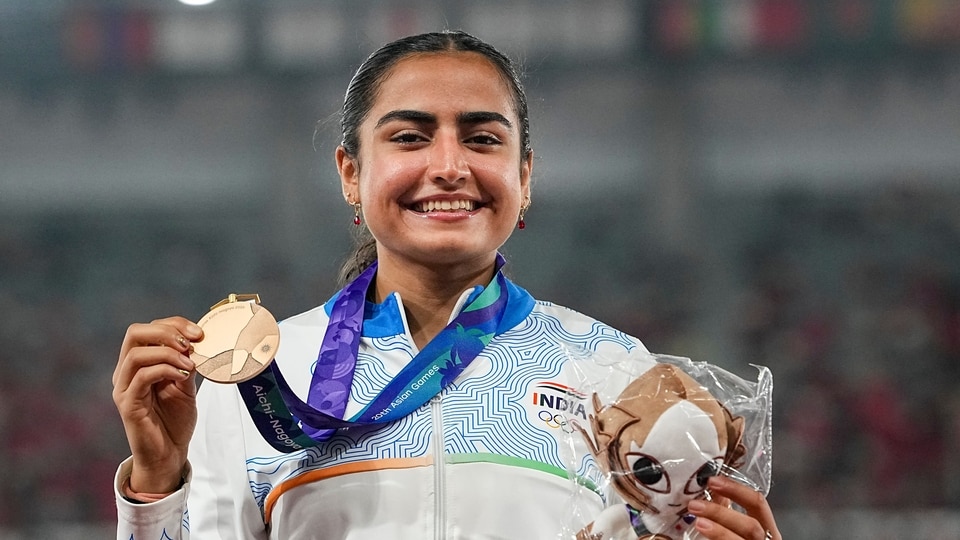
Now a full-time athlete, her sprint journey, which began in a city known for its fast pace yet not quite fast sprinters in recent times, has picked up speed.
“This is just the beginning,” said Mumbai’s Harita, back home after a hectic few months of rewriting her own benchmarks and stepping on to podiums in Bhubaneshwar, New Delhi and Nagoya.
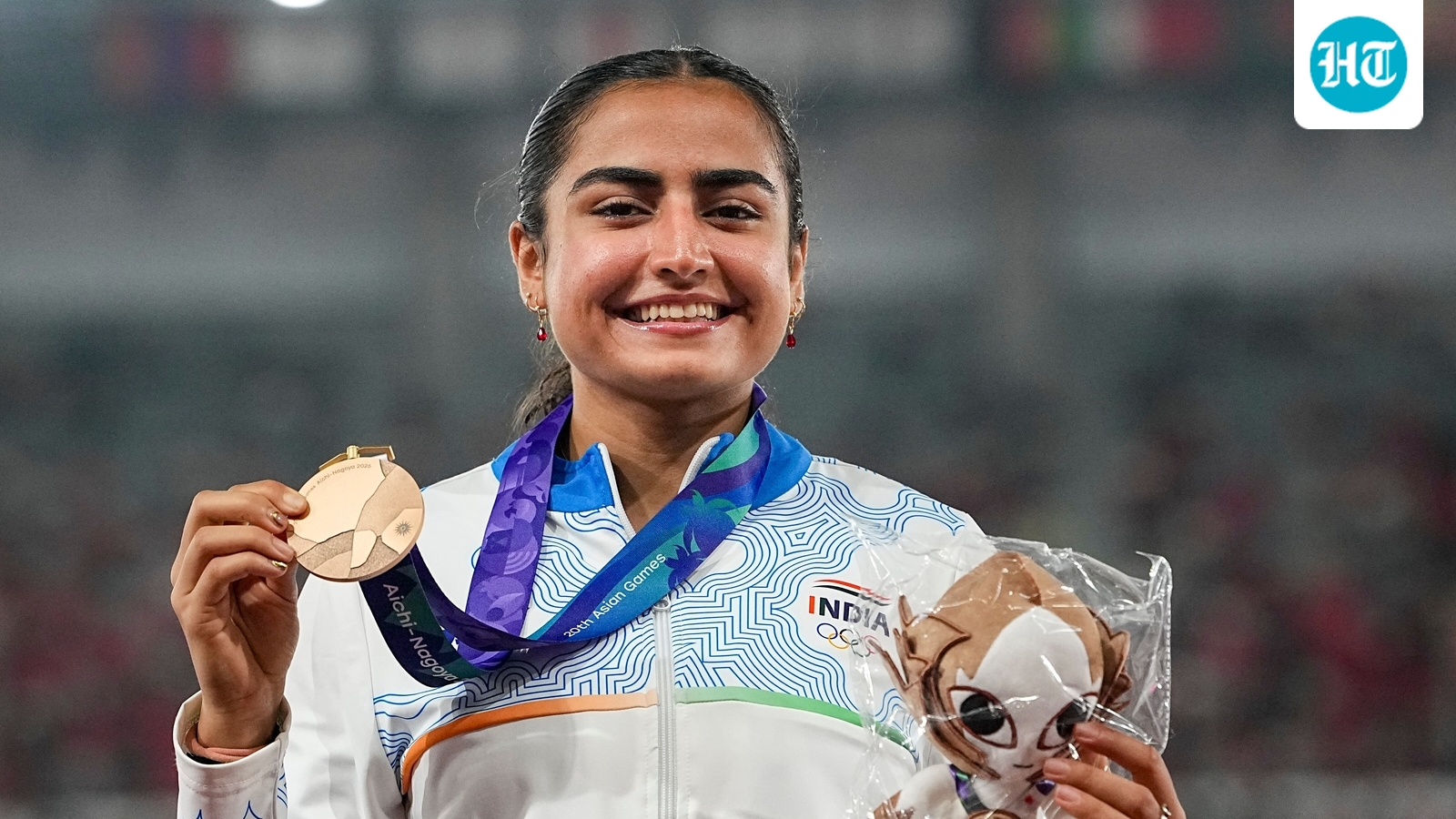
The last one, especially, was noteworthy, given that there have been only a handful of Indian women sprinters to medal at the Asian Games. By winning the 200m bronze in Nagoya with a timing of 23.20 seconds, Harita joined Dutee Chand, Saraswati Saha, PT Usha, Stephie D’Souza and Mary D’Souza in a select group.
She was also part of India’s 4x100m mixed relay group, alongside SS Sneha, Gurindervir Singh and Animesh Kujur, that won bronze.
From returning home with a BSc from Loughborough University last year to coming back with two medals from the Asian Games this year, it’s been quite a ride for the 23-year-old.
“It’s been really hectic after the Asian Games. But, I look at it as a privilege,” Harita told HT. “The major change I’ve felt after the Asian Games is being more recognised. Everyone knows me now.”
The popularity spike may have been sudden, but the process of getting wasn’t overnight.
In her first season as a full-time athlete (and a part-time handmade jewelry entrepreneur), Harita raised her personal ceiling. First, in the 200m with a timing of 23.14s in June in Bhubaneswar and then in the 100m clocking 11.22s in September in New Delhi. The 100m mark stands just shy of Dutee’s national record (11.17s).
“It’s not one, but many collective reasons,” said Harita of the factors behind her solid season. “It was about everything working as it should for this to happen.”
The first was about finding a proper training base, which she did at Reliance Foundation’s Jio Institute in Navi Mumbai where some of the country’s top sprinters also train.
“It played a key role in pushing me while being among national champions and record holders,” Harita said. The support of her coach and family also played a key role, more so in easing her mentally. “The main thing is that I have enjoyed this entire season.”
So did working on a few technical reinforcements. “Mostly in the action – the knee drive, ankle stiffness, and such things.”
All of that ensured that Harita flew to Japan with the belief of doing what she did.
“Before the Asian Games, winning a medal was the goal. And to achieve any goal, you have to believe in it,” she said.
The goal of winning medals for India had been ingrained in her from childhood, when she picked up running at her school in Vikhroli, a bustling Mumbai suburb. In a city that isn’t brimming with athletics tracks, Harita would train at the Somaiya Vidyavihar University, where she also studied, and in Bandra.
The Rafael Nadal fan was always inclined towards giving equal value to academics. And so in 2022, she went to the UK’s Loughborough University to pursue a BSc in sport science, coaching and physical education.
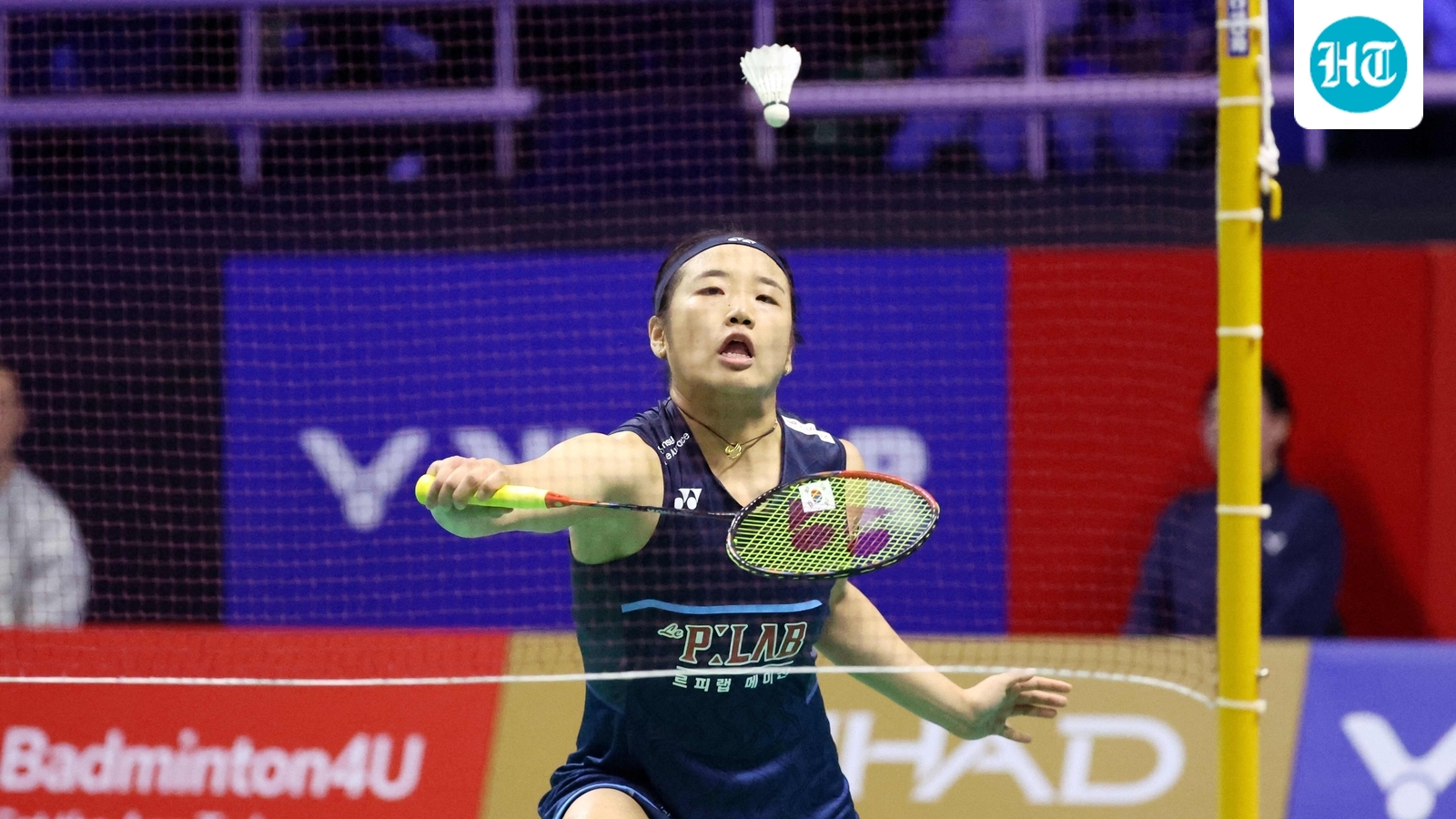
Also Read: The indomitable reign of An Se Young
“Going to a university renowned for its sports courses and athletics, I thought I shouldn’t miss that opportunity,” she said.
Turning up for various inter-university and other meets as a student-athlete, Harita competed in 60m, 100m, 200m, and even long jump. “Having that international exposure helped,” she said. “I got more comfortable with having athletes with a much stronger physique racing beside me.”
Harita completed the course last year and took a break from academics. It also gave her “much more time for athletics”. She used all that extra time to produce a fruitful season, culminating in the sweet Asian Games reward.
Harita joins a promising pack of sprinters in India currently that is out to take bigger strides at the Asian and world level.
“There’s a lot of potential, and a lot of things still to come from both the men and women’s side. The Indian sprint scene is definitely rising, and I’m optimistic about our future.”
As for her own future, the 2027 World Championships is circled as the next big target. And the 2028 LA Olympics as the bigger one. “To qualify for it. And not just qualify but also perform well there,” she said.