









![JMA – Ninja & Deep Jandu [Official MV] Kaptaan](https://i.ytimg.com/vi/-dsfIh319s0/maxresdefault.jpg "JMA – Ninja & Deep Jandu [Official MV] Kaptaan")






Shakespeare’s Hamlet says, “conscience doth make cowards of us all”.
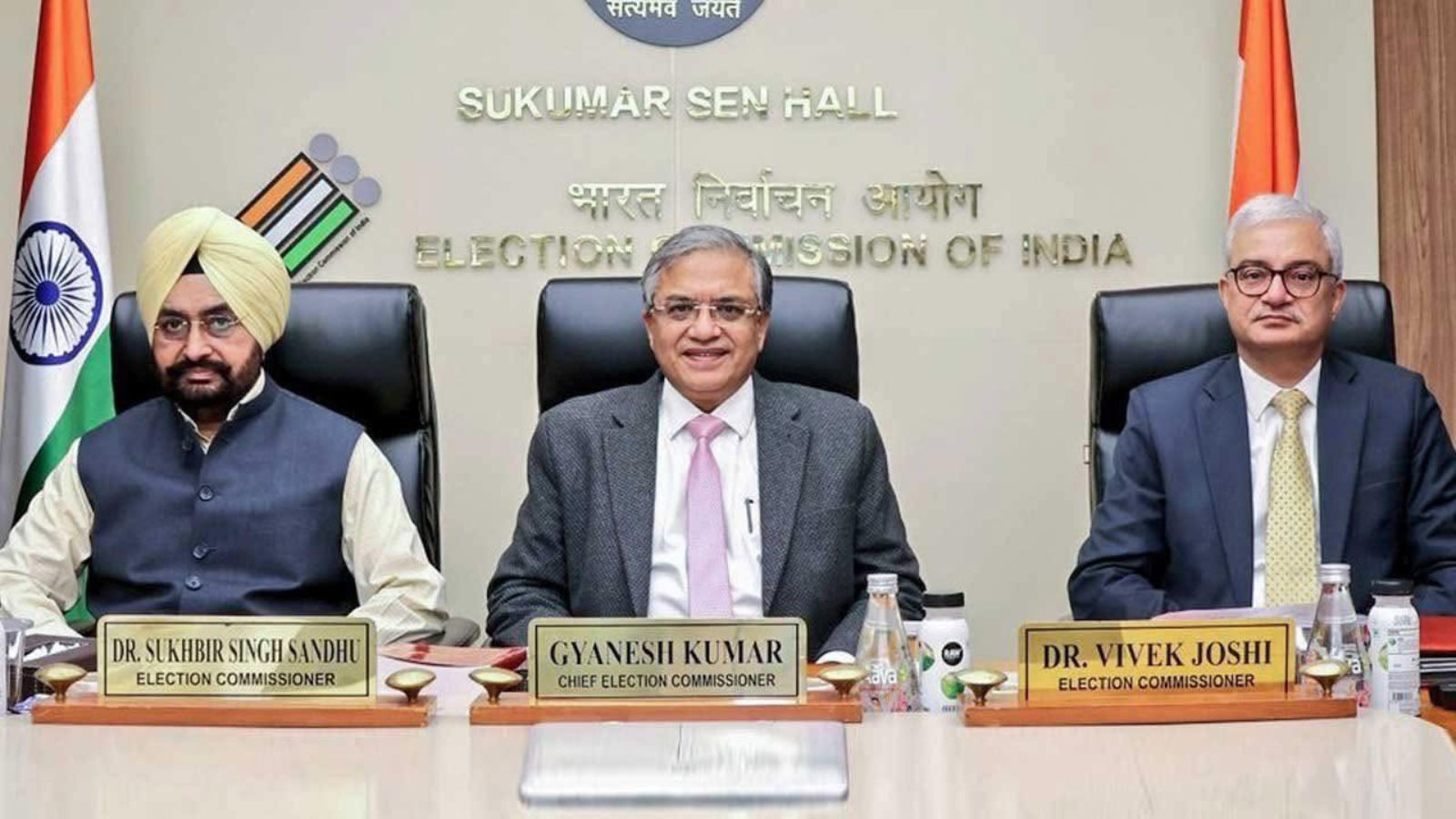
What is conscience? How does it make us “cowards”? Hamlet’s outburst is his anger at himself for repeatedly putting off what he needs to do. In real life, things are difficult, confusing and contradictory, as is apparent in the current controversy around the Election Commission of India (ECI), where two Election Commissioners decided to record their “objections” against the ECI’s decisions.

Many of us face these dilemmas but are not bound by an oath; public servants are. Whether selected through examination or elected through a popular mandate, those in public office are bound by an oath of “allegiance to the Constitution of India” to “conscientiously discharge my duties…without fear or favour, affection or ill-will”. They also are bound by an oath of secrecy to “not directly or indirectly communicate or reveal to any person or persons any matter… except as may be required for the due discharge of my duties.” High-sounding words that carry only as much weight as individuals are inclined to feel or bear.
What happens if public servants find themselves in situations where the oath of secrecy and the allegiance to the Constitution are in conflict? Are they guided by their conscience? We have the case of Clive Ponting, the Ministry of Defence official in England, who found the minister in charge had misinformed parliament about the reasons for the sinking of the Argentine cruiser General Belgrano by British torpedoes during the Falklands War. Ponting leaked the official documents to an Opposition Labour MP, Tam Dalyell, for which he was dismissed for violating the oath of secrecy and convicted by the trial judge, who ruled that the “interests of the state” were synonymous with the interests of the current government in power. The jury, however, overturned the verdict on February 11, 1985, holding that civil servants have a covenant with the constitution and, in adhering to that, violating the provision of a law was not an offence. By disclosing facts, Ponting was performing his primordial commitment to his oath, the people, and Parliament.
The call of conscience acts like a beacon when faced with a moral dilemma. Good sense may dictate otherwise and may caution against the risk of swimming against the tide. That makes one timid, a “coward” curbing one’s instinct, guided by the dictum “discretion is the better part of valour”. All those inclined to act according to their conscience must understand that this is a four-step process. Clarity of purpose, conviction that the purpose is right, courage to act, and the capacity to bear the consequences of one’s action. Truth is strong only when it is willing to pay the price of following conscience.
In fact, following one’s conscience is difficult if one is not prepared for unpleasant fallouts or one expects to be applauded, making ethical conduct more complex. The Kenyan runner, Abel Mutai, a bronze medallist in the 2012 London Olympics, participated in the 3,000 metres steeplechase in Spain later that year. He led the race but stopped a few metres before the finish line, thinking he had completed the race as he couldn’t read the Spanish signage. The Spanish runner Iván Fernández, who followed him, realised that Mutai had made a mistake. Instead of overtaking him, he nudged him to take the last few steps and be the winner. Ivan thought Mutai was the rightful winner, and his conscience didn’t let him take advantage of his rival’s mistake. He was criticised by his coach for lacking the “killer’s instinct”, the stuff champions are made of. Asked why he did what he did, Ivan simply said, “How would I have faced my mother?” Following one’s conscience is not about winning; it is about doing inspiring deeds that others aspire to emulate.
The “mother” was another name for conscience. For public servants, that “mother” is the public, and acting against public interest itself amounts to forsaking one’s conscience. One of the greatest challenges of public service in India today is that the meaning of “public interest” is diffused and the commitment to it is diluted. As elected representatives get obsessed with winning elections with civil servants on their right side, public interest is bound to suffer. The need to act according to one’s conscience arises not necessarily when what is being done is illegal. It does so when what is being done is legal but against the spirit of the law. It arises when long-term public interest is sacrificed for short-term political or personal gains. Abandoning conscience would mean public servants are completely oblivious to the public interest or single-mindedly corrupt.
What is illegal is easy to oppose because the law is on your side, although even that might entail consequences if one’s opposition hurts the vested interests of those in power or those who are the power behind the throne. The ethos in public life seems to have suffered a sea change from times when the honest were idolised to the present times when they are isolated as inconvenient parts of the system. Earlier, there were political leaders who would appreciate or not mind those driven by rectitude acting “without fear or favour”. As the perceived and real risk of not toeing the line became more pronounced, “conscience” became an unnecessary burden one could do without.
There was a time when bosses didn’t mind their subordinates recording notes freely and would overrule them with sound, superior arguments. Now, bosses seek “alignment in thinking” and political masters want a “committed bureaucracy” in which “there’s not to reason why” but to “not-do and die” — do nothing, or risk punishment and being labelled “deviant”, “dissenter” or a “square peg in a round hole”. The system is less tolerant of those whose conscientiousness is perceived as a roadblock in pursuing a political agenda. The 360-degree system of evaluating civil servants for empanelment, as practised, has made systemic performance appraisal ineffective over the years by giving greater weight to random observations from those handpicked to provide feedback on the so-called qualities required to be a “trouble-free” cog in the wheel. The timid stand guarantee for the meek.
It is time the oath is turned on its head. Public servants must act in “favour” of the weak and the vulnerable, and act in “fear” of their conscience, if they have preserved that “unseen” and “troublesome” part of the inherent human constitution. The Urdu poet Krishan Behari ‘Noor’ said: “Zameer kaanp to jata hai, aap kuch bhi kahiye, vo ho gunaah se pehle ki ho gunah ke baad” (Whatever you might say, the conscience does get shaken whether before you commit a wrong or after it).
The writer is a former election commissioner