












![JMA – Ninja & Deep Jandu [Official MV] Kaptaan](https://i.ytimg.com/vi/-dsfIh319s0/maxresdefault.jpg "JMA – Ninja & Deep Jandu [Official MV] Kaptaan")






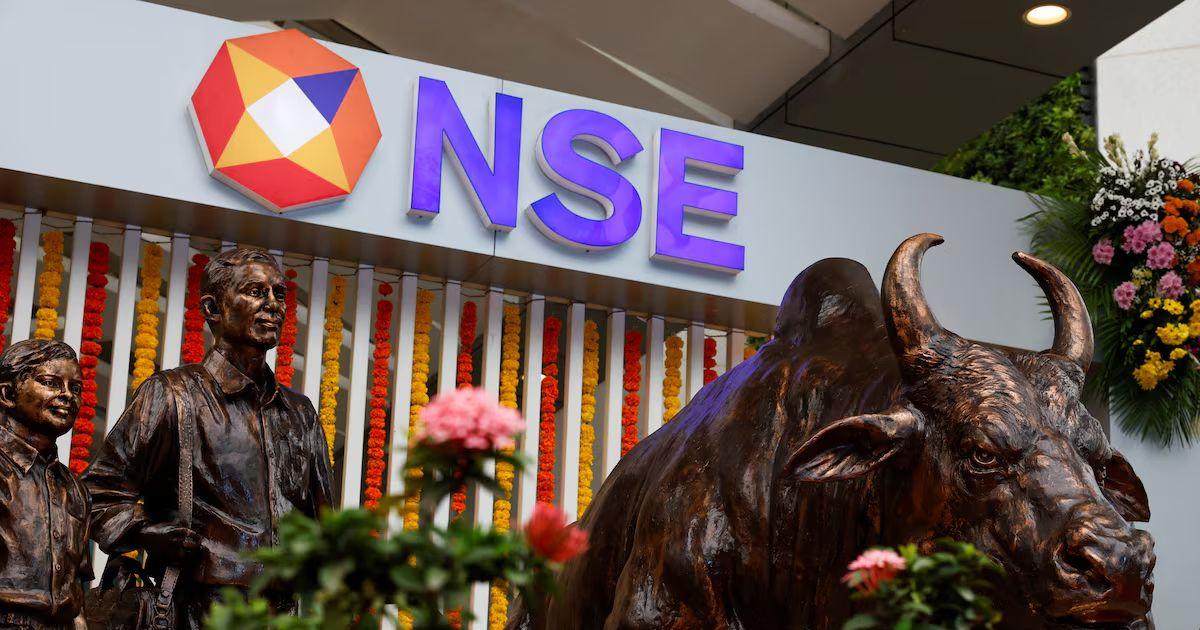
The National Stock Exchange’s highly anticipated initial public offering (IPO) concluded with a robust 5.71 times oversubscription, largely propelled by strong demand from qualified institutional buyers (QIBs) and significant interest from both domestic and foreign investors.

Photograph: Francis Mascarenhas/Reuters
Key Points
- The National Stock Exchange’s IPO was oversubscribed 5.71 times overall, receiving bids for 505.8 million shares against 88.6 million offered.
- Qualified institutional buyers (QIBs) were the primary drivers of demand, subscribing 12.68 times their reserved portion, including significant interest from foreign institutional investors.
- Non-institutional investors also showed strong interest, subscribing 6.55 times their quota, while retail individual investors subscribed 1.39 times their reserved shares.
- The NSE raised ₹6,746 crore from nearly 189 anchor investors, including major global and domestic financial institutions.
- Brokerage reports largely recommended subscribing to the issue, citing attractive valuations and NSE’s strong position to capitalise on India’s capital market growth.
The initial public offering (IPO) of the National Stock Exchange (NSE) was subscribed 5.71x overall as of Monday, the final day of bidding, with bids received for 505.8 million shares against 88.6 million shares on offer for its nearly ₹22,560 crore offer for sale, according to data on BSE.
Strong Institutional and Non-Institutional Demand
Qualified institutional buyers (QIBs) drove the bulk of the demand, subscribing 12.68x their reserved portion of 25.2 million shares, with bids for nearly 320 million shares.
Within this category, foreign institutional investors bid for 140.3 million shares, domestic financial institutions, including banks and insurance companies, for 68 million shares, and mutual funds for 54.1 million shares.
Non-institutional investors also saw strong traction, subscribing 6.55x their reserved quota of 18.9 million shares, with bids for 123.8 million shares.
Bids from those putting in more than ₹10 lakh were subscribed 7.78x, while smaller non-institutional bids of ₹2-10 lakh were subscribed 4.09x.
According to market estimates, the issue received a demand for around ₹90,300 crore at the upper price band.
Retail Subscription and Grey Market Impact
Retail individual investors, whose category had been running well below full subscription through much of the issue, ended up bidding for 61.3 million shares against a reserved quota of 44.1 million shares, translating into 1.39x subscription — a marked improvement from the tepid demand seen in the early days of bidding.
Market watchers said the subdued grey market premium also weighed on retail subscription.
According to websites that track grey market activity, the premium on NSE shares had fallen to around 2 per cent from a peak of 20 per cent ahead of the IPO.
The employee reservation portion was subscribed 2.4x, with 1.03 million shares bid for against 433,000 reserved.
The country’s largest exchange raised ₹6,746 crore from nearly 189 anchor investors.
Life Insurance Corporation of India, Norway’s Government Pension Fund Global, the Monetary Authority of Singapore, Abu Dhabi Investment Authority, and Société Générale were among the marquee names, along with several other life insurers and mutual funds.
Most brokerage reports recommended subscribing to the issue from a medium and long-term perspective.
Analyst Outlook and Future Prospects
“Valued at a 2025-26 price-to-earnings multiple of 42.9x — a notable discount to peers like BSE — NSE offers an attractive valuation backed by a robust 32.1 per cent return on equity. Powered by tech monetisation, Gujarat International Finance Tec-City expansion, and strong core margins, NSE is well positioned to capitalise on India’s long-term capital market growth,” observed Mirae Asset Sharekhan in a note.
Moderation in options volumes was cited by many as a near-term concern for the exchange, with Nirmal Bang saying the competitive shift could weigh on NSE’s transaction revenue growth.
However, the brokerage maintained a positive long-term outlook for the exchange.
“What that price buys is market infrastructure with no real substitute. NSE runs the exchange, clears the trades, owns the Nifty indices and sells the data, so a single trade earns it money several times over and a new product costs almost nothing to add.
“More than nine-tenths of cash market turnover and almost all equity futures have gone through NSE every year since 2023-24, and neither share has been seriously challenged,” said Choice.