









![JMA – Ninja & Deep Jandu [Official MV] Kaptaan](https://i.ytimg.com/vi/-dsfIh319s0/maxresdefault.jpg "JMA – Ninja & Deep Jandu [Official MV] Kaptaan")



Dressed in an impeccably crisp blue shirt, Prakash Padukone let out a big smile when asked if he missed what he had been doing for more than three decades after retiring as India’s trailblazing badminton player: elite coaching.
“No, no, I think I’ve done enough. It’s a good change for me. There’s no tension, no pressure… I’m enjoying my new role,” smiled Padukone, who is now more into coaching the coaches and expanding the sport’s base at the bottom of the pyramid.
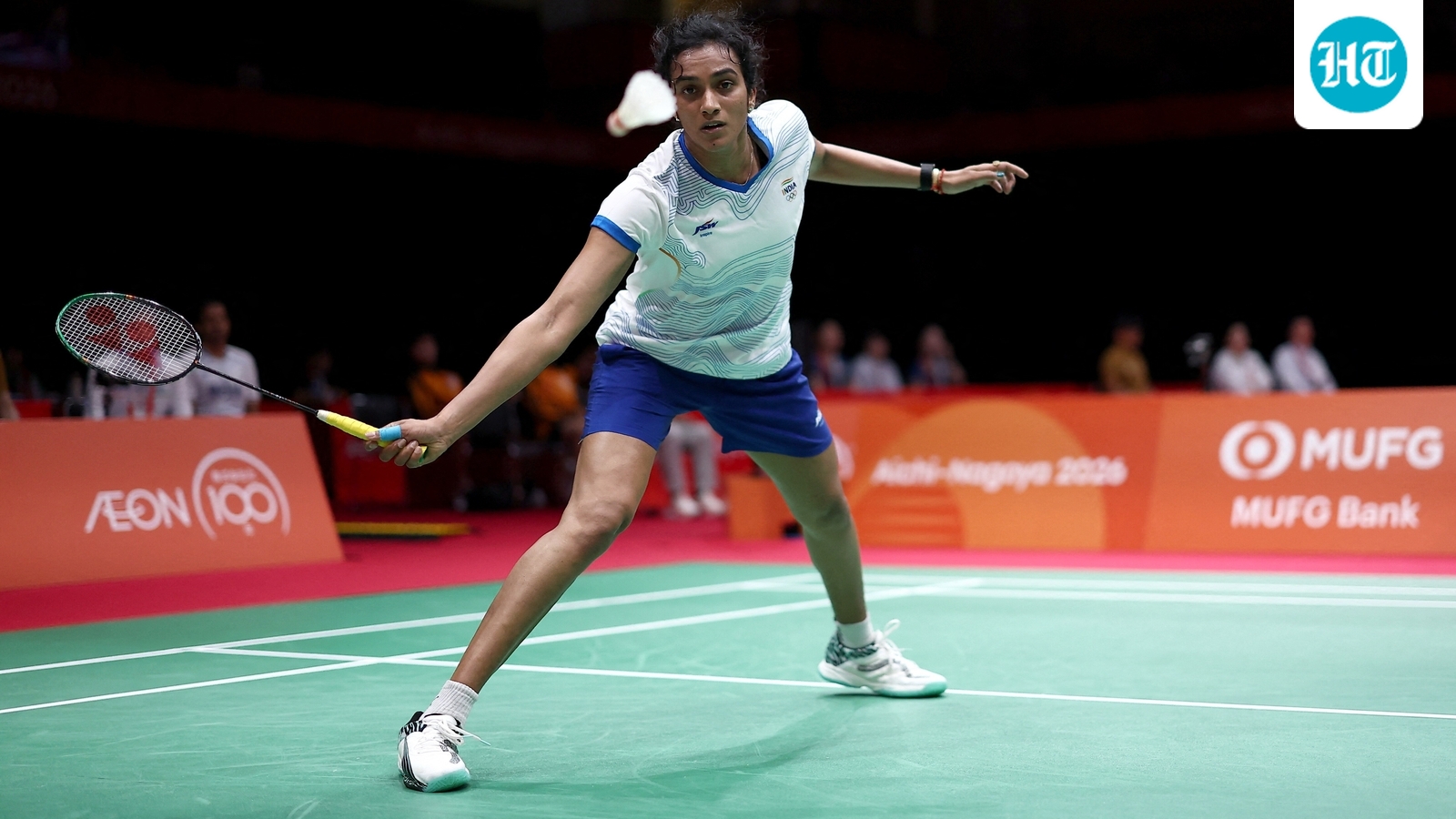
At the top, Indian badminton isn’t having the best of times currently. The one-medal Aichi-Nagoya Asian Games was a significant drop from the three-medal Hangzhou edition. There was no gold and individual medal to go with the men’s team bronze.
“It was a little disappointing. We had done much better last time, and considering the kind of talent we have, we should have done much better. Even I was expecting, if not to better, at least equal the last time’s medal tally,” Padukone told select media on Thursday in Mumbai, where he signed an MoU between the Padukone School of Badminton and the International Institute of Sports Management (IISM) to develop nationally recognised coach education programmes.
The disappointment wasn’t just about the dip in returns but also the stage of the exits. Chirag Shetty-Satwiksairaj Rankireddy and Lakshya Sen, for instance, crashed out early. This, from a player who reached his second All England final in March (only the second Indian man to do it twice after Padukone), and a pair which won the China Masters heading into the Asian Games.
“They play throughout the year, so it’s difficult to be on top all the time, for everybody. But I would definitely like the players to be more consistent. And it is possible. It is not due to lack of support – they have a lot of support. They need to put in a little more effort,” said India’s first All England champion in 1980.
“I’m not saying you win all the tournaments. But at least reach the quarters, semis. There are some… like you win a tournament and lose the first round in the next. That should be avoided.”
Padukone, whose academy has produced and shaped players like Lakshya and Ayush Shetty and who has worked with Lakshya and PV Sindhu closely ahead of and during the 2024 Paris Olympics, couldn’t pinpoint the exact reasons for these fluctuations. Yet, like his remarks at the Paris Games that caused a stir, he reiterated that players need to improve their consistency, “considering the kind of support they get.”
“I’m not involved in elite coaching now. I don’t know if they are playing too many tournaments, they should cut down on a few tournaments, but they are scared that the ranking will go down. There are so many factors. So unless you know the whole thing, it is difficult to suggest exactly what is going wrong. But one thing is clear, they definitely can be and should be more consistent than they are currently.”
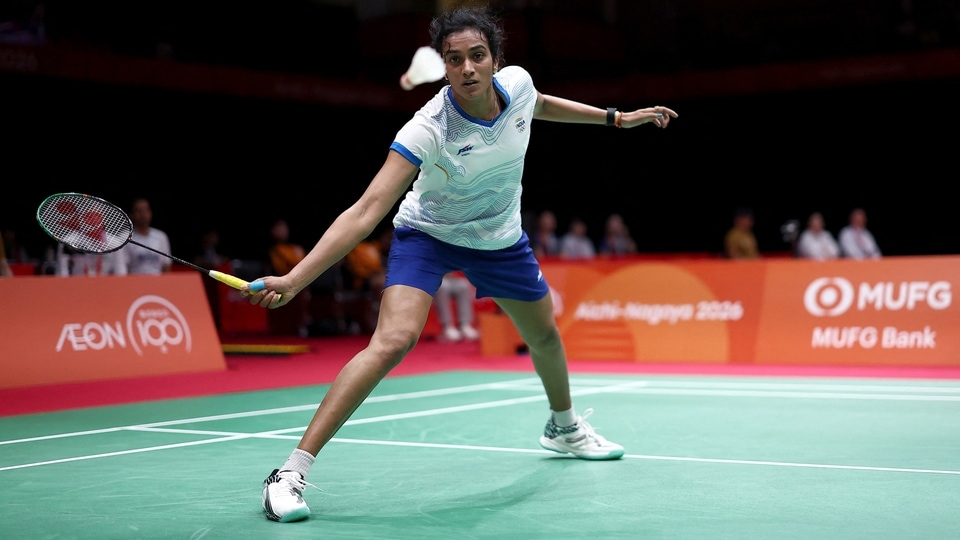
Someone who has stepped up with greater force of late has been Sindhu. The 31-year-old multiple-time Olympic and World Championships medallist lifted her first title in over two years at the Japan Open in July. At the Asian Games, she battled her way into the quarter-finals before losing to Chen Yufei. Padukone, now 71, wishes the younger Indian players would take a leaf out of Sindhu’s book.
“I’m happy that despite winning so many medals, she is still hungry. That’s the kind of hunger that the others should also display. Especially Lakshya and maybe even the doubles pairs. Not be satisfied with what they have achieved. Look to win big tournaments, and continue doing that. Go all out in the next 5-6 years, because they are all still very young,” the badminton legend said.
“Sindhu is 31 now, she has won so many medals, she can easily rest on her laurels and be happy. But she still wants to push. And I think she is an ideal (example) for others to follow.”
Some good young players are coming up, felt Padukone, singling out Shetty in men’s singles and Unnati Hooda, Tanvi Sharma and “many others” in women’s singles. He does not see that kind of depth in doubles after the top pairs across the board.
“Singles has always been our strength, and I think that will continue. Women’s and men’s singles, there will be better, immediate replacements, which may be more difficult – I’m not saying it is impossible – in the paired events.”
As badminton braces for the shorter, quicker 15×3 scoring system next year, Padukone predicted that cracking the consistency puzzle will be even more difficult. Not just in Indian badminton but across the world.
“I don’t know whether we are now losing because of fitness, because of playing too many tournaments. We’ll have to wait and see,” Padukone said. “We’ll have to maybe change the kind of game we are playing. Maybe be a little more aggressive, because now the games will be shorter.”