

















The addition of recent flights at airports will now be based on passenger-handling capacity at security checkpoints, in response to the Bureau of Civil Aviation Security (BCAS).
Photograph: Sarah Meyssonnier/Reuters
The civil aviation security regulator issued instructions on this regard on May 22 in a transfer to cut back congestion and delays inside airport terminals.
Following this, airports must examine passenger-handling capacity at security checkpoints earlier than allotting slots.
The BCAS directive is not going to instantly impression ongoing flight schedules however has upset airports, which concern value escalation.
The Association of Private Airport Operators (APAO) has objected to the order, saying the parameters thought-about by the regulator are too conservative.
The airports consider that huge capital expenditure might be wanted for capacity augmentation if the directives are carried out.
APAO has additionally urged the ministry of civil aviation to nominate a global advisor to undertake such a capacity evaluation train.
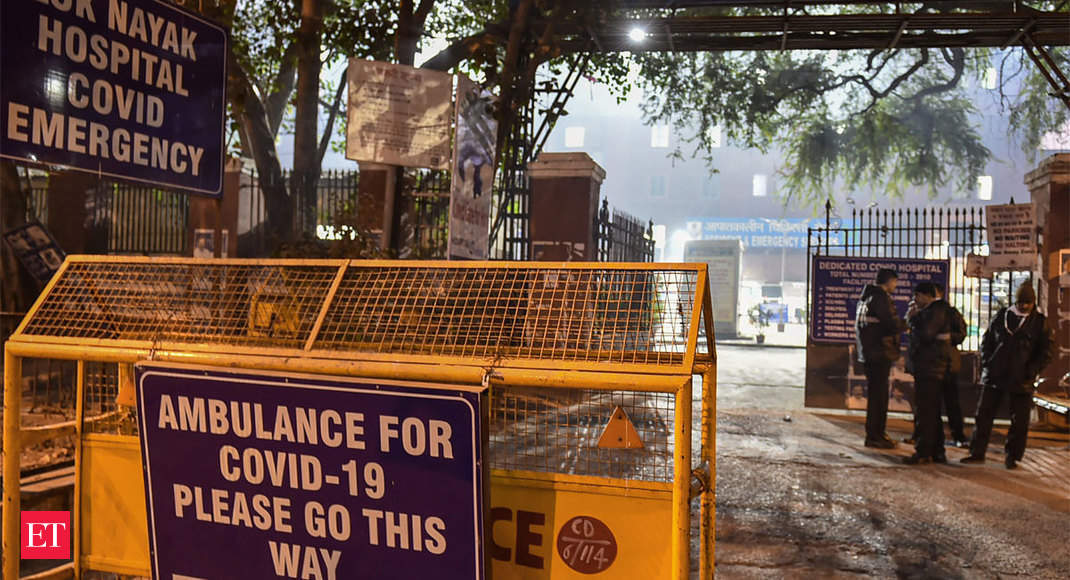
The BCAS transfer comes towards the backdrop of chaos at Delhi Airport final winter, with passengers complaining of lengthy ready occasions at the doorway and security checks.
Following this, the ministry took a number of steps to decongest terminals in Delhi.
Aviation Minister Jyotiraditya Scindia additionally chaired conferences to evaluate the readiness of airports for peak journey seasons.
BCAS has mounted the utmost per-hour passenger processing capacity (to be up to date twice every year) of airports based on baggage X-ray machines and screening services for employees and crew, amongst different issues.
This, in flip, has been decided by the per-hour processing capacity at every baggage X-ray machine.
On the home aspect, the processing capacity per machine per hour has been saved between 135 and 180 passengers; the upper throughput is for machines with automated tray retrieval programs.
On the worldwide aspect, the processing capacity per machine per hour is between 105 and 160 passengers.
International passengers sometimes carry extra luggage than home ones, and therefore the processing capacity of machines on the worldwide aspect has been decided to be decrease.
Also, throughout winters, the processing capacity is prone to lower as passengers want extra trays for his or her jackets, winter put on, and many others.
Thus, airport operators have been suggested to plan proportionate infrastructure by way of house and gear to fulfill extra necessities throughout the winter season.
On Saturday, airports throughout the nation dealt with 6,721 plane actions and over one million passengers.
These included each home and worldwide departures and arrivals.
The variety of flights that an airport can deal with relies upon upon elements corresponding to runway capacity, the variety of parking bays, and the services contained in the terminal.
Thus, Mumbai Airport has little scope for growing flights due to its restricted slots.
At another airports, the issue is because of restricted parking bays.
“We have issued the instructions after discussions with airports.
“There is transparency in the complete course of, and it’ll profit all stakeholders.
“The intention is to enhance passenger expertise by decreasing congestion and delays.
“Airports mustn’t hold including flights with out growing security capacity.
“Our goal is to assist progress and never cap it,” mentioned a BCAS govt.
“Airport operators ought to assess their passenger processing capacity.
“They ought to plan and put together nicely upfront to enhance their security checkpoint infrastructure to fulfill the necessities of passenger progress and undergo BCAS headquarters for mandatory examination and security vetting procedures,” BCAS mentioned in its order.
“There is not any impression on our operations as of now.
“We are nonetheless in discussions with the federal government concerning this order,” mentioned a senior govt of a non-public airport.
In a letter to Scindia, APAO mentioned a extra scientific method to capacity evaluation needs to be used, together with contemplating peak hour load, passenger processing necessities, and a mixture of switch passengers, amongst different parameters.
The airports have objected to parameters thought-about by BCAS concerning visitors progress, capacity parameters, and peak hour masses.
For occasion, APAO has argued that BCAS has thought-about 100 per cent peak hour load whereas figuring out passenger processing capacity, whereas International Air Transport Association and different companies counsel a scientific foundation for computing peak hour masses.
“Transfer passengers contribute a major share of passengers and don’t use the departure services as there are designated switch services,” APAO has mentioned.