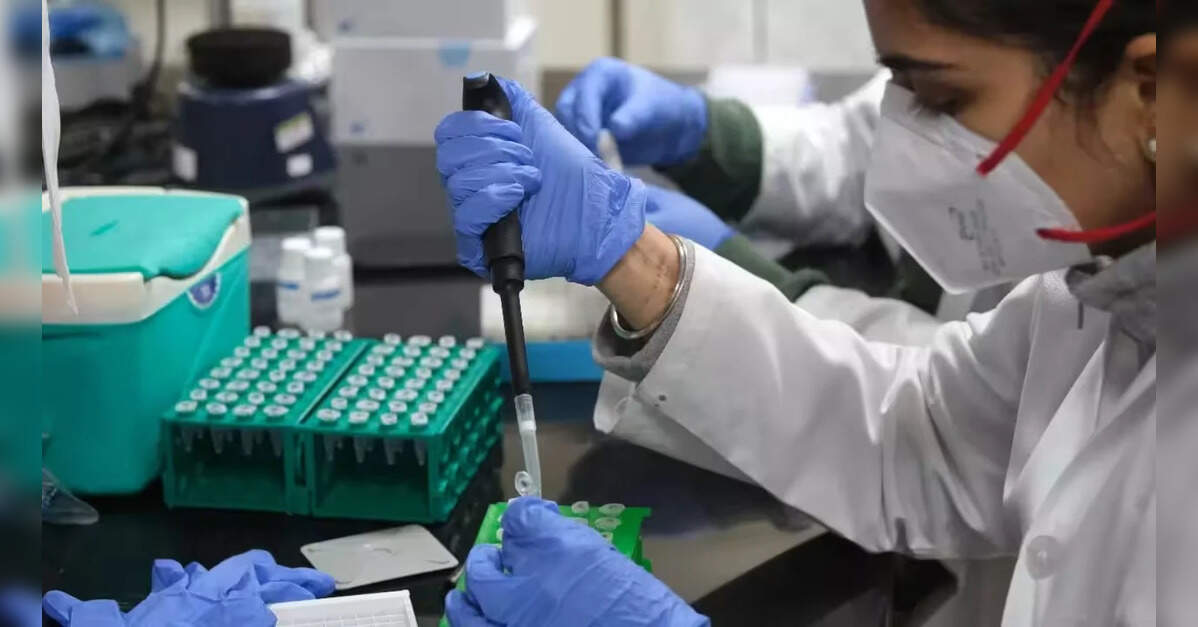


















Scientists from Japan and Thailand have identified a new group of coronaviruses closely related to SARS-CoV-2 in horseshoe bats living in Thailand, raising fresh questions about how such viruses evolve and spread in nature.
The discovery was made by researchers from the Institute of Medical Science at The University of Tokyo and Chulalongkorn University. According to the university statement, the newly identified viruses have the ability to infect human cells, although researchers stressed that the specific viruses studied do not currently pose a threat to people.
The findings were published in the journal Cell on May 6, 2026.
ALSO READ: International Nurses Day 2026: How Florence Nightingale Changed Modern Healthcare? Know History And Significance
Why Horseshoe Bats Are Drawing Global Attention
Horseshoe bats are considered the primary natural hosts of coronaviruses related to SARS-CoV-2, the virus responsible for the COVID-19 pandemic. However, scientists say much remains unknown about the diversity of these viruses, especially across Southeast Asia, home to the world’s largest variety of horseshoe bat species.
To better understand these viruses, researchers collected samples from acuminate horseshoe bats in Thailand and studied how the newly discovered viruses compared with SARS-CoV-2.
Their investigation combined wildlife virus surveillance, laboratory experiments, and computational analysis to trace how the viruses may have moved geographically and evolved over time.
Discovery Of A New Coronavirus Group
The study identified a newly recognised category of SARS-CoV-2-related viruses, referred to as ‘Clade B.’
What makes this finding particularly significant is that Clade B viruses were found circulating alongside another previously identified group, called Clade A, inside the same artificial cave in Thailand’s Chachoengsao Province. In some cases, both virus groups were detected in the same bat.
Researchers noted a key distinction between the two clades. Unlike Clade A viruses, the newly identified Clade B viruses can use the same human receptor, ACE2, that SARS-CoV-2 relies on to infect human cells.
This suggests that different coronavirus groups can coexist within the same bat populations while potentially exchanging genetic material through recombination, a process that may alter how the viruses behave.
Laboratory Tests Reveal Lower Risk To Humans
To better understand the virus, researchers synthetically produced a representative Clade B virus known as RacCS20637 and studied its behaviour under strict Biosafety Level 3 laboratory conditions in Japan.
The experiments showed that although the virus could bind efficiently to the human ACE2 receptor, it replicated much more slowly in human cells than SARS-CoV-2.
Animal studies also offered reassuring results. Infected hamsters showed little to no signs of disease, and the virus did not spread between animals.
Researchers said these findings indicate that the virus performs far less effectively in humans compared to SARS-CoV-2.
Existing Vaccines And Antiviral Drugs Remain Effective
The study also found that RacCS20637 could be neutralised by blood serum from individuals who had received three doses of a COVID-19 vaccine.
In addition, currently available antiviral drugs used against SARS-CoV-2 were found to work effectively against the virus.
While the researchers emphasised that this specific coronavirus group does not currently threaten humans, they warned that only small genetic changes may be needed for related viruses to alter their properties.
Check out below Health Tools-
Calculate Your Body Mass Index ( BMI )
Calculate The Age Through Age Calculator