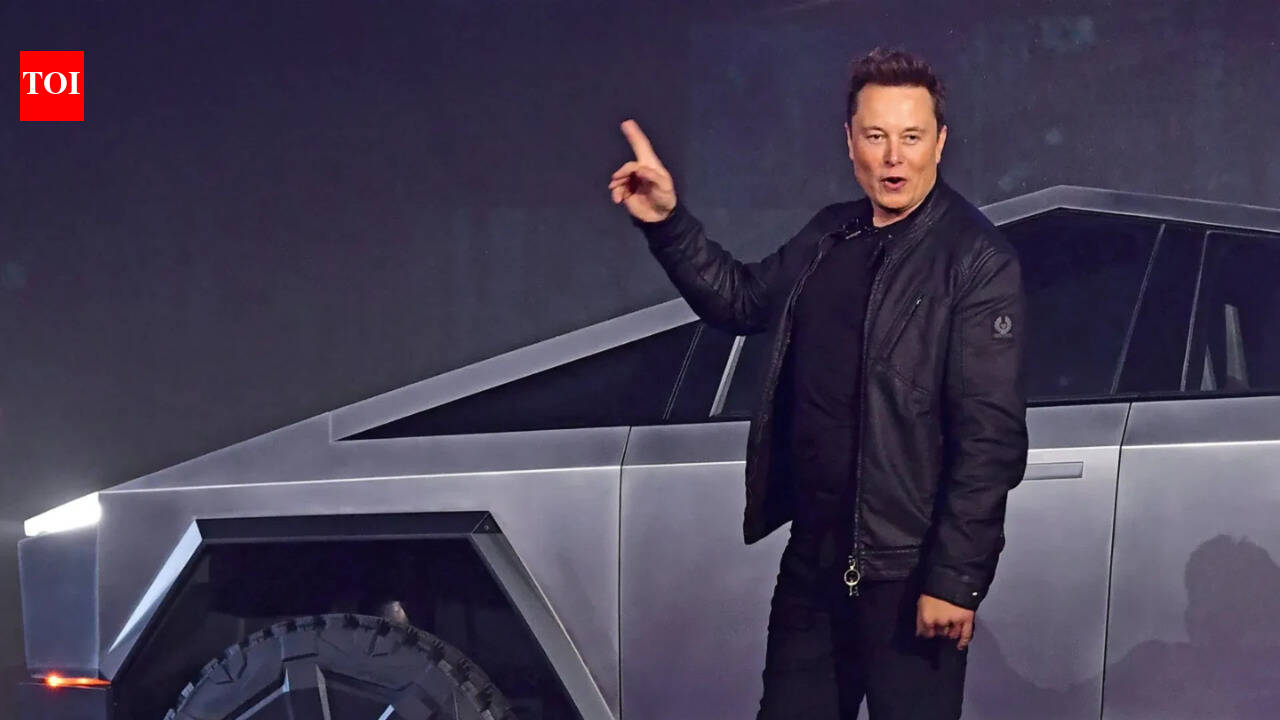


















Elon Musk’s rise to becoming the world’s first trillionaire has been powered not just by investors and technology breakthroughs, but significantly by years of US government support, according to analysis of SpaceX and Tesla’s early growth and financing.From Nasa contracts that kept SpaceX alive to federal loans, tax credits and regulatory programmes that boosted Tesla, US government funding played a crucial role in both companies surviving their fragile early years and scaling into global giants.SpaceX was struggling to stay afloat in its early years when it received a major boost from the US government. In 2006, Nasa awarded the company a $278 million grant to develop its Falcon rocket system and Dragon spacecraft as the US looked for private partners to replace the Space Shuttle programme and maintain access to the International Space Station.That funding was only the beginning. According to data from PitchBook, SpaceX received more than $500 million in early government grants. Later, in 2008, when the company was close to running out of money, Nasa awarded it a $1.6 billion contract, a turning point that ensured its survival.Investment manager Ross Gerber, CEO of Gerber Kawasaki and an early Tesla investor, said the US government was essential to Musk’s companies existing in the first place.“There would not be (Tesla and SpaceX) if it weren’t for the government,” said Ross Gerber, CEO of investment firm Gerber Kawasaki and an early investor in Tesla.SpaceX later went on to become a key contractor for Nasa, launching missions and ferrying astronauts to the International Space Station, turning its early public funding into long-term government business.Casey Dreier, chief of space policy at the Planetary Society, said the early Nasa funding was decisive.“That was about half of their capital that they raised to that point,” Casey Dreier, chief of space policy at the Planetary Society, a public interest group advocating space flight, said ahead of the SpaceX IPO.They added: “This was a substantial commitment that Nasa provided.”SpaceX benefited from direct federal funding, but Tesla’s support came more indirectly but was equally important in its early survival.In 2010, when Tesla had sold fewer than 2,000 vehicles, it received a $465 million low-interest loan from the US Department of Energy. The funding helped it develop the Model S, which became its first major commercial success. Tesla later repaid the loan early in 2013 after raising additional capital through stock sales.US government support also came through consumer incentives. A $7,500 federal tax credit for electric vehicle buyers helped Tesla attract demand and raise prices. Analysts estimate Tesla buyers received around $3.4 billion in federal tax credits before the programme ended in 2019, later restarting briefly under the Inflation Reduction Act before being phased out again in 2025.However, the most significant long-term support came through regulatory credits. Under US emissions rules, carmakers that exceeded environmental standards could sell credits to those that did not. Tesla, producing only electric vehicles, consistently earned excess credits.Between 2008 and 2019, these regulatory credit sales generated more than $2 billion for Tesla, at times accounting for nearly a quarter of its revenue. Even after that period, the company continued to benefit, bringing in an estimated $12.3 billion in additional credit sales through 2019 onwards.Tesla itself has acknowledged how close it came to collapse. Musk admitted in 2020 that the company was near bankruptcy in 2019, despite its growing reputation.In a tweet in 2020, Musk admitted that Tesla was nearly forced to file for bankruptcy as recently as 2019.Even as Tesla moved towards profitability, it remained heavily supported by credit revenues, only achieving consistent profits without them after 2021.Today, Tesla’s valuation is now around $1.5 trillion. It is driven less by car sales and more by investor belief in future technologies such as robotaxis and humanoid robots. Yet analysts say that the foundation of that valuation was built during years when government programmes helped stabilise both Tesla and SpaceX.