




















Last Updated:
Oman’s Hormuz proposal is partly modelled on Straits of Malacca and Singapore, where a private foundation collects voluntary contributions to support safe navigation.




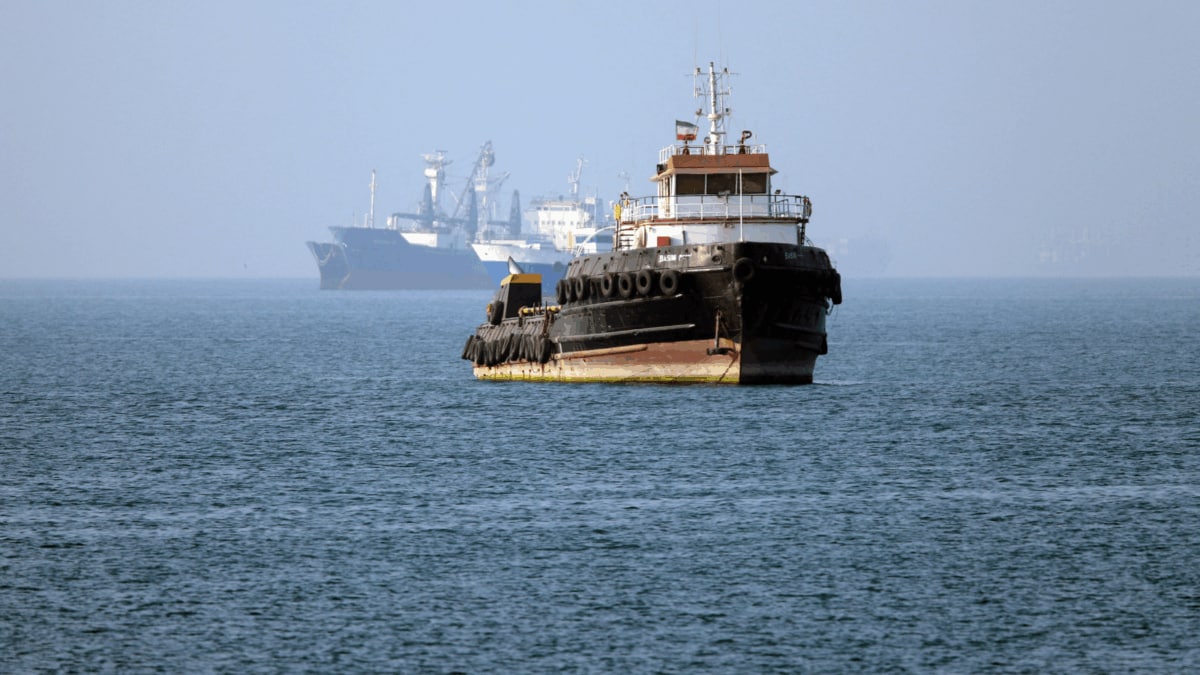
The Iran-flagged tugboat Basim sails near a ship anchored in the Strait of Hormuz off Bandar Abbas in southern Iran. (Source: AFP)
Iran and US-allied Oman are moving ahead with plans to introduce payments for ships transiting the Strait of Hormuz despite public objections from Washington, according to a report published by The New York Times.
The proposal, if implemented, would mark a significant departure from the pre-war status of the strategic waterway, where commercial vessels had long transited free of charge between Iran and Oman while transporting oil and gas from the Persian Gulf to global markets.
During the conflict earlier this year, Iran effectively blockaded the Strait of Hormuz, disrupting one of the world’s busiest shipping lanes and sending global energy prices sharply higher. Since then, Iranian officials have repeatedly said they intend to monetise the waterway.
Oman Submits Hormuz Fee Proposal To Western Allies
According to the report, Oman has submitted a formal proposal to the United States and other Western allies outlining a framework under which shipping companies would pay service fees to use the Strait of Hormuz.
Also Read: Oman Warns Allies Ships Passing Through Strait Of Hormuz May Face Transit Fees
Speaking to the NYT, a person familiar with the US position said American negotiators had received the proposal and intended to discuss their concerns with Omani officials. The person and the regional diplomat said the proposal referred to voluntary service fees rather than mandatory tolls.
The Iranian official, however, said the payments would be compulsory.
The future of the Strait of Hormuz remains a key issue in negotiations between Washington and Tehran over a lasting peace agreement.
According to the regional diplomat, Oman’s proposal is partly modelled on arrangements in the Straits of Malacca and Singapore, where a private foundation collects voluntary contributions to support safe navigation.
Oman Partners With Iran On Hormuz Crisis
On Monday, Iran’s Deputy Foreign Minister Kazem Gharibabadi said Tehran’s priority was to reach an agreement with Oman on managing the waterway. However, if Oman does not agree to establish a joint framework, Iran will proceed independently, according to remarks carried by Iranian state television.
Also Read: Iran Fired Projectile At Cargo Ship Passing Through Strait Of Hormuz: US Officials
Oman has long served as a mediator between the United States and Iran and has sought to maintain a neutral position amid regional tensions.
Trump Threatens To Bomb Oman
After reports emerged in May that Oman had discussed partnering with Iran on charging service fees in the strait, US President Donald Trump warned he would bomb Oman if it did not “behave just like everybody else.”
Last week, Trump also described the idea of collecting tolls or fees for passage through the Strait of Hormuz as “unacceptable.”
It remains unclear whether the Trump administration would accept a system based on voluntary service fees.
60-Day Free Transit Through Hormuz
A framework peace agreement signed by the United States and Iran earlier this month guaranteed “the safe passage of commercial vessels with no charge” through the Strait of Hormuz for 60 days while negotiations continue over a longer-term arrangement.
The agreement also calls for Iran and Oman to begin a dialogue on the future management of the waterway after the 60-day period.
According to The New York Times, American negotiators valued Washington’s partnership with Oman and were confident that differences over the proposal could be resolved through technical discussions.
Oman’s Opaque Stance On Iran’s Hormuz Fee Demand
Three European diplomats said Omani officials had initially presented the proposal as a contingency plan to facilitate maritime trade if the conflict continued.
Although European governments oppose the introduction of fees, they are focused on ensuring any arrangement complies with international law, they said.
Also Read: Last-Minute Change To US-Iran Deal Text Allows Tehran To Collect Hormuz Transit Fees: Report
According to remarks carried by Iranian state television, Gharibabadi said Iran and Oman would begin talks next week on arrangements for the strait, including the collection of fees from passing ships and changes to existing shipping routes.
Oman has publicly maintained that charging vessels merely to transit the strait would be illegal. Foreign Minister Badr al-Busaidi has instead distinguished between transit fees and payments for services provided by the countries bordering the waterway.
Last week, Oman and the International Maritime Organisation designated a safe shipping route through Omani territorial waters.
Iran subsequently attacked a cargo ship in the Strait of Hormuz, after which the International Maritime Organisation suspended efforts to evacuate hundreds of stranded vessels from the waterway.
About the Author

Prisha is the Chief Sub-Editor at News18.com, with more than 10 years of experience in national and international news. She specialises in editorial leadership, sharp news judgment, and high-impact st…Read More
Washington D.C., United States of America (USA)
Read More