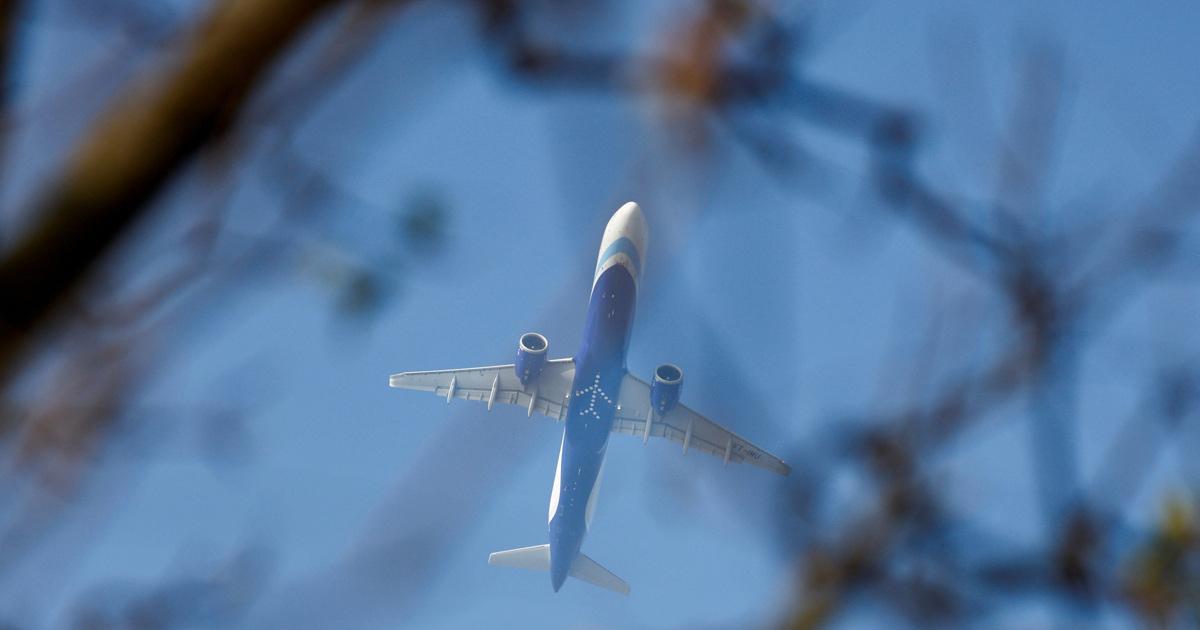





















India’s largest airline, IndiGo, has reported a substantial net loss of Rs 2,536.9 crore in the March quarter of fiscal year 2025-26, primarily driven by significant foreign exchange impacts, challenging operating conditions, and new labour law expenses.
Photograph: Priyanshu Singh/Reuters
Key Points
- IndiGo reported a net loss of Rs 2,536.9 crore in the March quarter of FY26, a significant decline from a profit in the year-ago period.
- The airline’s profitability was severely impacted by an exceptionally sharp rupee depreciation, resulting in an Rs 8,100 crore foreign exchange loss.
- Operational challenges, including Rs 580 crore impact from December flight disruptions and Rs 1,200 crore in new labour law expenses, contributed to the loss.
- Despite the losses, IndiGo’s capacity grew by 9.5 per cent and total income increased by 6.4 per cent in FY26.
- IndiGo’s domestic market share stood at 63.3 per cent in March, even amidst leadership changes with a new CEO appointed.
Flying into the red, IndiGo on Friday reported a loss of Rs 2,536.9 crore in the March quarter due to multiple headwinds, including challenging operating conditions and rupee depreciation.
The country’s largest airline had a profit of Rs 3,067.5 crore in the year-ago period.
Financial Performance Overview
For the 2025-26 fiscal, the carrier posted a net loss of Rs 2,393.6 crore, but excluding the impact of foreign exchange and exceptional items, it would have been a profit of Rs 7,502.5 crore, it said in a release.
Total income in the fourth quarter of the 2025-26 fiscal rose over 3 per cent to Rs 23,830.7 crore from Rs 23,097.5 crore in the same period a year ago, according to a release.
“For the quarter ended March 2026, IndiGo reported a net loss of INR 25,369 million. Excluding the impact of foreign exchange and exceptional items, the company reported a net profit of Rs 19,206 million,” the release said.
Operational Challenges and Impact
Despite continuing external disruptions in 2025-26, IndiGo said its capacity rose 9.5 per cent on an annual basis, and the total income grew 6.4 per cent to Rs 89,513.4 crore.
“Exceptionally sharp rupee depreciation, changes in labour laws and a challenging operating environment offset the operational profit and the company reported a net loss of Rs 23,936 million,” the airline said.
In 2025-26, the foreign exchange loss was around Rs 8,100 crore, and the impact of the December flight disruptions stood at Rs 580 crore. Besides, the expenses related to the implementation of the new labour laws were at Rs 1,200 crore, as per the airline’s financial statements.
Management Commentary and Future Outlook
IndiGo MD Rahul Bhatia said FY26 was marked by an an exceptionally challenging operating environment, which materially impacted its profitability.
“During the year, our capacity grew by 9.5 per cent, and total income increased by over 6 per cent. Excluding the impact of foreign exchange and exceptional items, IndiGo delivered a profit of Rs 75 billion,” he said.
In the June quarter, capacity in terms of ASKs (Available Seat Kilometres) is expected to grow around 3-4 per cent as compared to the first quarter of fiscal year 2026.
The airline witnessed multiple challenges in the last financial year, including the massive operational disruptions, especially between December 3 and 5 last year — a period during which 2,507 flights were cancelled, and 1,852 flights were delayed, impacting over 3 lakh passengers at airports across the country.
In March, Pieter Elbers quit as the CEO, and later that month, the airline announced the appointment of William Walsh, a pilot and current chief of the global airlines’ grouping IATA, as its next CEO.
The airline’s domestic market share stood at 63.3 per cent in March.
Shares of IndiGo fell 3.27 per cent to close at Rs 4,418.40 apiece on the BSE.