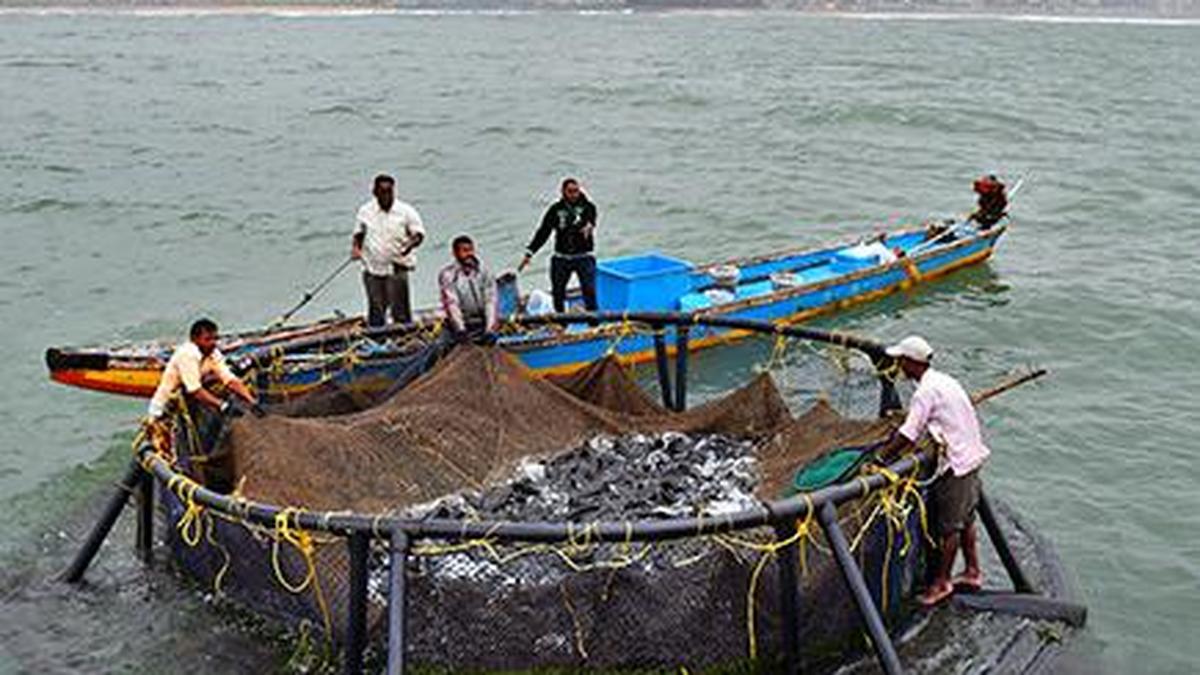


















India’s long coastline supports communities, feeds millions, and shapes regional economies. The sector’s contribution to livelihoods and export earnings is well known. What receives less attention is how differently these waters are managed from one State to another — and how this diversity, while rooted in local realities, also creates challenges when fish, boats and economic interests move across jurisdictions that were never designed to work as one.
Every coastal State has its own Marine Fisheries Regulation Act, written to suit its ecology, history and fishing practices. These differences matter. The eastern and western coasts vary widely in currents, species, and gear traditions. What works for Tamil Nadu might not suit Maharashtra; what is essential for Kerala may not apply to Odisha.
But as fishing pressure has grown and as stocks migrate more unpredictably due to climate change, the gaps between these regulatory systems have become more visible. Boats often cross each other’s waters. Shared stocks move from one zone to another. Enforcement teams try to manage pressure with very different tools, staffing levels and technologies. None of these issues reflect a flaw in State authority; they simply show how the ocean behaves — as one continuous space.
A changing seascape
The recent “Sustainable Harnessing of Fisheries in the Exclusive Economic Zone Rules – 2025” is one of the first attempts to create a national approach beyond the 12-mile State boundary. It sets out access requirements, reporting systems and standards for the EEZ. This is a useful step, especially for activities far from shore.
However, most fishing happens close to the coast, in waters governed by the States. Here, variation is natural, even necessary. For instance, Tamil Nadu allows certain traditional boats to operate during the monsoon ban, while Andhra Pradesh keeps the ban uniform for all vessels. Kerala has detailed mesh-size rules for specific nets; Karnataka takes a different approach. Some States have adopted Minimum Legal Sizes for certain species; others have chosen not to.
These examples illustrate how differently coastal fishing has evolved, not disagreements. The challenge is that as the sea becomes more crowded and climate patterns shift; these differences sometimes create confusion or unintended ecological impact — especially when rules overlap or vessels rely on practices that adjacent States do not follow.
Finding balance: national guidance with local judgement
The question is not whether India should have a single rulebook — it should not. Local knowledge is too valuable, and coastal geographies are too diverse.
What India may need instead is a shared set of guiding principles that States can draw on while keeping their autonomy intact. Some elements lend themselves naturally to common alignment: mesh sizes and minimum legal sizes work better when neighbouring States follow similar standards; licensing formats and basic penalties can follow comparable templates to reduce confusion for fishers; and a unified digital registration system could help everyone without altering State authority.
At the same time, States must retain the ability to define near-shore zones for artisanal fishers, tailor gear rules to local habitats, and preserve longstanding customs and community-led governance systems.
This approach — a broad national compass with space for local steering — respects the strengths of India’s federal structure while recognising the shared nature of the ocean.
A blue economy built on resilience, not depletion
India’s Blue Economy Policy emphasises both growth and environmental care. In practice, however, infrastructure development and income enhancement often receive more attention than ecological recovery. Modern harbours, better cold chains and safer vessels are all important. But if fish populations shrink, these investments will struggle to deliver long-term gains.
Healthy ecosystems are the foundation on which coastal prosperity rests. Without mangroves, nursery grounds disappear. Without reefs, fish habitats collapse. Without regular scientific assessments, it becomes hard to know which species are under pressure or how climate change is shifting migration patterns.
Economic advancement and conservation are not opposing goals; they work best when planned together. A modern fleet benefits from a recovering ocean, just as restoration efforts benefit from stable livelihoods and better infrastructure.
Steps that can help us move forward
A few areas can create meaningful progress if approached cooperatively:
Shared standards where helpful: A common understanding on mesh sizes, minimum legal sizes and basic licensing norms could help reduce juvenile catch and bring clarity across borders.
Better tools for enforcement: Vessel Monitoring Systems, geo-fencing, and smoother data sharing between agencies can assist State officers and local cooperatives alike. Training officials and communities in species identification and reporting adds another layer of support.
Balancing ecological and economic investment: Closed-season support, mangrove and reef restoration, and pollution control can be integrated more strongly into ongoing schemes. Incentives that reward compliance or sustainable practices can help fishers transition without bearing the cost alone.
None of these measures diminish State authority; they strengthen it by giving States better information, tools and shared reference points.
A shared ocean, a shared future
India’s marine fisheries hold enormous potential. They are woven into culture, nutrition and economic opportunity. But they operate in an environment that does not recognise administrative boundaries.
A more coherent approach — built on cooperation, shared science, and respect for local judgement — can help India safeguard both its coastal economies and its marine ecosystems.
If the country can bring its policies closer together without flattening its diversity, India’s fisheries can thrive without compromising the oceans that sustain them.
(The author is Senior Manager, Climate Resilient Fisheries, Environmental Defense India Foundation.)
Published on November 22, 2025