












![JMA – Ninja & Deep Jandu [Official MV] Kaptaan](https://i.ytimg.com/vi/-dsfIh319s0/maxresdefault.jpg "JMA – Ninja & Deep Jandu [Official MV] Kaptaan")






India’s Goods and Services Tax revenue saw an impressive 18.1 per cent annual increase in September, reaching Rs 1.77 trillion, primarily propelled by a significant surge in tax collections from imports, reflecting strong economic activity and global trade dynamics.

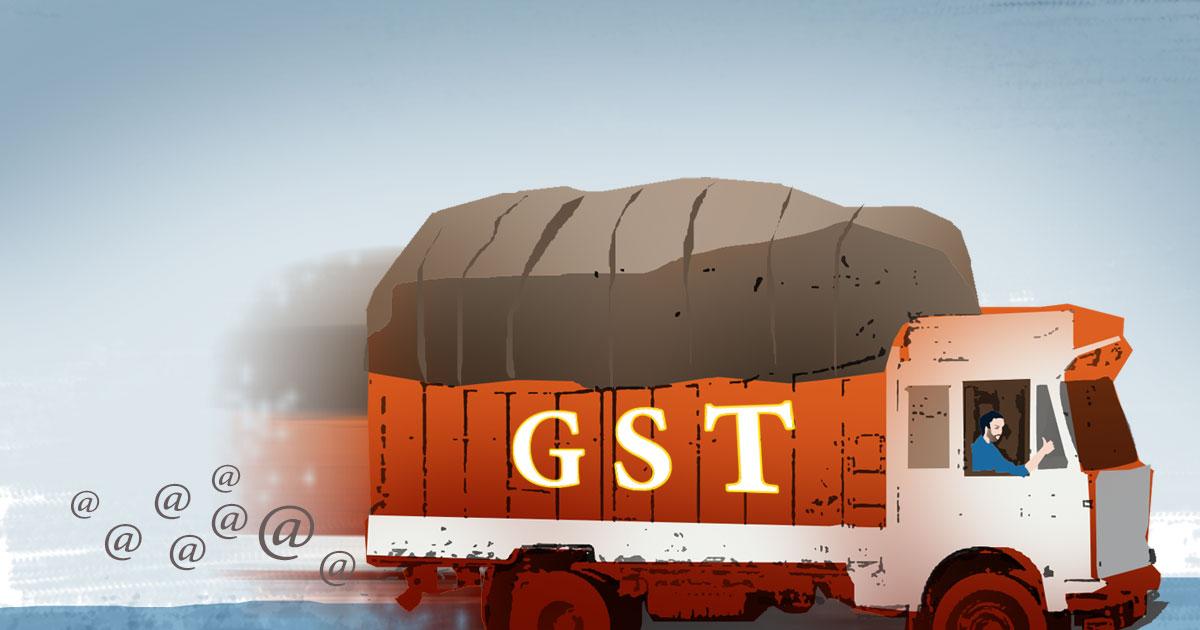
Illustration: Dominic Xavier/Rediff
Key Points
- India’s net GST revenue rose 18.1 per cent annually to approximately Rs 1.77 trillion in September, the fastest growth in six months.
- Integrated GST (IGST) revenue from imports was a primary driver, growing 26 per cent annually and contributing a third of the total gross GST revenue.
- Experts attribute the surge in import-linked GST to factors like the West Asia war impacting commodity prices and increased capital expenditure in key sectors.
- Gross GST revenue crossed the Rs 2-trillion mark for the third time in six months, indicating robust domestic demand despite global pressures.
- Industry experts anticipate the next phase of tax reform to focus on ‘process rationalisation’ to simplify compliance and refunds for businesses.
Aided by a surge in tax revenue from imports, Goods and Services Tax (GST) receipts of central and state governments, after accounting for refunds, rose 18.1 per cent annually to Rs 1.77 trillion in September, marking its fastest growth in six months, according to provisional data released by the finance ministry on Thursday.
The latest increase takes the growth in net GST revenue to around 14 per cent in the September quarter, compared with around 7 per cent in the June quarter. Net GST collections had grown 15.8 per cent in July and 8.3 per cent in August.
Import-Driven Growth
Integrated GST (IGST) revenue from imports has consistently been growing faster than domestic GST revenue collections since April this year.
Experts said the rise in import-linked GST revenue was partly due to the West Asia war, which pushed up prices of several commodities in world markets and weakened the rupee against the dollar.
Besides, higher capital expenditure in sectors such as mobile-phone manufacturing, power and defence boosted imports of capital goods, components and other inputs, they added.
IGST on imports contributed Rs 65,525 crore in September before adjusting for refunds, growing 26 per cent annually and accounting for a third of the total gross GST revenue collection of Rs 2.04 trillion. IGST revenue collection before refunds had expanded 27.4 per cent on an average between April and September.
It had accounted for about a fourth of gross GST revenue receipts in April.
After accounting for refunds to exporters using imported inputs, net IGST revenue in September stood at 29 per cent of the net GST receipts.
It was 21.7 per cent in April.
Broader Economic Indicators
Indicating a similar trend, Customs duty revenue of the central government had also seen a 28 per cent surge in the April to August period to Rs 1.06 trillion, official data from the Controller General of Accounts showed.
Centre had only projected a 5 per cent Customs duty growth in FY27, in Budget.
Gross GST revenue mopup in September, which expanded 14.7 per cent annually, had crossed the Rs 2-trillion mark for the third time in six months, after touching Rs 2.43 trillion in April and Rs 2.11 trillion in July.
The rise was also driven by a 10.1 per cent rise in domestic GST revenue to Rs 1.38 trillion.
After accounting for refunds, net domestic GST revenue increased 13.5 per cent to Rs 1.24 trillion, while net GST revenue from imports rose 30.8 per cent to Rs 52,028 crore.
Total refunds stood at Rs 27,001 crore in September, 3 per cent lower than Rs 27,848 crore a year ago.
Domestic refunds fell 13.5 per cent to Rs 13,504 crore, while refunds related to exports through ICEGATE, an online portal, rose 10.2 per cent to Rs 13,497 crore.
Expert Analysis and Future Outlook
“The Rs 2 trillion mark in gross GST collections, with growth of close to 15 per cent, shows that domestic demand continues to do well despite global pressures,” said Saurabh Agarwal, Tax Partner, EY India.
Agarwal said GST on imports was growing much faster than domestic collections, suggesting a need to recalibrate some production-linked incentive schemes so that the gains from the groundwork laid for domestic manufacturing are fully realised.
Abhishek Jain, Indirect Tax Head & Partner, KPMG said, “Gross GST collections growing 14.7 per cent in September despite global headwinds is very encouraging.
“As import GST is up nearly 26 per cent; it is important to see how much of that is raw materials versus finished goods.
“It will be good to analyse this in detail, specifically if it signals already stronger domestic manufacturing or there is a need for further push, thereby making stronger the case for continuing and expanding schemes like production-linked incentive (PLI).”
Experts expect the next phase of tax reform to centre on process rationalisation.
“The industry’s expectation, therefore, is that the next phase of GST 2.0 should complement the gains from rate rationalisation with ‘process rationalisation’ — making it easier for businesses to claim legitimate credits, obtain refunds, comply with the law and resolve disputes,” said Mahesh Jaising, Leader, Indirect Tax, Deloitte.
In the April-September period, gross GST revenue rose 11.6 per cent to Rs 12.46 trillion, while net GST revenue increased 10.4 per cent to Rs 10.66 trillion.