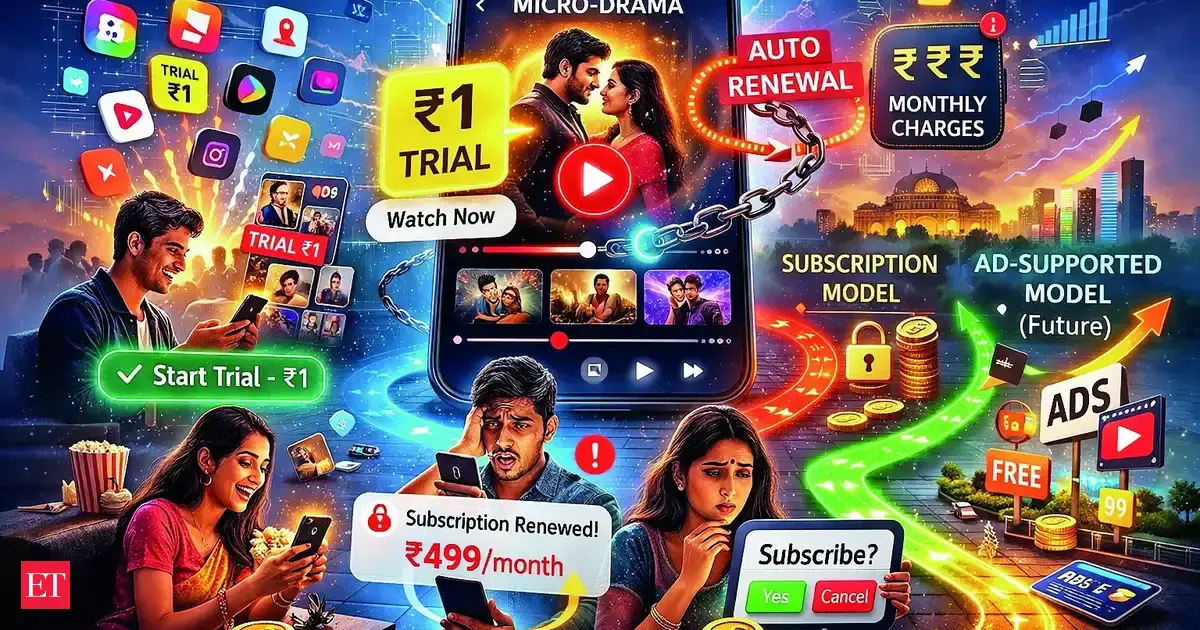
















Several micro-drama apps attract users with trial access priced as low as Re 1, but consumers say subscriptions automatically renew once the trial period ends unless they cancel in time. Currently, most micro-drama platforms follow a subscription-led model, though many plan to introduce advertising-supported tiers as they scale up.
Read more: European aviation body flags lapses in Air India planes
The micro-drama audience in India is estimated at more than 100 million and expanding rapidly. India has seen the launch of multiple micro-drama apps, including Kuku TV, Pocket TV and Bullet. Leading over-the-top (OTT) platforms are also mulling entry into the segment.
Read more: Input costs make electronics, cars & more goods expensive
According to a report by Meta and Ormax Media, more than half the viewers cite concerns over auto-renewal as a key reason for avoiding paid plans. Micro-dramas typically consist of short, mobile-first episodes discovered through social media feeds and primarily consumed individually on smartphones.

India’s micro-drama market is currently estimated to be worth hundreds of millions of dollars, but analysts expect it to grow into a multi-billion-dollar category over the next decade.
“In the early days of autopay there were concerns and some platforms did exploit the lack of awareness. But today awareness in India is comparable to markets like the US. UPI (Unified Payments Interface) auto pay is far better than credit card auto pay because users can easily cancel subscriptions through apps like PhonePe or Paytm,” said Lal Chand Bisu, co-founder of Kuku FM, which also owns micro-drama platform Kuku TV.Most platforms begin with a Rs 1-2 trial primarily to enable auto-debit for future payments, according to industry executives. Trial periods are often extremely short, sometimes lasting just one to three days, after which the full subscription fee, typically around Rs 499-699 per quarter, is charged.
Several apps advertise these trials as “free” or “refundable,” though the auto-renewal terms may not always be prominently displayed upfront. App store reviews frequently contain complaints from consumers who say they were caught off guard by unexpected deductions.
Industry experts also warn that the sector’s heavy reliance on UPI autopay presents structural risks. A RedSeer report last year noted that more than 70% of users currently pay via UPI, meaning any disruption could trigger churn or push platforms toward ad-supported formats as they scale up.
Despite these challenges, RedSeer expects micro-dramas to remain among the fastest-growing segments within India’s interactive media market, which is projected to reach $3.1-3.4 billion by 2029-30.
The Meta-Ormax report also highlighted broader barriers to paid subscriptions in the category. These include the availability of similar free content on social media, access to pirated or freely shared videos on platforms such as Telegram and Dailymotion, and the perception among viewers that the content may not always be compelling enough to justify payment.
The study, conducted through computer-assisted personal interviews with 2,000 micro-drama viewers across India, found that 28% of audiences had paid for content at some point, while only 17% held an active subscription at the time of the survey.
Willingness to pay clusters strongly in the Rs 50-99 per month range. With 60% preferring prices below Rs 100, the effective median willingness to pay is around Rs 75 per month. Pricing beyond Rs 150 sharply reduces the addressable audience, indicating affordability remains critical for expanding the category.