









![JMA – Ninja & Deep Jandu [Official MV] Kaptaan](https://i.ytimg.com/vi/-dsfIh319s0/maxresdefault.jpg "JMA – Ninja & Deep Jandu [Official MV] Kaptaan")



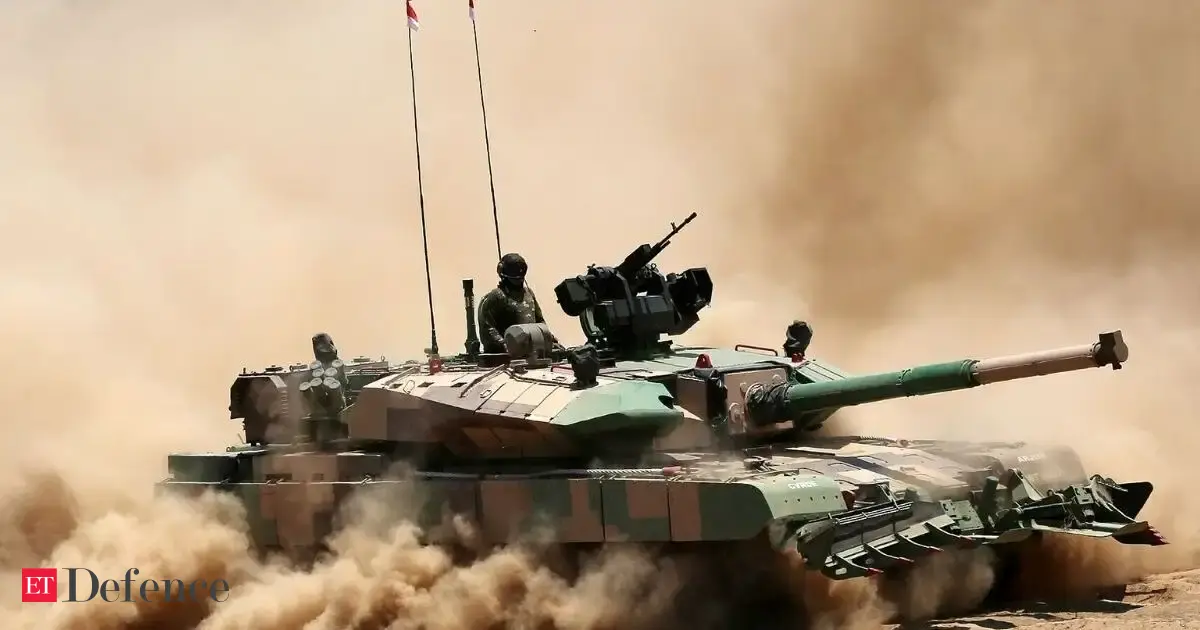
The overhaul marks the first time the Arjun will undergo a complete rebuild covering its hull and turret. The two pilot tanks will receive upgrades drawn from the newer Mk-1A configuration, while the repair and refurbishment methods developed at Avadi are expected to become the template for the rest of the fleet.
First full rebuild comes years after deadline
The Arjun Mk-1 was inducted into the Army from 2004, but its first major overhaul was originally expected to take place by 2020.
A 2016 CAG report had pointed out that the tank was approaching its overhaul timeline, while no agency had been identified to undertake the work. The audit also noted that Arjun tanks had remained idle since 2013 because of inadequate repair infrastructure and shortages in spares support from HVF.

Work on the tank’s engine and powerpack had continued separately. Engine Factory Avadi and the Combat Vehicles Research and Development Establishment had undertaken a powerpack overhaul exercise, providing a foundation for the current programme. The latest project, however, represents the first complete rebuild of the tank itself.
26 upgrades to be tested on pilot tanks
The two Arjun Mk-1 tanks selected for the initial overhaul will receive 26 changes intended to improve their operational capabilities.
Six of these have been identified as major upgrades. They include a commander’s panoramic sight, the Mk-II gunner’s sight, an automatic target tracker, an improved muzzle reference system, upgraded tracks and an enhanced running gear system.
The remaining 20 changes are comparatively smaller modifications covering various aspects of the tank. These include an auxiliary power unit, improved fire suppression, LED headlamps and better protection against dust entering the vehicle.
The outcome of the pilot rebuild will help establish the procedures to be followed when the rest of the 124-tank fleet is overhauled.
Mk-1A programme faces its own delays
The Army’s existing Arjun fleet is being upgraded even as the Mk-1A programme continues to face delivery delays.
The Army ordered 118 Arjun Mk-1A tanks from HVF in 2021 under a contract worth Rs 7,523 crore. The tanks have yet to be delivered, with engine availability emerging as the main bottleneck.
The Mk-1A was conceived as a substantial improvement over the original Arjun Mk-1, with changes intended to enhance firepower, mobility and survivability.
The newer variant features a redesigned turret incorporating improved Kanchan armour and explosive reactive armour. It was also designed with 89 enhancements, of which 73 were considered suitable for retrofitting onto the older Mk-1.
What makes the Arjun Mk-1A different?
Among the prominent Mk-1A additions are non-explosive reactive armour, integration of the gun-launched SAMHO anti-tank guided missile, automatic target tracking and a new commander’s panoramic sight.
The tank also introduces uncooled thermal imaging systems for both the gunner and driver.
Crew protection has been strengthened through containerised ammunition storage, while changes to the suspension and running gear are intended to improve mobility.
The Mk-1A also has a higher level of indigenous content, reflecting India’s effort to reduce dependence on imported defence equipment. However, the delays in delivering the ordered tanks highlight continuing production and supply challenges.
124 Arjun Mk-1 tanks form current fleet
The Army currently has 124 Arjun Mk-1 tanks, which were inducted between 2004 and 2010.
They are deployed with two armoured regiments, the 43 Armoured Regiment and the 75 Armoured Regiment.
The refurbishment programme will therefore determine how the older tanks can be modernised and kept operational while India moves towards newer armoured platforms.
FRCV to replace ageing T-72 fleet
Beyond the Arjun programme, the Indian Army is also preparing for a much larger transition through its Future Ready Combat Vehicle (FRCV) project, also known as Project Ranjeet.
Reports put the programme’s estimated cost at more than Rs 50,000 crore to Rs 60,000 crore. Its primary objective is to develop and acquire 1,770 next-generation main battle tanks that would eventually replace the Army’s ageing Soviet-era T-72 fleet.
The programme is being processed under the Make-I category. Under this framework, the government can finance up to 70% of prototype development costs, with selected private companies funding the remainder.
Next-generation tank planned as multi-role platform
The FRCV is being designed around a modular architecture that could support at least 10 variants rather than serving solely as a main battle tank.
Potential versions are expected to include light tanks, self-propelled artillery systems, air-defence platforms and armoured engineering vehicles.
The programme requires at least 60% indigenous content, with the broader aim of reducing dependence on foreign supply chains.
Prototype development is targeted for completion by 2028, while bulk production and induction are planned to begin around 2030.
AI, drones and active protection in future design
Capability roadmaps for the FRCV envisage a tank built around network-centric warfare and newer battlefield technologies.
The platform is expected to incorporate artificial intelligence for applications such as precision targeting, threat identification and human-machine teaming. It could also function as a local hub for operating systems such as loitering munitions and unmanned ground vehicles.
Protection is another major focus, with the proposed vehicle expected to combine an active protection system, composite armour and counter-drone electronic warfare capabilities designed to deal with modern anti-tank missiles and unmanned threats.
The Arjun overhaul and the FRCV programme therefore represent two different stages of the Army’s armoured modernisation effort: extending the service life of an existing indigenous fleet while developing a future platform intended to eventually replace its much older T-72 tanks.