


















Building a car out of a cereal container
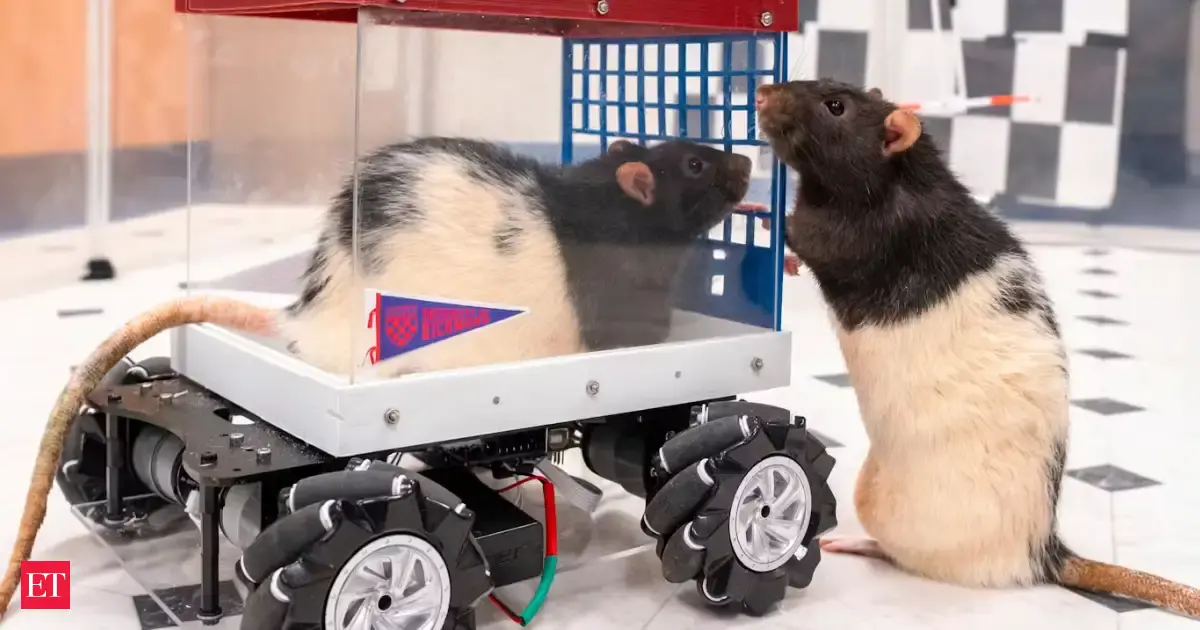
The “rodent-operated vehicle,” as the researchers called it, was refreshingly low tech. The University of Richmond’s own research release said the car was built from a clear plastic food container with an aluminum bottom and was placed on wheels. The steering wheel was three copper bars. When a rat placed its paws on the left, right, or center bar, it created an electrical connection that drove the car in that direction. They lifted their paws, and the car slowed. No app, no car company involved, just careful engineering, and 17 rats that learned to drive. During training, researchers dangled Froot Loops in front of the rats and rewarded them only when they steered in the right direction. As training progressed, the distance to the reward increased, requiring the rats to plan their steering rather than repeat a memorized pattern.

Rats raised in enriched cages, with toys and space to explore, learned to drive faster than those in standard cages. Image Credits: Kelly Lambert / The University of Richmond
Home environment made a real difference
Not all rats were equally good drivers; that gap turned out to be one of the most interesting study findings. Some rats were housed in simple lab cages. Some lived in “enriched” cages filled with toys, ladders, and wood chips, more akin to what a rat would see in nature. The published research says the enriched-cage rats learned to drive faster and continued to show interest in the car even when no Froot Loop was waiting for them. That matches what scientists have long suspected: a stimulating environment can affect how flexibly an animal’s brain learns new skills.

Driving seemed to relax them
The team collected the rats’ feces to measure two hormones: corticosterone, a marker of stress, and dehydroepiandrosterone, a hormone that tends to counter stress and that in humans has been linked to a better mood. Training continued, and the ratio of these two hormones improved in both the enriched-cage and standard-cage rats, suggesting the effect tracked with the driving training itself, not just with a more stimulating home environment. It seemed to relieve their stress too. Lambert has linked this finding to a notion researchers call self-efficacy, a feeling of having real control over your own outcomes. People often feel that way after learning a new skill through practice. The results suggest that rats could have something like it.
Steering left, right or straight: a rat navigates its “rodent-operated vehicle” toward a reward. Image Credits: Kelly Lambert / The University of Richmond
The rats kept returning for more
In a 2024 essay for The Conversation, Lambert described a smaller, later test with just three of the original driving-trained rats: offering them a choice between a short walk directly to the Froot Loop or a longer drive in the car. Two out of three rats preferred to drive, although it took more time and effort. She also saw the rats running to their cars before the start of training sessions, like a dog getting excited at the sound of a leash. Lambert took that as a sign the rats weren’t just after the reward; that they seemed to enjoy driving for its own sake, though with only three rats involved and the drive still ending in a treat, it’s her interpretation of the behavior rather than a controlled finding.
Why this matters beyond the lab
That’s not to say rats think like people, and the researchers have been careful not to say that. What the findings do provide is a new way to look at how stress, environment and motivation interact in the brain. Lambert has said such complex tasks could help researchers better understand anxiety, depression and motor disorders such as Parkinson’s disease, in which both planning and movement go awry. For the moment, the picture is simpler and a little charming. Give a rat an interesting environment, a reachable goal, and some practice, and it may surprise you with how much it can learn and enjoy learning.