



















Treatment relies on donors
The treatment was the brainchild of the late Dr. Stephen Arnon, who was a scientist with the California Department of Public Health.
In 1976, Arnon and colleagues identified the rare form of botulism that affects infants younger than 1 — and then spent his 45-year career figuring out how to treat it. The disease occurs when babies ingest botulism spores that germinate in the intestine and produce a dangerous toxin that attacks the nervous system.
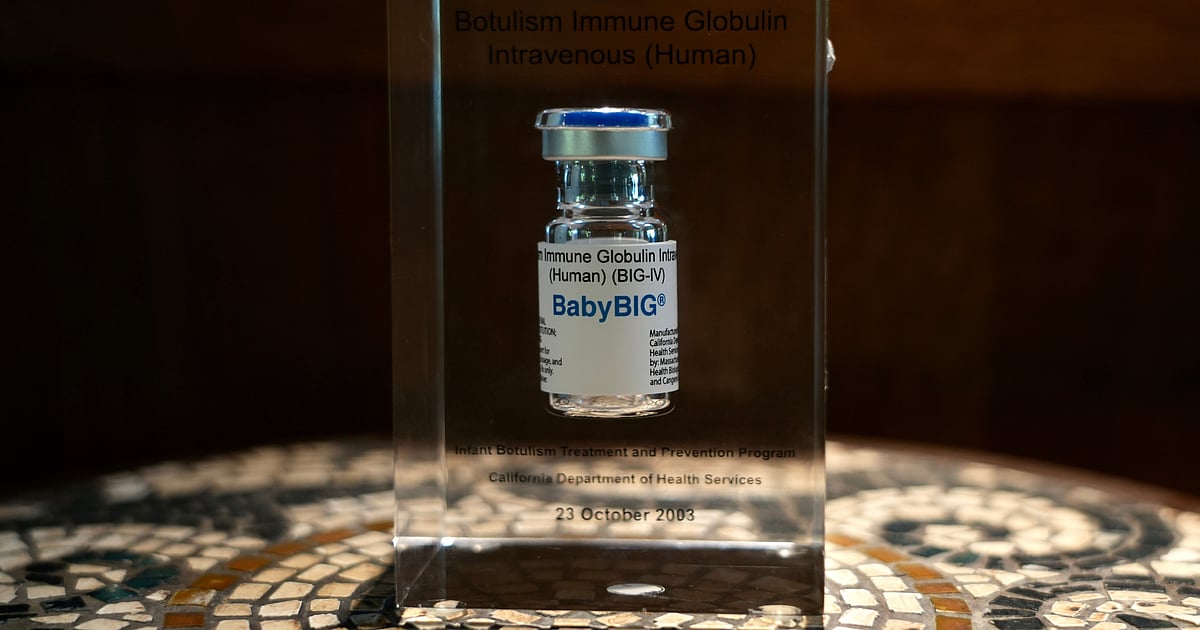
More than 3,700 children worldwide have been treated with BabyBIG since Arnon and his team conducted a pivotal clinical trial in California in 1997 that showed the medication could shorten hospital stays and reduce the need for breathing machines.
Produced in small batches every five years, BabyBIG costs nearly $70,000 per treatment, according to the California Infant Botulism Treatment and Prevention Program, which Arnon founded. Under state law, fees from the sale of the drug are used only to fund the botulism program.
The medication relies on donors like Nancy Shine, a 76-year-old retired biochemist in California who was vaccinated against botulism because she worked with the lethal germ in a lab.
Arnon first recruited Shine and other scientists for the BabyBIG project two decades ago because their blood produced high levels of antibodies, the blood proteins that neutralize the botulism toxin.
The early protocol required the volunteers to receive boosters doses of an investigational botulism vaccine also used by the US military and then undergo a procedure that harvests the blood plasma that contains antibodies against botulism types A and B.
“It was not very pleasant to be vaccinated with,” Shine recalled.
“There were a lot of side effects, like big welts where you got vaccinated and a little bit of pain.”
Still, Shine contributed to three batches of the antitoxin produced between 2008 and 2019. “It’s probably the highlight of my career that I actually was able to participate in this project and donate plasma,” Shine said.
“We made a product that could save infants’ lives.”