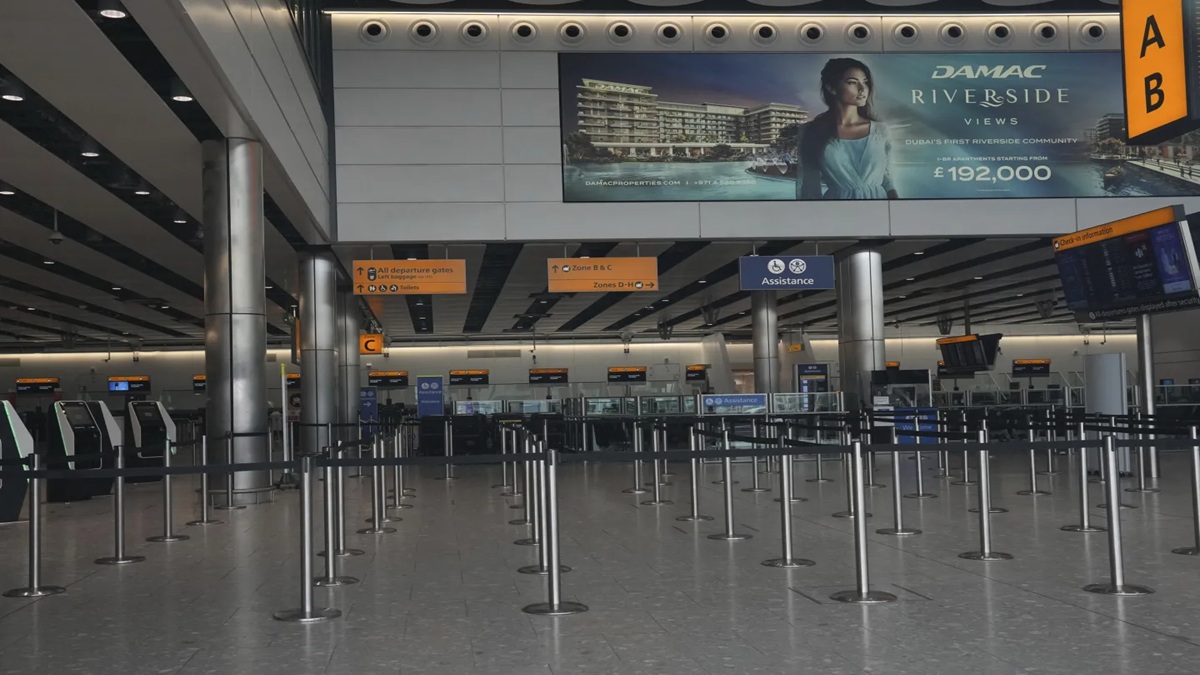



















Collins Aerospace, the provider of check-in and boarding systems for various airlines across multiple global airports, is currently facing a technical issue. London’s Heathrow Airport confirmed that this problem may cause delays for departing passengers, impacting airport operations.
A cyberattack targeting the service provider responsible for check-in and boarding systems has caused major disruptions at several prominent European airports, such as Brussels Airport, London Heathrow, and Berlin Brandenburg Airport. The attack, which took place late on Friday night, has forced airports to switch to manual check-in and boarding processes, leading to significant delays and flight cancellations.
Impact on passengers and airports
Brussels Airport experienced cancellations of multiple flights and advised passengers to only travel if their flights were confirmed. They urged travellers to arrive early- two hours before Schengen flights and three hours before non-Schengen flights- to accommodate slower manual processing. London Heathrow also warned of delays due to a technical issue caused by the third-party service provider. Although the full list of affected airports is not yet known, the disruption was widespread.
Service provider and response
Though unconfirmed officially, the service provider impacted is widely believed to be Collins Aerospace, a major global supplier of check-in and boarding systems. The company is actively working on restoring services. Brussels Airport expressed regret over the inconvenience caused and reassured passengers that efforts to resolve the problem were ongoing.
Airports not affected
Zurich Airport and Frankfurt Airport reported their systems remained unaffected by the cyberattack, maintaining normal operations.
Advice to travellers
Passengers scheduled for travel were advised to confirm their flight status with their respective airlines before heading to airports, and to be prepared for longer wait times due to manual processing procedures.
This cyberattack highlights the vulnerabilities in airport IT infrastructure and the critical need for robust cybersecurity measures to safeguard essential aviation services against disruptions that impact millions of travellers worldwide.