

















India’s recent decision to ban sugar exports until September 30 has ignited significant concerns among the sugar industry and farmers, who fear the move could negatively impact long-term stability and farmer livelihoods despite the government’s aim to control domestic prices and ensure availability.

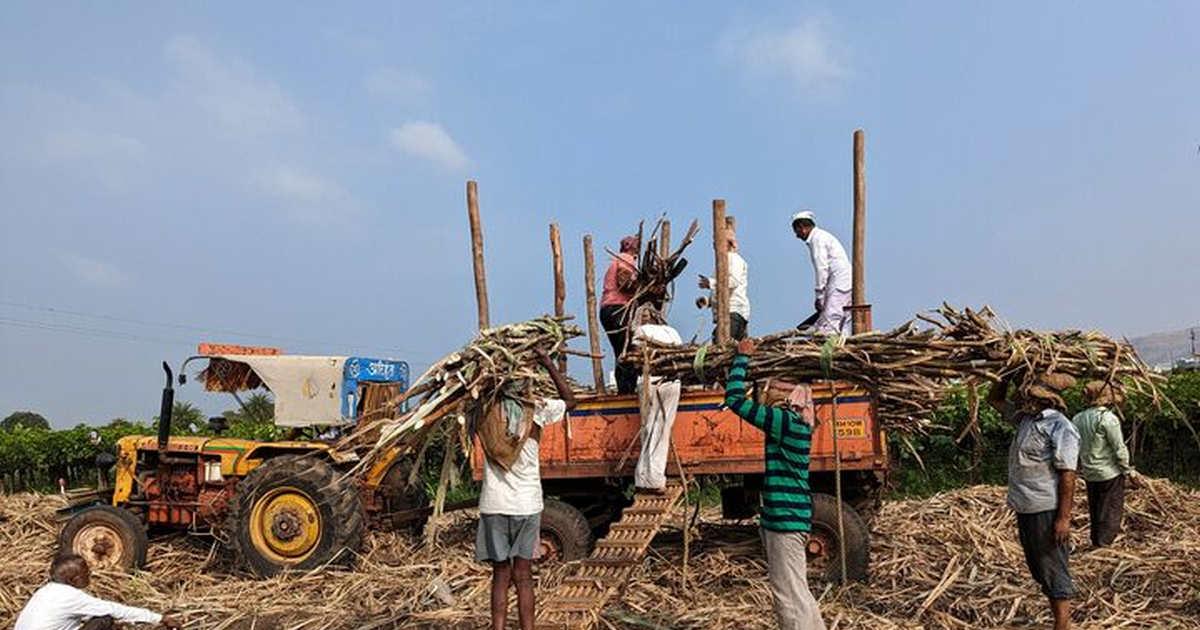
IMAGE: Sugar mill workers load harvested sugar cane in a tractor trolly in Sangli district, Maharashtra. Photograph: Rajendra Jadhav/Reuters
Key Points
- The Indian government has banned sugar exports until September 30, reversing an earlier decision to allow additional exports, citing concerns over domestic prices and availability.
- Industry players and farmer leaders have criticised the ban as a ‘knee-jerk reaction’ that could harm farmers through mounting dues and undermine the credibility of Indian suppliers globally.
- The Indian Sugar & Bio-energy Manufacturers Association (Isma) urged the government to permit the execution of already concluded export contracts to facilitate orderly trade settlement.
- Lower-than-expected sugar production in the 2025-26 season and tighter closing stocks are key factors influencing the government’s decision, with projections indicating around 27.95 mt against an earlier 29 mt forecast.
- Rating agency Icra suggests the export ban will help stabilise domestic prices and safeguard availability, though the outlook for the 2026-27 season remains concerning due to potential El Niño impacts.
The sugar industry reacted with shock and awe to the government’s decision to ban exports until September 30, barely weeks after it permitted an additional export of 500,000 tonnes over and above the earlier allowed 1.5 million tonnes (mt).
While some said the exports had been banned to check the surge in domestic prices and ensure availability in the coming months, others termed the move a knee-jerk reaction that could hurt farmers in the long run.
Some industry players also felt the move might not help the government meet its objective of reining in ex-mill sugar prices, which have risen from around Rs 35-36 per kg to almost Rs 38-40 per kg in recent weeks amid expectations of lower closing stocks and a drop in production.
Industry Concerns and Production Outlook
“The overall pipeline is weak as sugar production in the 2025-26 season (October to September) is expected to be around 27.95 mt against the earlier projected 29 mt, while closing stocks are estimated at 3.8-3.9 mt, significantly lower than last year’s 5 mt,” a senior industry official said.
He added that the export ban would at best help the government retain around 200,000 mt of sugar.
Farmer leader Raju Shetti described the Central government’s decision as “unwise”, saying it would hurt both mills and farmers through mounting dues.
Impact on Contracts and Global Credibility
The Indian Sugar & Bio-energy Manufacturers Association (Isma), while acknowledging the rationale behind the government’s move, said the abrupt nature of the restriction could create practical difficulties for mills that had entered into binding commitments with foreign buyers.
It urged the government to allow execution of already concluded export contracts, even after the ban on overseas sugar shipments came into effect from May 13 until September 30.
“Permitting execution of already concluded contracts may help facilitate orderly trade settlement and support the credibility of Indian suppliers in the global market,” Isma Director General Deepak Ballani said.
Export Figures and Future Projections
For the current sugar season 2025-26, the food ministry had initially permitted exports of 1.5 mt and subsequently opened an additional 500,000 tonne export window, of which only 87,587 tonnes received approval.
Informal reports indicate that nearly 650,000 tonnes have been exported, with an estimated 40,000-60,000 tonnes still in the pipeline.
Isma noted that exports were originally cleared in November 2025 on the basis of optimistic production estimates.
However, output in key cane-growing states fell short of projections due to lower-than-expected yields and adverse weather conditions.
Rating Agency Assessment and El Niño Threat
Rating agency Icra said the export ban would help arrest any sharp rise in domestic prices while safeguarding availability, given expectations of tighter closing inventories.
India’s net sugar production for 2025-26, after accounting for ethanol diversion, is likely to come in at around 28 mt, below earlier forecasts.
With domestic consumption pegged at 28.3 mt and exports already executed at 0.7 mt, closing stocks are projected at around 4.3 mt by September 2026, equivalent to roughly two months of consumption and marginally lower than in previous years, said Rachit Mehta, vice-president and sector head at Icra.
The outlook for 2026-27 adds another layer of concern.
The season is expected to be impacted by El Niño conditions, which could further weigh on sugarcane output and keep supplies tight.