












![Asla – Watan Sahi [Official MV] Latest Punjabi Song – K Million Music](https://i.ytimg.com/vi/sCuLojys0n4/maxresdefault.jpg "Asla – Watan Sahi [Official MV] Latest Punjabi Song – K Million Music")



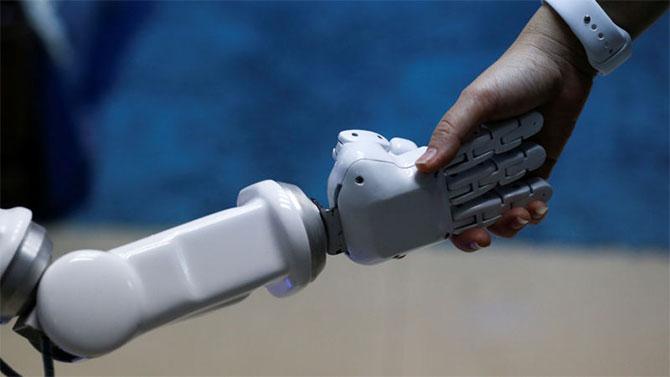
Air India is strategically implementing artificial intelligence to revolutionise its operations, enhance customer service, and drive down costs, marking a significant step in its transformation journey.
Key Points
- Air India is using AI to reduce operational costs, citing its generative AI-based virtual agent as an example.
- Generative AI helped Air India smoothly implement revised Flight Duty Time Limitations (FDTL) norms for pilots.
- Air India employs predictive, generative, and agentic AI to improve customer experience and reduce costs.
- The airline is using agentic coding to understand business requirements and support departments cost-effectively.
- AI tools will empower Air India employees, changing the nature of their roles and enhancing customer interactions.
Embracing technology in a big way, full-service carrier Air India is tapping opportunities with artificial intelligence to enhance operational efficiency, improve customer services, increase revenues and reduce costs.
Piloted by the Tata Group since its takeover from the government in January 2022, the loss-making Air India is in the midst of implementing an ambitious transformation plan in which technology is a key element.
AI Implementation and Cost Reduction
“We had practically nothing at the time of privatisation. So, we were able to go forward without undue consideration for the existing operating systems, comprising the previous generation of agents and chatbots,” Air India’s Chief Digital & Technology Officer Satya Ramaswamy said as he described various forms of Artificial Intelligence (AI) as quite transformational.
In a recent interview with PTI, Ramaswamy said that AI has helped reduce operational costs in many areas and cited the example of its generative AI-based virtual agent AI.g.
“It handles about 50 per cent of the contact volume based on customer choice and has saved a significant amount of contact centre costs. Similar examples are employee support, engineering, operations and other areas.
“We have worked extensively with all our CXOs to arrive at AI programmes of the highest priority for them, and many of them are about cost reduction aspects specific to each department,” he said.
Generative AI and Flight Duty Time Limitations
Another main area where the airline used generative AI pertained to the implementation of the revised FDTL (Flight Duty Time Limitations) norms for pilots.
Air India implemented the revised FDTL norms for pilots relatively smoothly last year.
Generative AI was a critical help in validating the airline’s FDTL implementation, Ramaswamy said, adding that the airline made several fixes before the smooth rollout of the FDTL norms.
“The rules from DGCA are typically codified into internal specifications relevant to our operations by our veteran pilots and then implemented in software. We used generative AI to validate the mapping between the DGCA rules, our internal specifications and the software implementation to ensure the correctness of the implementation and its completeness.
“This was never possible before, but generative AI gave us the ability to do that,” he said.
According to him, generative AI also helped in generating extensive test cases to further ensure the implementation is correct and as intended by the DGCA (Directorate General of Civil Aviation) rules.
“In particular, we generated an exhaustive set of edge and corner cases to test the implementation, as they have the potential to result in violations which we want to very much prevent,” he noted.
Types of AI and Agentic Coding
The airline has three types of AI — predictive, generative and agentic.
A holder of multiple patents, Ramaswamy said Air India is looking at the entire landscape and at software systems that “we believe we can implement ourselves very quickly using agentic coding. Such measures will help reduce the operating cost”.
Now, with agentic coding, he said the airline is able to understand its business requirements very precisely and support the work of various departments in a more precise and cost-effective manner.
“Various forms of AI, be it traditional predictive AI, generative AI, or the emerging agentic AI, are all quite transformational. We have seen for ourselves how they reduce customer pain, increase customer delight, reduce costs, increase revenues and very importantly, do things that were never possible before,” he said.
Impact on Hiring and Employee Roles
To a query on whether increasing use of AI could result in less hiring activities in the long term and increased consolidation of existing roles, Ramaswamy said it is too early to tell whether there will be less hiring per se.
“What is, however, certain is that the nature of practically every role we have will change due to AI. Every employee will be empowered by AI tools.
“For example, we are providing our cabin supervisors with tools to interact with customers who may have been affected by past disruptions in a manner that is empathetic manner and is consistent across the organisation. We have developed capabilities that help team members in our commercial department avoid some of the manual work in managing our routes…,” he said.
Disclaimer: News content is sourced from the stated source. Headlines, summaries, section headers, and images are automatically generated or selected using AI/algorithms and may not always be fully accurate. Readers are advised to refer to the full article for complete context.