















‘We are profoundly energy-dependent on the Gulf. That dependency must now be redirected towards the United States, because we require American permission to procure oil.’
‘We additionally require Iranian permission to acquire oil from that source. So India now has to seek two separate permissions merely to secure its energy supply.’
‘Should we be compelled to source from America, or from Venezuela — which is, in effect, American-controlled supply — that will inevitably carry a price premium, an elevated shipping cost, and a considerably extended delivery timeline, given the distances involved.’

Photograph: Arko Datta/Reuters
Ace investor, serial entrepreneur and founder of GQ FinXRay, Shankar Sharma pulls no punches in this conversation with Prasanna D Zore/Rediff as he takes on some ‘delusional/illusional’ narratives set by India’s leading money managers.
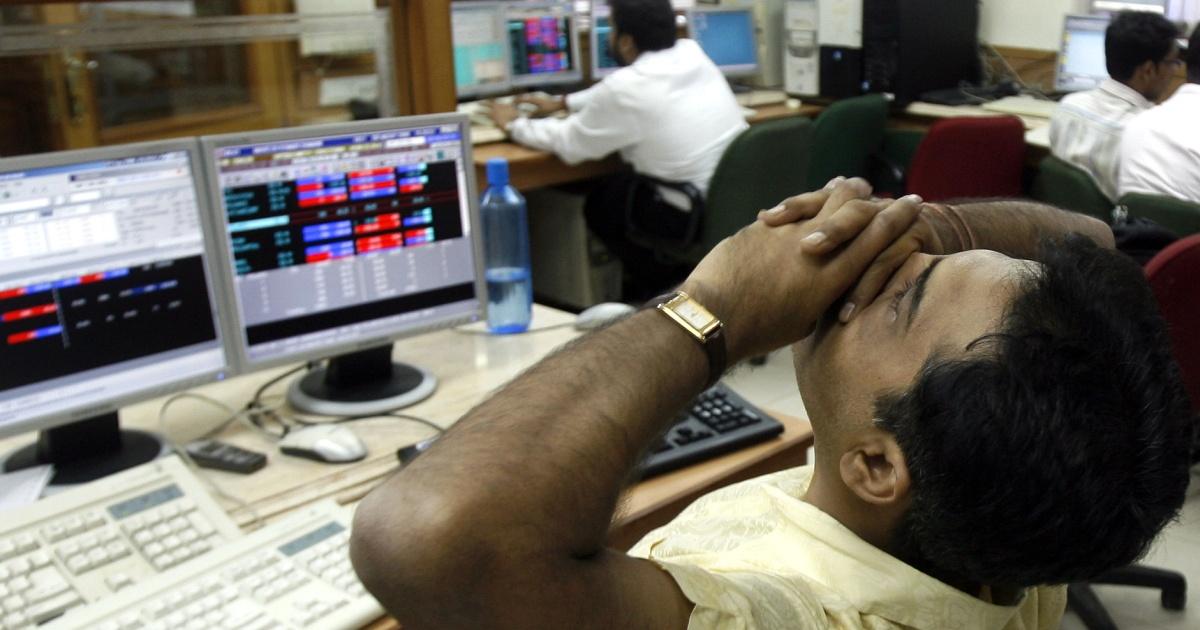
With oil above $100, the rupee at 93-94, and foreign institutional money haemorrhaging at over Rs 1 lakh crore this calendar year alone — even as domestic SIP inflows soldier on at nearly Rs 30,000 crore monthly — Sharma insists the apparent resilience is a carefully curated illusion.
India, he argues, ranks amongst the worst-performing markets globally over the past two years in both equity and currency terms, and the financial media’s persistent failure to report this in dollar terms amounts to “being economical with the truth.”
Key Points
- ‘The reality is that India delivered excess returns in the four years from 2020 to 2024, and the next four to five years are going to be distinctly subpar — perhaps flat, perhaps mildly negative in aggregate.’
- ‘The proposition is: We are growing at 6%-7%, corporate balance sheets are strong, macros are sound. Fine. But is this optimism or overconfidence? I would characterise it as self-delusion.’
- ‘India is down approximately 40%. That is a bear market. One cannot argue that the market has not collapsed. It has collapsed.’
With the Gulf conflict now threatening energy security, fertiliser imports, and the current account in equal measure, Sharma — in this two part interview — delivers a sobering verdict: “There is no country which is worse off than India at the current point in time.”
He reserves particular scepticism for the notion of forex reserve adequacy — describing India’s reserves as “callable” (which India doesn’t own and can deplete on demand) rather than earned surplus — and identifies what he regards as a profound structural hollowness at the foundation of the Indian economy.
‘Iran Crisis: There is no nation more exposed than India at this juncture’
We are speaking at a moment when oil has surged above $100, the rupee is hovering around 93-94, and foreign institutional investors have withdrawn over Rs 1 lakh crore this calendar year alone. Yet domestic SIP inflows of nearly Rs 30,000 crore per month continue unabated.
On the surface, this presents the appearance of resilience — but beneath it, mid-cap and small-cap indices are bleeding, down 20%-30%.
When you examine these data points in their totality, do you perceive structural strength, or a rather well-disguised fragility?
There is no disguise whatsoever. India is, in point of fact, the weakest market in equity terms as well as in currency terms over the past one — indeed, two — years. It languishes at the very bottom of the 35 to 36 markets that we track in terms of performance.
The disguise, such as it is, exists solely because the Indian financial press has consistently declined to highlight how poorly India has fared relative to the rest of the world over the past 52 weeks and beyond — both in currency terms and in equity returns, and critically, in dollar terms. That is the crux of the matter. There is no disguise.
Given that we now have what amounts to a near full-scale armed conflict in the Gulf, how do you assess the outlook for India going forward?
From India’s standpoint, if you are asking specifically about India — the outlook is deeply unfavourable. India is, without any shadow of a doubt, the worst-affected nation amongst all major countries in this scenario.
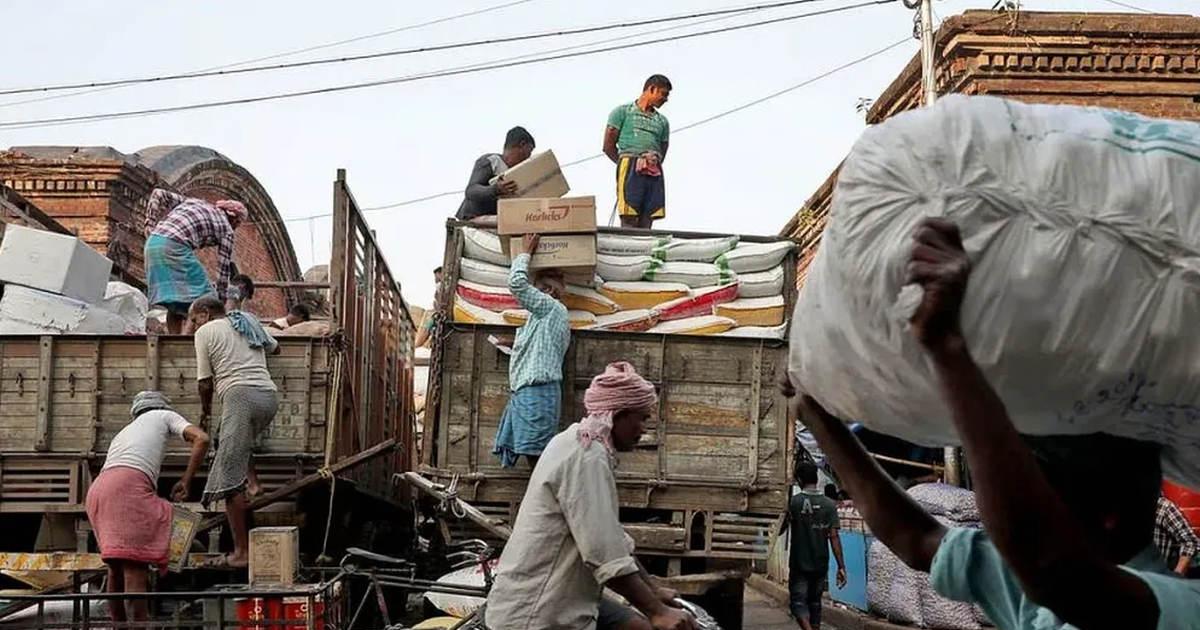
We are profoundly energy-dependent on the Gulf. That dependency must now be redirected towards the United States, because we require American permission to procure oil.
We additionally require Iranian permission to acquire oil from that source. So India now has to seek two separate permissions merely to secure its energy supply.
Should we be compelled to source from America, or from Venezuela — which is, in effect, American-controlled supply — that will inevitably carry a price premium, an elevated shipping cost, and a considerably extended delivery timeline, given the distances involved.
The same logic applies to gas, where we remain wholly dependent on Middle Eastern supply and no longer carry any meaningful leverage with those nations — nor, for that matter, with Russia.
We shall, once again, revert to dependence on America for that as well. And when one turns to fertilisers — we produce virtually none of our own. India remains 60%-70% agricultural in terms of its working population. That may not contribute commensurately to GDP, but it sustains the livelihoods of the majority of this country’s people.
In every dimension one examines, there is no nation more exposed than India at this juncture.
‘Talk is cheap. Stocks, unfortunately, are not cheap’
And yet major benchmark indices have only corrected 10%-12%…
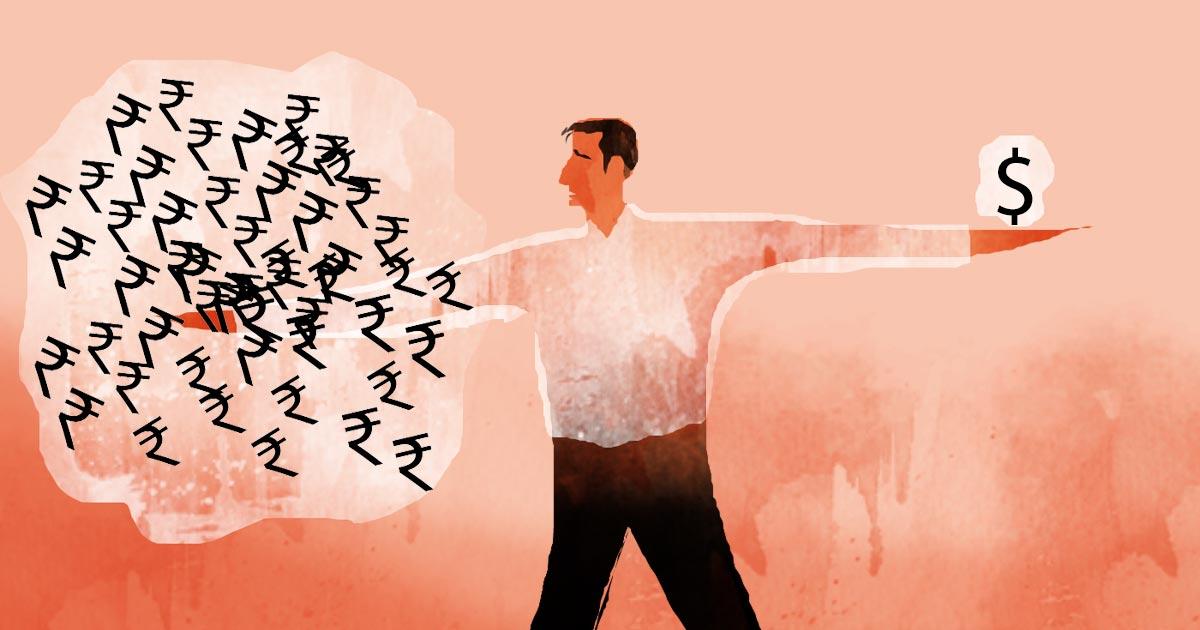
It is emphatically not 10%-12%. The correction, properly understood, is closer to 30%. One must account for the dollar depreciation of the rupee. Some may argue that currency depreciation is a concern only for foreign institutional investors — that a domestic investor sitting in India need not worry about it. That is a wholly disingenuous position.
If the currency depreciates in dollar or euro terms, you are losing purchasing power — full stop.
Are we never to purchase anything imported? Are we never to consume oil, gas, or fertiliser sourced from abroad? Are we never to send our children overseas for education, or travel internationally ourselves?
To tell investors that the decline is merely 10% whilst omitting the currency dimension is — to use a precise phrase — being economical with the truth. It is a form of cheating investors through the selective deployment of half-truths.
If the Sensex were to fall 10% whilst the rupee simultaneously collapsed to 150, would any responsible financial commentator describe that as merely a 10% decline? Would that be a fair statement? A logical statement? A financially honest statement? Of course not. So let us be clear about what is actually happening here.
The market has collapsed’
Why, then, are these narratives being perpetuated? Is India still a market of expensive narratives and inexpensive logic?
Talk is cheap. Stocks, unfortunately, are not cheap — but talk most certainly is.
If that is the condition on the ground, why has the Indian market not seen a deeper correction in absolute terms?
It has already corrected — substantially. I must repeat this, because it bears emphasising: The market is already down approximately 35% in real terms.
A bear market can manifest in multiple forms. The most visible form is the absolute variety — where a given market falls 30%, 40%, 50% in outright terms. That typically occurs under one of two conditions: A country-specific major catastrophe, or a global meltdown of the kind witnessed in 2008 or 2000 (dot com bubble bust).
Neither of those conditions currently exists, and yet — our currency has collapsed, our equity indices are down 15% from their peaks in absolute terms. Combined, that represents a decline of 30%-35%.
More critically, relative to global benchmarks — whether one looks at emerging markets indices or the All Country World Index — India is down approximately 40%. That is a bear market.
One cannot argue that the market has not collapsed. It has collapsed. And we have done so, let us not forget, during what has been a spectacular global bull run over the past 12 to 24 months — markets in other parts of the world are up 30%, 40%, 50%, even 70% in certain cases.
That India is down 30% in that environment, says everything one needs to know. We cannot remain as proverbial frogs confined to a well, oblivious to the world outside. This requires global context, and that global context is deeply unflattering.
‘I would characterise it as self-delusion’
What exactly is the Indian market getting wrong? Corporate balance sheets are ostensibly strong. GDP growth is cited at 6%-7%.
The markets themselves do not believe any of that — and markets are the final arbiters. Markets are not amenable to being controlled through narrative. One can jawbone a market for a day or two, but not permanently.
The reality is that India delivered excess returns in the four years from 2020 to 2024, and the next four to five years are going to be distinctly subpar — perhaps flat, perhaps mildly negative in aggregate.
I said precisely this in 2024 and wrote about it at length. So the markets are delivering a period of subpar returns. One can continue to contest that reality and proclaim the India story from the rooftops, but that is not how markets function.
So where precisely is the disconnect? Is the India story itself being oversold?
Let us first establish what the story actually is. The proposition is: We are growing at 6% to 7%, corporate balance sheets are strong, macros are sound. Fine. But is this optimism or overconfidence? I would characterise it as self-delusion.
When one’s analytical faculties are insufficiently developed, one is perpetually under the impression that they are highly developed — that is the very nature of the condition. A person of limited insight never voluntarily identifies himself as such. It requires those observing from the outside to point it out.
An intelligent person is capable of identifying his own blind spots and limitations. But someone who lacks that capacity of self-reflection simply cannot do so — because if he were sufficiently self-aware to recognise his limitations, he would, by that very act, have transcended them and would be called extremely intelligent!
There is, in fact, a beautiful parallel in Buddhist literature — the concept that a fool who believes himself a pundit is the most intractable kind of fool.
That, I am afraid, is an apt description of where much of India’s investing discourse currently resides.
‘2026-2027 could become quite a challenging year’
Returning to macroeconomics — with oil above $100, India importing 80% to 85% of its crude, and the rupee at 93-94, are markets adequately pricing the risk to the current account and the currency?
Is India’s macroeconomic position headed for the ICU, if not already in?
I would not go so far as to say intensive care, but we have a material issue with the balance of payments. In fiscal year 2025, we recorded approximately negative $5 billion in the balance of payments — after accounting for current account flows, capital flows, and everything else.
For the current fiscal year, I suspect the outcome will be materially worse — perhaps negative $10 billion to $20 billion.
Looking ahead to 2026-2027, it could become quite a challenging year. Our energy import bill stood at approximately $170 billion to $180 billion prior to the commencement of hostilities in West Asia. Since then, energy prices have risen between 50% and 100% across the board, compounded by the rupee’s depreciation.
Taking both factors together, one can reasonably estimate that our overall import bill has risen by approximately 70% — representing an additional $70 billion to $80 billion in annual outgoings, assuming current conditions persist for the next twelve months. That is an enormous addition to an already stretched external account.
And the forex reserves — often cited as a buffer?
Our foreign exchange reserves are not what commentators typically represent them to be. They are not the equivalent of earned savings sitting securely in an account at the end of the month.
A substantial portion of those reserves comprises inflows from equity investors, bond subscriptions, and foreign direct investment — all of which are, in a meaningful sense, callable obligations. These are not monies belonging to India in any permanent sense.
The only component of our reserves that one can genuinely characterise as earned is remittance income — which runs at perhaps $50 billion to $80 billion annually. Everything else is money that has come in and can, under the right conditions, go back out.
Compare that with China’s reserves, which represent earned trade surpluses — fundamentally different in character and in solidity.
Our reserves, properly understood, are what I would term callable reserves — and they carry an inherent fragility that is routinely underappreciated in public discourse. The analogy is a bank: A bank loans out the deposits it receives, but must maintain sufficient liquidity to meet withdrawal demands. If those demands arrive simultaneously and in volume, the position becomes precarious.
What do your quantitative models tell you about the point at which a falling rupee and spiralling oil prices cross from a problem into a crisis?
I hope sincerely that we do not reach that point — but I have been quite clear in my assessment from the very first day of this conflict that it was not going to resolve itself quickly or cleanly.
Many commentators, operating without the benefit of serious research, assumed it would be resolved swiftly — that a statement here or a diplomatic gesture there would bring matters to a close. But when you do not have the analytical tools or the patience to examine a situation in depth, you default to wishful thinking.
My job requires that I analyse, gather facts, and examine data. And all of that, from the very outset, told me that this is an extraordinarily complex and intractable problem — and it has become progressively more so as the weeks have elapsed.
The conditions that existed prior to the outbreak of hostilities — questions of nuclear de-escalation, access to the Strait of Hormuz, broader regional stability — were already deeply complex.
The United States and Israel proceeded with military action notwithstanding those complexities. And now, what had previously been agreed or understood is no longer going to be accepted by Iran.
I see no clear pathway to resolution as matters stand, and all of that is deeply unfavourable for India.