










India
oi-Saumya Joshi


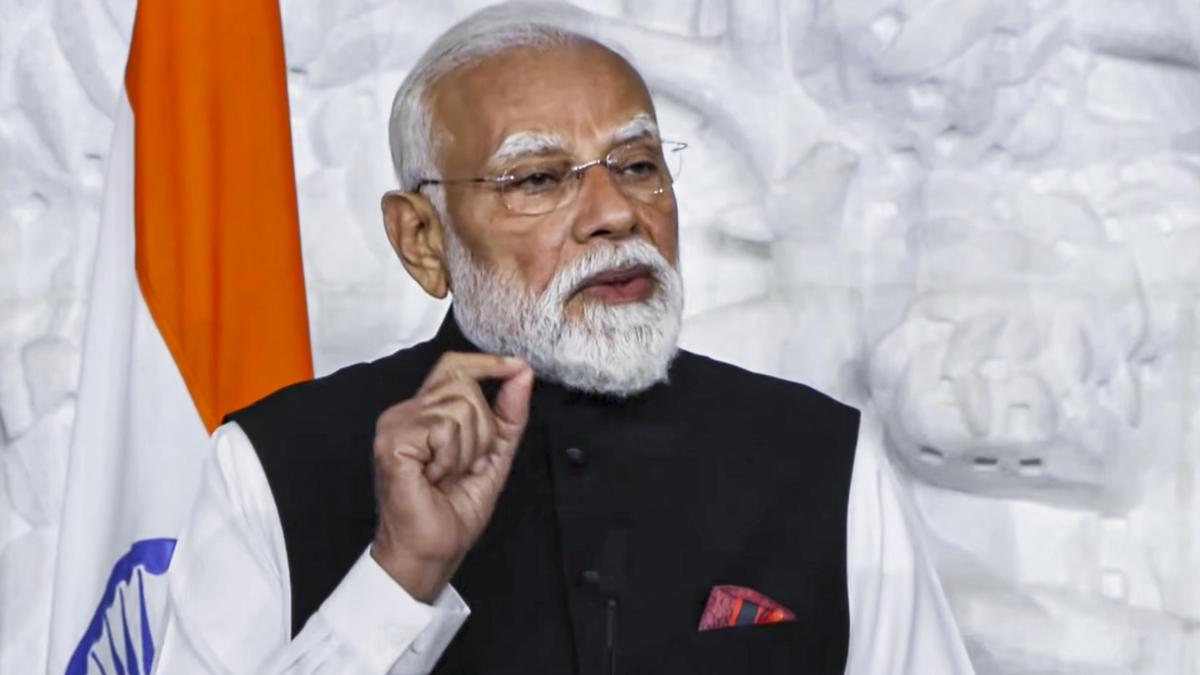
On
October
31,
2024,
Prime
Minister
Narendra
Modi
marked
National
Unity
Day,
or
Rashtriya
Ekta
Diwas,
with
a
powerful
address
at
the
Statue
of
Unity
in
Gujarat,
emphasizing
the
importance
of
national
unity
and
the
need
to
identify
and
combat
“Urban
Naxalism.”
In
his
speech,
Modi
called
attention
to
certain
forces
that
he
claimed
are
attempting
to
destabilize
India’s
economy
and
dissuade
global
investors.

He
urged
citizens
to
recognize
and
stand
against
these
so-called
“Urban
Naxals,” whom
he
described
as
agents
of
discord
threatening
the
nation’s
unity.
“These
individuals,
while
invoking
the
Constitution
and
democracy,
are
working
to
divide
India
among
its
people,”
Modi
stated.
“The
Naxalism
that
once
thrived
in
rural
areas
has
evolved
into
a
new
model
of
urban
Naxalism,
and
it
is
essential
for
us
to
confront
those
who
seek
to
break
our
country
apart.”
During
the
event,
Modi
reiterated
his
government’s
commitment
to
achieving
“One
Nation,
One
Election,” which
aims
to
synchronize
the
electoral
process
for
the
Lok
Sabha
and
state
assemblies,
as
reported
by
Hindustan
Times.
He
expressed
optimism
that
this
initiative
would
enhance
democracy
in
India
and
optimize
the
country’s
resources.
“India
is
also
moving
towards
a
One
Nation,
One
Civil
Code,
which
embodies
the
spirit
of
a
secular
state,”
he
added.
The
Prime
Minister
remarked
on
the
last
decade
as
a
period
of
unprecedented
achievements
for
national
unity,
stating
that
this
unity
will
be
reflected
in
every
government
initiative.
He
noted,
“Today
marks
the
beginning
of
Sardar
Patel’s
150th
birth
anniversary
year,
a
time
for
us
to
honour
his
contributions
to
India’s
unity.
This
celebration
will
span
two
years
and
will
be
filled
with
initiatives
that
reflect
national
unity.”
Modi’s
tribute
to
Sardar
Vallabhbhai
Patel,
often
called
the
architect
of
a
unified
India,
was
a
central
theme
of
his
address.
He
emphasized
Patel’s
legacy
in
bringing
together
hundreds
of
princely
states
post-independence,
stating,
“When
India
gained
independence,
many
believed
the
nation
would
disintegrate.
However,
Sardar
Patel’s
realism,
resolve,
humanitarian
spirit,
and
nationalistic
aim
ensured
that
a
united
India
emerged.”
Earlier
in
the
day,
Modi
paid
tribute
to
Patel
at
the
Statue
of
Unity
and
administered
the
Unity
Oath,
followed
by
attending
the
‘Rashtriya
Ekta
Diwas’ parade,
as
reported
by
Hindustan
Times.
The
parade
featured
16
marching
contingents
from
nine
states
and
one
Union
Territory,
including
four
Central
Armed
Police
Forces,
and
the
National
Cadet
Corps
(NCC).
Highlights
included
a
spectacular
flypast
by
the
Indian
Air
Force’s
‘Surya
Kiran’
team
and
displays
of
Indian
martial
arts
by
the
Border
Security
Force
(BSF).
In
conclusion,
PM
Modi’s
address
on
Rashtriya
Ekta
Diwas
served
not
only
as
a
tribute
to
Sardar
Patel
but
also
as
a
call
to
action
for
citizens
to
remain
vigilant
against
divisive
forces
while
working
towards
a
more
unified
and
prosperous
India.