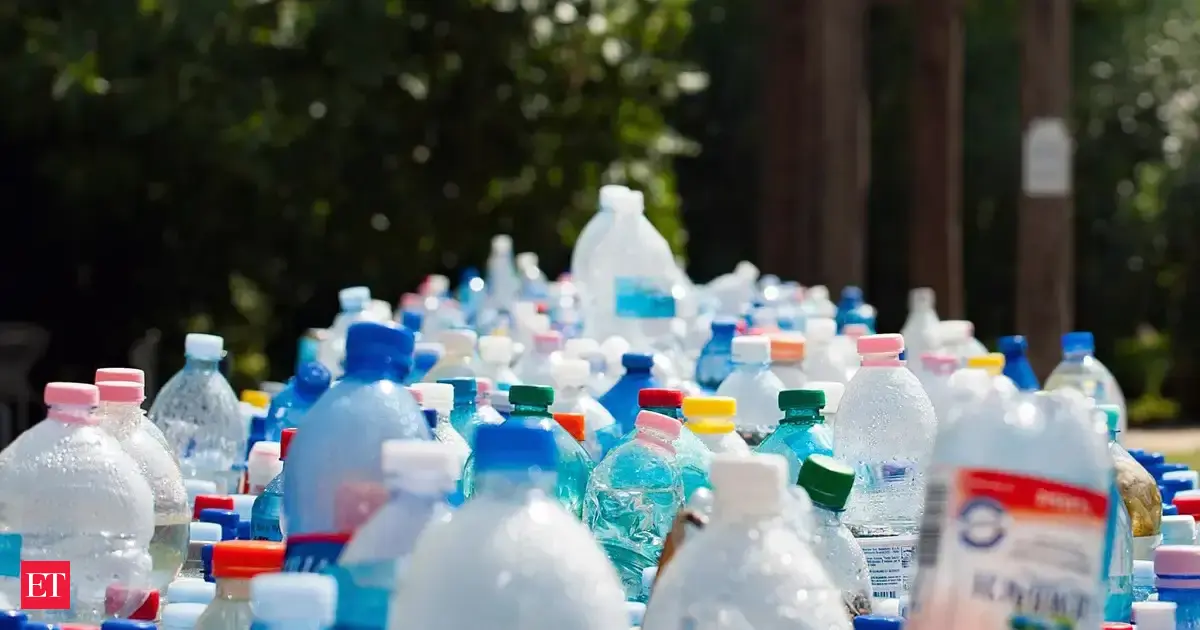
















The idea challenges the way society thinks about plastic waste. For decades, discarded bottles have been viewed mainly as an environmental burden. Now, scientists are exploring whether the same material could become a valuable resource for clean energy.
The research focuses on polyethylene terephthalate, commonly known as PET, the plastic widely used in beverage bottles. Through a carefully controlled process, scientists converted PET into a crystalline carbon structure similar to graphite used in battery anodes.
Could plastic waste become the future source of battery materials?
Plastic recycling has traditionally focused on turning old products into new plastic items. But the Penn State research explores a different possibility: changing plastic itself into an advanced energy material.
The team converted PET waste into synthetic graphite, a form of carbon known for its ability to store and release electrical charges. In lithium-ion batteries, graphite plays a crucial role as the anode material, helping batteries function efficiently.

The researchers found that the graphite created from plastic waste showed highly organized carbon layers. These microscopic structures, called crystallites, displayed a strong level of alignment and order.
That matters because battery performance depends heavily on the quality of the materials inside. A well-structured graphite anode can influence how efficiently a battery charges, stores energy, and operates over time.The discovery does not mean every discarded bottle can immediately become a battery component. More testing and scaling are needed. However, it opens a new pathway where recycling connects directly with clean energy innovation.
Why is graphite becoming such an important resource?
Graphite may not receive as much attention as lithium or other battery materials, but it remains one of the most important parts of modern energy storage.
Every lithium-ion battery requires graphite because it acts as the location where lithium ions move during charging and discharging. Without graphite, many of the devices people rely on every day would not function the same way.
As electric vehicles become more common and renewable energy systems expand, the need for battery-grade graphite continues to grow. This creates a challenge: finding enough high-quality graphite while reducing environmental damage from mining and processing.
The United States Department of Energy classifies graphite as a critical mineral because of its importance to modern technology and energy systems.
The plastic-to-graphite approach offers a different way to think about supply chains. Instead of searching only underground for resources, scientists are exploring whether existing waste streams can provide new materials.
How did researchers transform a plastic bottle into graphite?
Turning PET plastic into graphite requires more than simply heating it. Scientists used a controlled thermal process designed to reorganize the carbon atoms inside the material.
The researchers combined shredded PET with a small amount of graphene oxide, a carbon-based material that helped guide the transformation. The graphene oxide acted as a structural template, encouraging carbon atoms to arrange into graphite-like layers.
The team discovered that using around 2.5% graphene oxide produced the most ordered graphite structure. The resulting material showed crystallite properties that compared favorably with commercial natural graphite samples.
This process is different from many traditional methods of making synthetic graphite. Conventional techniques often depend on metal catalysts such as iron, nickel, or cobalt, which can introduce impurities.
By using graphene-based additives instead, the researchers aimed to create cleaner graphite while reducing the need for extra purification steps. That could make future production more efficient and environmentally friendly.
Could recycling change how we view plastic forever?
The deeper meaning of this research goes beyond batteries. It challenges the idea that waste has no value after its original purpose is finished.
A plastic bottle usually represents a short moment of convenience followed by years of environmental impact. But if that same material can become part of an energy storage system, its lifecycle could look very different.
This does not solve the global plastic pollution crisis overnight. Reducing unnecessary plastic use and improving recycling systems remain essential. Still, finding valuable uses for existing waste can change how industries approach materials.
The concept reflects a broader shift in science: waste is increasingly being seen as a potential resource rather than simply something to remove.
Researchers are now looking at how these methods could be improved for larger-scale manufacturing. Future studies will need to test battery performance, durability, and economic feasibility.
FAQs:
1. Why is finding alternative battery materials becoming important?
The global shift toward electric transportation and renewable energy is increasing pressure on raw material supplies. Scientists are exploring new sources because future energy systems will need materials that are reliable, affordable, and environmentally responsible.
2. Can recycling solve the entire plastic pollution problem?
No single technology can eliminate plastic waste completely. Recycling innovations can reduce the amount of discarded material, but reducing unnecessary plastic production and improving waste management remain important parts of the solution.
3. What makes graphite valuable in modern technology?
Graphite has a unique layered structure that allows ions to move between its layers. This property makes it useful in energy storage, industrial applications, electronics, and advanced manufacturing.
4. Could waste-based materials make batteries cheaper in the future?
Possibly. If waste materials can be converted into useful battery components at large scale, manufacturers may gain additional supply options. However, cost depends on processing methods, energy use, and commercial production efficiency.