

















Last Updated:
The lack of transparency surrounding the deal has emerged as a major concern among conservative commentators and former administration officials.




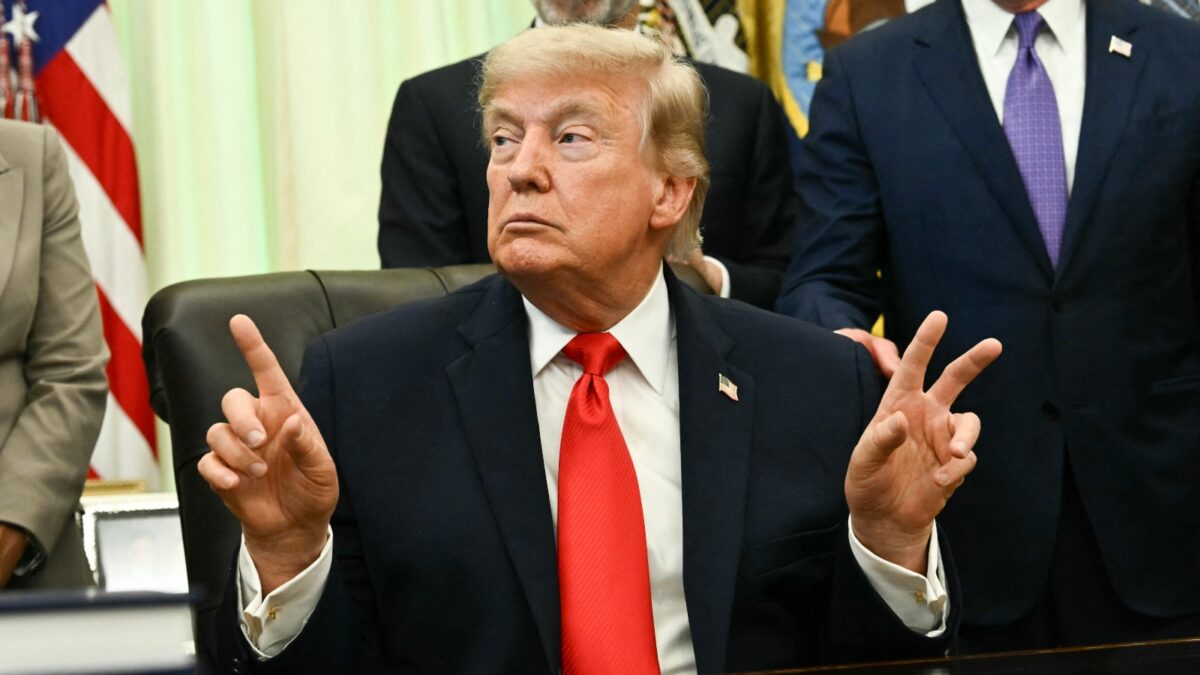
US President Donald Trump speaks before signing a proclamation in the Oval Office of the White House. (AFP photo)
Even as US President Donald Trump celebrated a landmark agreement with Iran as a breakthrough that could end the conflict and prevent Tehran from acquiring a nuclear weapon, some prominent Republican foreign policy hawks voiced concerns that the administration may have conceded too much in pursuit of peace.
With the full text of the memorandum of understanding (MoU) yet to be released, a number of Trump’s allies and longtime supporters have begun questioning whether the agreement adequately protects US and Israeli security interests.
Senator Lindsey Graham, one of US Congress’s most outspoken Iran hawks, said he was “somewhat concerned” by reports that Iranian officials were describing the agreement differently from the Trump administration. In a post on X (formerly Twitter), the South Carolina Republican also stressed that US Congress should have a role in reviewing any such agreement.
The lack of transparency surrounding the deal has emerged as a major concern among conservative commentators and former administration officials. Fox News host Mark Levin, a vocal supporter of military action against Iran during the conflict, has repeatedly called on the administration to release the text of the agreement.
Levin’s criticism intensified after Trump publicly criticized Israeli military actions against Hezbollah in Lebanon during the final stages of negotiations, prompting questions among some conservatives about whether Washington may be placing new constraints on Israel.
Former Secretary of State Mike Pompeo, who oversaw the Trump administration’s “maximum pressure” campaign against Iran during the US President’s first term, also struck a cautious note.
“I pray that any settlement preserves those sacrifices and secures the interests of the American people,” Pompeo wrote on X.
The sharpest criticism came from conservative commentator Marc Thiessen, a former aide to President George W. Bush and a figure reported to have advised Trump on foreign policy issues. Speaking on Fox News, Thiessen warned that the emerging framework bore similarities to the nuclear agreement negotiated by former US President Barack Obama- a deal Trump repeatedly denounced and ultimately withdrew from during his first term.
The comparison is particularly sensitive for Trump, who has sought to contrast his agreement with previous diplomatic efforts.
Asked when the text of the memorandum would be released, Trump said he wanted the public to see it because it was “a very powerful document.”
“It’s not like the Obama document, which was just a terrible document,” the US President said on the sidelines of the G7 summit.
Vice President JD Vance said Tehran will only receive benefits if it fulfills commitments related to regional stability, support for militant groups and a verifiable pledge not to develop a nuclear weapon.
Still, the criticism highlights an emerging divide within Trump’s political coalition. While many Republicans have welcomed the apparent end of the conflict and the reopening of the Strait of Hormuz, some remain skeptical that Iran can be trusted and are demanding greater clarity about the concessions made during negotiations.
Those questions are likely to intensify once the administration publishes the text of the memorandum, which Trump has indicated could be released after Friday following a formal signing ceremony in Geneva.
Washington D.C., United States of America (USA)
Read More