














India’s economy in the financial year 2025-26 witnessed robust growth, primarily driven by accelerated investment demand and steady private consumption, according to provisional estimates released by the National Statistics Office.

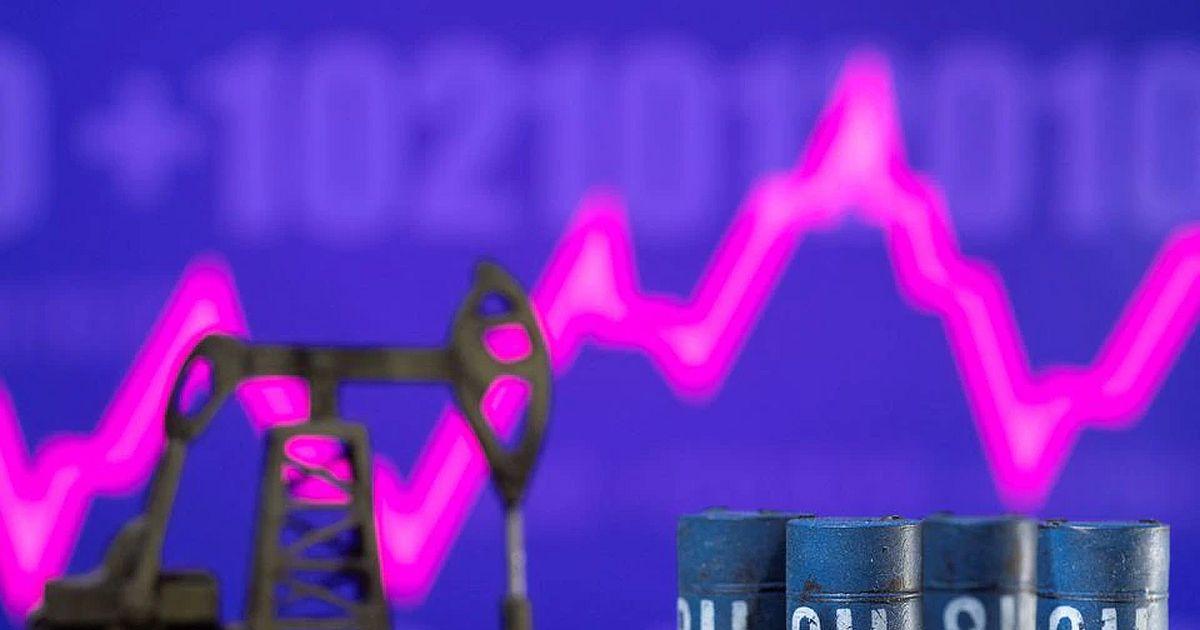
Kindly note that this illustration generated using ChatGPT has only been posted for representational purposes. Illustration: Ashish Narsale/Rediff
Key Points
- India’s Gross Fixed Capital Formation (GFCF) accelerated to 8.2 per cent in FY26, up from 6.4 per cent in FY25, indicating strong investment momentum.
- Private Final Consumption Expenditure (PFCE) growth in real terms increased to 7.7 per cent in FY26, showing steady consumption demand.
- The share of GFCF in nominal GDP rose to 31.9 per cent, while PFCE’s share increased to 56.7 per cent in FY26.
- Economists attribute the higher GDP growth in FY26 to a sharper expansion in fixed capital formation, spread across both public and private sectors.
- Despite a dip in consumption demand in Q4 FY26, overall investment demand continued to rise, pushing the quarterly GDP print higher than expected.
Investment demand gathered pace in the financial year 2025-26 (FY26) as gross fixed capital formation (GFCF) accelerated to 8.2 per cent from 6.4 per cent in FY25, according to data released by the National Statistics Office (NSO) on Friday.
The provisional estimates of gross domestic product (GDP) for FY26 showed the share of GFCF, which represents investment demand in the economy, in nominal gross domestic product (GDP) terms rose by 30 basis points (bps) to 31.9 per cent from 31.6 per cent in FY25.
Consumption Trends and Economic Drivers
Private final consumption expenditure (PFCE) growth in real terms accelerated to 7.7 per cent in FY26, from 5.8 per cent in FY25.
The share of PFCE in nominal GDP rose by 20 bps to 56.7 per cent, from 56.5 per cent in FY25.
Devendra Kumar Pant, chief economist, India Ratings & Research, said GFCF pushed GDP growth higher in FY26.
“Higher growth in the provisional estimate was due to a sharper expansion in fixed capital formation.
“Government consumption, exports and imports, however, are estimated to grow more slowly as per PE (provisional estimates) as against SAE (Second Advanced Estimates),” said Pant.
Government Spending and Market Sentiment
Growth in government spending, represented by government final consumption expenditure (GFCE), eased to 5.5 per cent in FY26 from 6.5 per cent in the preceding year.
The share of GFCE in nominal GDP remained flat year-on-year (Y-o-Y) at 10.7 per cent.
India’s strong domestic demand, coupled with proactive government intervention, could help cushion the economy from external headwinds, said Rumki Majumdar, economist, Deloitte.
“The government’s front-loaded capital expenditure programme is already providing an important growth buffer at a time when private investment sentiment remains cautious,” she added.
Investment Spread and Q4 Performance
Bank of Baroda Chief Economist Madan Sabnavis said investment was well spread out across public and private sectors.
“Capital formation rate, which is a proxy for investment, was up marginally to 31.9 per cent, which does indicate that it was well spread out across public and private sectors,” he said.
“Of positive interest was steady growth in consumption and capital formation which vindicates, in a way, the push given by the government to spending during the year,” Sabnavis added.
Additionally, the fourth quarter (Q4) of FY26 saw a dip in consumption demand with PFCE decelerating to 7.1 per cent after rising to 8.2 per cent in Q3FY26 in real terms.
However, growth in investment demand rose to 10.8 per cent in Q4 from 8.2 per cent in Q3.
Meanwhile, government expenditure in Q4 rose sequentially to 4.9 per cent from 4.6 per cent.
Dharmakirti Joshi, chief economist, Crisil Ltd, said healthy private consumption and fixed investments pushed the Q4 GDP print to higher than expected.