















Last Updated:
In Bengal, local political ecosystems are built around access to power & convenience. When the perception of power changes, behaviour changes much faster than electoral statistics




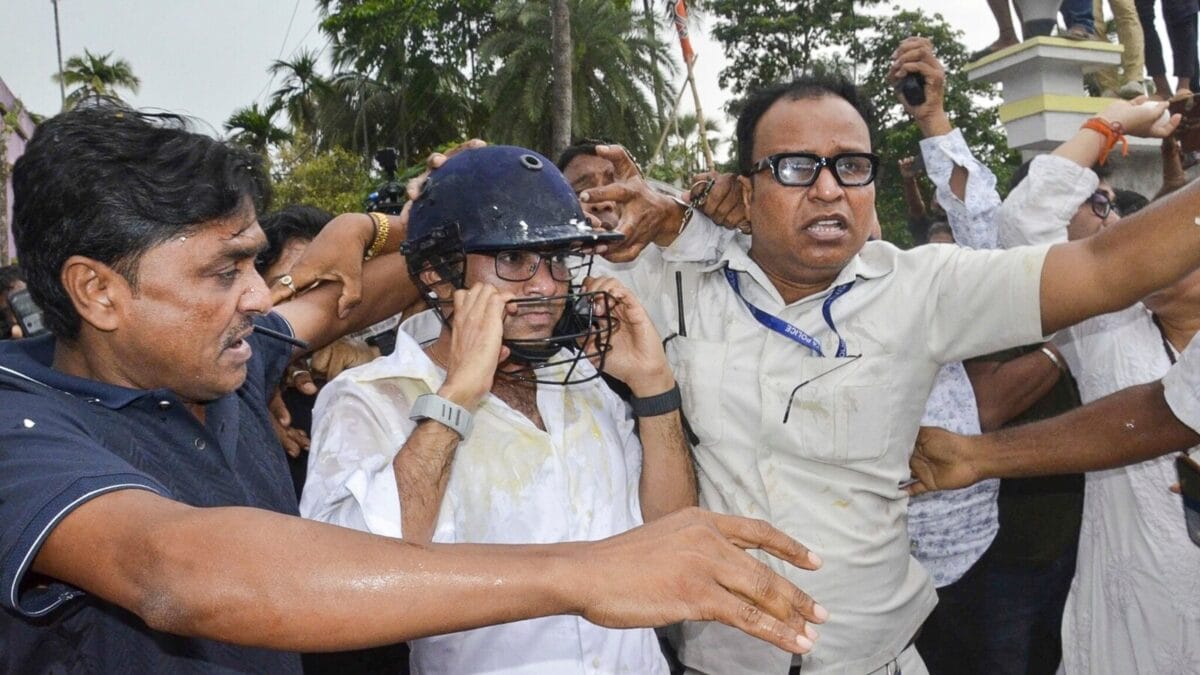
What stood out was not the aggression of the protesters, but the absence of Abhishek Banerjee’s party, Trinamool Congress. (PTI)
The most striking image from Sonarpur in South 24 Paraganas district was not of Abhishek Banerjee’s torn shirt or shattered spectacles. It was his isolation. The national general secretary of the Trinamool Congress found himself visibly vulnerable, surrounded by an angry crowd with little more than two plainclothes security personnel trying to escort him out.
Stones, shoes, and eggs flew as some heckled him and tried to hit him as well. Yet what stood out was not the aggression of the protesters, but the absence of Abhishek’s party, Trinamool Congress.
The incident occurred in ward no 9, Sonarpur Municipality, a civic body where all 35 wards are controlled by the TMC. There is no opposition presence in the municipality. And yet, as Abhishek came under attack, there was no visible wall of local councillors, block leaders, district heavyweights or grassroots workers and cadres around him.
ALSO READ | Why 2026 Is Not 1990 – And Why Abhishek Cannot Play The Mamata Playbook
Talking to News18, a senior Trinamool leader, who is also a councillor said, “The political situation here is grim. There is hardly any local leader whose house was not gherao-ed by local BJP cadres. We requested Abhishek Banerjee not to come here, but he did. Because he is our leader. However, we could not stand with him. No one wants to be seen in the same frame with him now. For a few days, we will have to lie low and stay quiet.”
No local MP or MLA reached the spot then or stood with him or former chief minister Mamata Banerjee in the evening when he was taken to hospital. The familiar muscle memory of Bengal politics, the instinctive rush of cadres to shield their leadership, was missing.
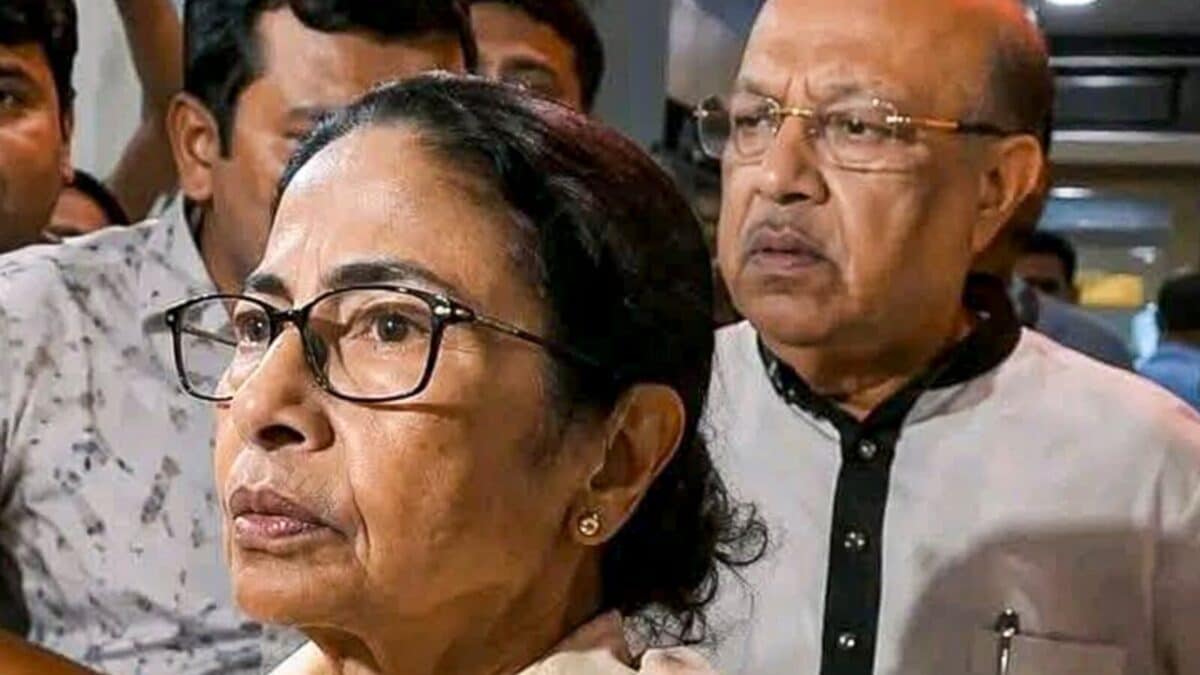
The same sense of isolation was visible hours later when Mamata Banerjee tried to stage a protest outside Bellevue Hospital. The crowd around Bengal’s most powerful political leader appeared remarkably thin. Alongside her stood veteran parliamentarian Derek O’Brien and Sovan Chatterjee, the former Kolkata mayor. Chatterjee, once a dominant political figure in South 24 Parganas, left the Trinamool for the BJP before returning to the party and largely retreating from active politics.
Meanwhile, several of her MLAs, and former ministers were not seen with her. On Sunday, after the alleged assault on another veteran Trinamool MP, Kalyan Banerjee, Mamata Banerjee called for a meeting at her residence. However, only a few turned up, while the rest excused themselves, citing the ‘political situation’ in their respective constituencies.
For a party that built its rise on street mobilisation and organisational strength, the images were politically revealing.
When Cadres Choose Survival
Political organisations rarely collapse from the top or come down when a few senior members leave or defect. The first signs emerge at the bottom.
The Trinamool may still command roughly 40 per cent of the vote, according to Election Commission data. This is a substantial social and political base in a state like West Bengal. But vote share and organisational confidence are not always the same thing.
What Sonarpur exposed was a phenomenon Bengal has witnessed before. When the Left Front lost power in 2011, the CPI(M) retained a significant vote share, in fact more than what Trinamool has now. Yet, local party offices were emptied, razed, locked or ransacked. Area strongmen disappeared. Ground-level operators recalibrated. Many of the mercenaries, who had once projected ideological commitment just to be in the party fold, suddenly prioritised personal survival.
The reason was simple. In Bengal, local political ecosystems are often built around access to power and convenience. When the perception of power changes, behaviour changes much faster than electoral statistics. Cadres are usually the first to detect shifts in local equations. They understand the mood of neighbourhoods, villages and municipal wards long before analysts and television debates do. Their response is often pragmatic rather than ideological. However, CPM still had an ideological anchor in form of Marxist-Communist ideas. Trinamool has none.
The question now raised by the Sonarpur incident is whether sections of the Trinamool’s grassroots network have entered that phase of calculation or not.
Fear Changes Direction
For more than a decade, the Trinamool benefited from an environment where the fear of confronting the ruling party often outweighed every other political consideration. Today, in several pockets, that equation appears less certain.
The disappearance of cadres does not necessarily mean they have switched allegiance. Nor does it mean the party’s support base has evaporated. What it suggests is something more subtle and potentially more consequential—the instinct for self-preservation may be beginning to override the instinct for political mobilisation. That is why the events in Sonarpur and the follow-ups near Bellevue hospital matter.
The attack on Abhishek Banerjee will inevitably trigger competing political narratives. The Trinamool will call it a conspiracy. Its opponents and the ruling BJP will describe it as public anger. But beyond those narratives lies a more uncomfortable reality for Bengal’s erstwhile ruling party.
A leader can survive an angry protest. A party can survive an electoral setback. What becomes far more difficult to survive is the moment when its own cadres decide that protecting themselves is safer than protecting the organisation.
West Bengal, India, India
Read More