












Prasar Bharati Chairman Prasoon Joshi expresses concerns about artificial intelligence’s influence on India’s cultural heritage and endangered languages, while a new Spotify report reveals significant growth in royalties for Indian artists across diverse linguistic categories, showcasing the economic power of India’s creative economy.

Key Points
- Prasar Bharati Chairman Prasoon Joshi highlights concerns about AI’s potential impact on India’s cultural wealth, including music and endangered languages.
- Joshi views AI as human experiential data, not truly artificial, and believes humans and AI will collaborate without hierarchy in creative fields.
- Spotify’s “Loud & Clear” report indicates a 29% growth in royalties for Indian artists in 2025, with significant contributions from diverse Indian languages like Telugu, Marathi, Bengali, and Haryanvi.
- The report underscores India’s linguistic diversity as a growing economic strength, enabling artists from various regions to build sustainable livelihoods through digital platforms.
- The Indian music landscape is evolving, with I-Pop and non-film soundtracks gaining prominence, and a substantial increase in artists earning over Rs 1 crore annually.
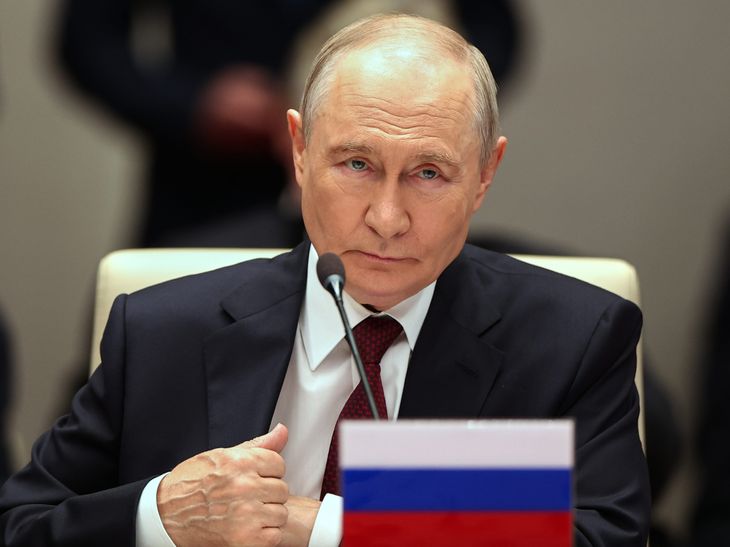
Prasar Bharati Chairman Prasoon Joshi on Tuesday expressed deep concern over the protection and preservation of India’s cultural wealth, including its music and endangered languages, amid the rapid adoption of artificial intelligence. Speaking at an event organised by music app Spotify, Joshi said that there is nothing called artificial intelligence as it is all about human data that has been expressed, and things that have been unexpressed reside within humans.
“Certain languages, certain creations, which are the moments of our civilization, special efforts have to be made in order to save them, to preserve them. In the world of AI, another thing which we should not forget is that the art is not going to survive, but an artist is going to have a little bit of an opportunity,” he said.
AI’s Role in Cultural Preservation
Joshi said humans will work in alliance with AI, without any hierarchy. “I don’t consider AI artificial intelligence. There is nothing called artificial about it. It’s all human data. It’s all human experiential data. But it’s only what has been expressed because the most beautiful song is yet to be written. It’s not yet available in data form. Hence, I call it avyakta (unexpressed). It is unexpressed. It resides inside us and it’s waiting for that moment to happen,” Joshi said.
On the sidelines of the event, Joshi said he is concerned about protecting cultural wealth, including music and its preservation. “On the cinema and creative, I am heading a group. Discussions are on AI, the creative economy, where the future of creativity is, and where we need to have government and private partnerships; these discussions are on,” Joshi said.
Actor-turned-politician Khushboo Sundar, during a panel discussion, said that songs that touch one deeply cannot be created by AI; humans have to create them.
Spotify Report Highlights Indian Music Growth
Meanwhile, skill development minister Jayant Chaudhary released Spotify’s annual “Loud & Clear’ report at the event. According to the report, Royalties generated by Indian artists on Spotify grew 29 per cent in 2025 – with every major Indian language contributing to that growth. Telugu royalties surged over 120 per cent year-on-year, Marathi rose nearly 50 per cent and Bengali nearly 40 per cent.
The report found that Haryanvi music has grown nearly 7x in streams on Spotify from February 2023 to February 2026, making it one of the fastest-growing languages on the platform. Nearly 100 Haryanvi acts now rank among Spotify India’s top 5,000 artists. Chaudhary said that as technology reshapes the creative industries, there is a need to continue to strengthen the skills, digital capabilities and enterprise opportunities that enable young creators to convert their talent into meaningful careers.
Linguistic Diversity Fuels Economic Strength
“India’s linguistic diversity is not merely our cultural strength. It is increasingly becoming an economic strength and a powerful part of our global identity. The 29 per cent growth in Spotify royalties, supported by strong gains across Indian languages, shows how digital platforms are enabling talent from every region to find audiences, build sustainable livelihoods and participate in the global creative economy,” he said.
According to the report, the number of artists generating over Rs 1 crore annually grew 21 per cent year-on-year. The number of artists earning over Rs 5 crore has more than doubled since 2023 and the growth isn’t concentrated at the top – it’s spreading across the artist base, across languages, and across genres. In 2025, 90 per cent of the tracks on Spotify India’s Daily Top 50 were by Indian artists.
“I-Pop or popular Indian music released outside of film soundtracks accounted for half of Spotify’s 2025 year-end top ten in India, with hits from Aditya Rikhari, Kushagra, Anuv Jain, Faheem Abdullah, and Jasleen Royal charting alongside the country’s biggest film soundtracks,” the report said.
Disclaimer: News content is sourced from the stated source. Headlines, summaries, section headers, and images are automatically generated or selected using AI/algorithms and may not always be fully accurate. Readers are advised to refer to the full article for complete context.