









Last Updated:
Nvidia chief Jensen Huang will join Tsinghua University’s advisory board, a move that US activist has flagged as a national security risk amid US-China chip export tensions.

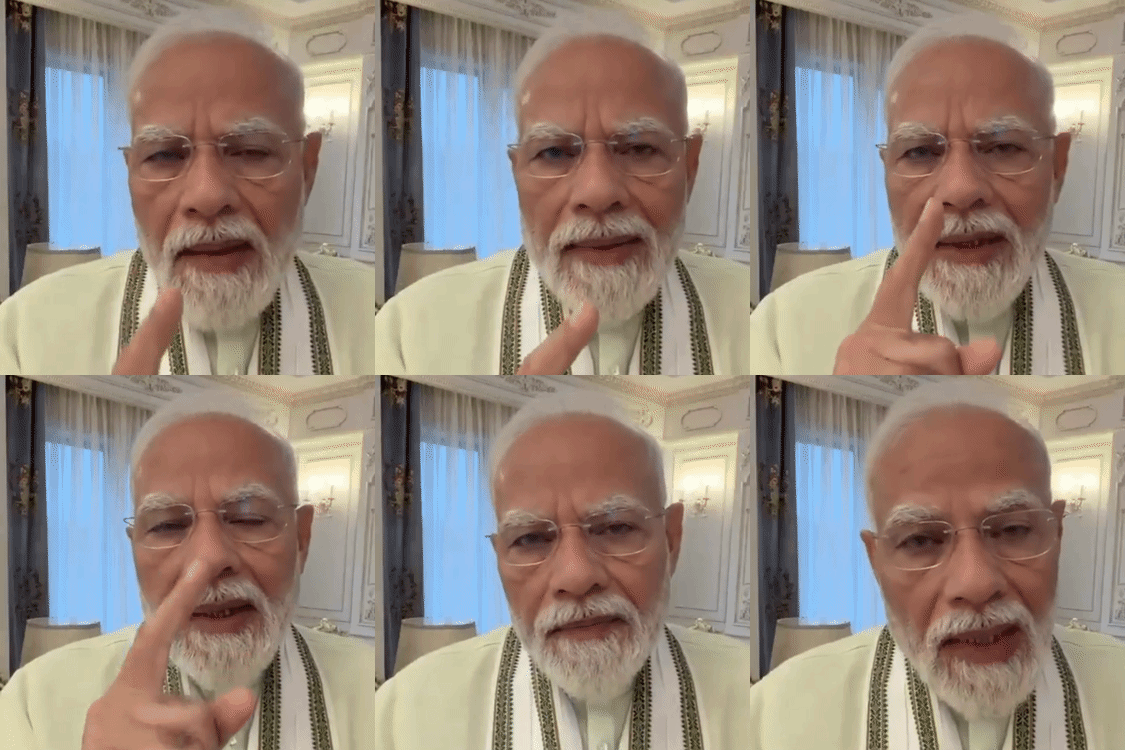
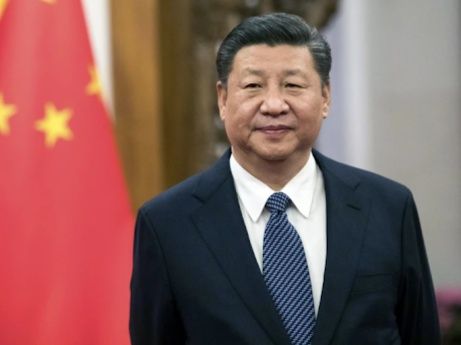
Nvidia CEO Jensen Huang (Left) leaves the Great Hall of the People in Beijing, China. Far-right activist Laura Loomer (Right). (Source: Reuters/X)
Nvidia chief Jensen Huang is set to join the advisory board of Tsinghua University’s School of Economics and Management (SEM) in a move seen as an effort to preserve the company’s ties with China despite escalating US restrictions on advanced chip exports, according to a report published in the Financial Times.
The reported move has triggered controversy in the US, with far-right activist Laura Loomer calling Huang’s association with the Beijing-based university a “national security risk”.
Nvidia Chief To Join Tsinghua University’s Board
Huang, who recently accompanied US President Donald Trump during his China visit, has accepted an invitation to join the board of the Beijing-based institution, one of China’s most prestigious universities known for its strong focus on science and engineering. Chinese President Xi Jinping is among its notable alumni.
The advisory board of SEM is tasked with helping shape the business school’s long-term strategy and strengthening its global engagement.
The 65-member body includes some of the world’s most influential business leaders. Apple CEO Tim Cook currently serves as chair, while members also include Elon Musk, Michael Dell, Microsoft chief Satya Nadella, Meta CEO Mark Zuckerberg, JPMorgan’s Jamie Dimon, BlackRock’s Larry Fink and Citigroup’s Jane Fraser.
Nvidia Balances Beijing Ties Amid Export Curbs
Although Huang’s appointment has not yet been officially announced, it signals Nvidia’s intent to remain engaged with Chinese academic and business networks even as Washington tightens restrictions on semiconductor exports to Beijing.
Nvidia has faced mounting barriers in China since the US banned exports of its China-specific H20 chips last year. While American authorities later approved limited shipments of the more advanced H200 chips to selected Chinese buyers, Beijing imposed its own restrictions in a bid to shield domestic chipmakers.
Speaking last week, Huang acknowledged the impact of export controls, saying Nvidia had “largely conceded” the Chinese market to local rivals such as Huawei.
Despite the company’s strong quarterly performance, he cautioned investors to “expect nothing” in terms of near-term approvals for advanced chip sales to China.
“We would be more than delighted to serve the market,” Huang told CNBC last week. “We have a lot of customers there, we have a lot of partners there, and we’ve been there for 30 years,” he added.
‘Massive Scandal’: Activist Flags Huang’s Appointment As ‘National Security Risk’
Far-right activist Laura Loomer sharply criticised the reported appointment, calling it a “massive scandal” and claiming she had sent an “exclusive report” to the White House and the “Department of War”, which she said had acknowledged her concerns and was “looking into this”.
I have sent my exclusive report to the @WhiteHouse and the Department of War.A senior Department of War official replied to me immediately and told me they are looking into this.
This is a massive scandal!!!! And they agreed with me. @nvidia’s Jensen Huang cannot be… https://t.co/ntQlvyv7ZC
— Laura Loomer (@LauraLoomer) May 28, 2026
Loomer argued that Nvidia chief Huang should not simultaneously serve on President Donald Trump’s Council of Advisors on Science and Technology (PCAST) while also joining the board of what she described as a “CCP University”.
In a series of posts on X, Loomer alleged that Tsinghua University is deeply tied to the Chinese Communist Party and China’s military-industrial ecosystem.
She claimed the institution plays a key role in advancing Beijing’s technological and strategic ambitions through research in artificial intelligence, missile systems and dual-use technologies.
Citing a Tsinghua statement announcing the establishment of an institute dedicated to studying Xi Jinping Thought, Loomer accused the university of openly aligning itself with the CCP leadership and warned that Huang’s association with the institution posed what she called a “major national security risk”.
All About SEM’s Advisory Board
Established in 2000 by former Chinese premier Zhu Rongji, the SEM advisory board has become one of the few remaining high-profile forums where American and Chinese corporate leaders continue to interact amid growing geopolitical and economic tensions.
Zhu worked with former Goldman Sachs chief Henry Paulson, the board’s founding chair, to assemble its initial group of international business leaders.
The board’s annual meetings in Beijing are often viewed as an informal channel connecting Chinese policymakers with global corporate executives.
In 2025, Chinese Vice-Premier He Lifeng met more than 20 board members ahead of the yearly gathering, while former vice-president Wang Qishan has previously hosted dinners and meetings for participants.
Alongside major Chinese business figures such as Alibaba founder Jack Ma, Tencent’s Pony Ma and Baidu’s Robin Li, the board also includes executives from multinational companies including Coca-Cola, Siemens, General Motors, BP and Tata.
According to the university, members regularly deliver lectures to students in addition to attending annual strategy meetings.
The structure is often compared with Harvard Business School’s board of dean’s advisers, which similarly brings together senior figures from global finance and technology.
Read More