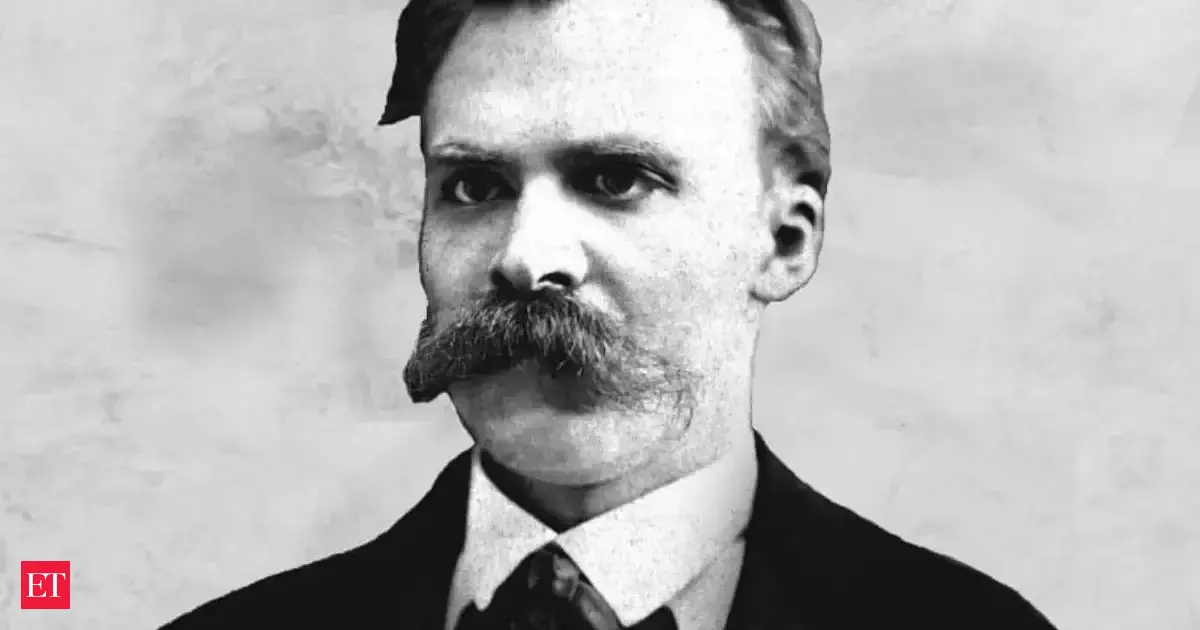


















His powerful quote, “I’m not upset that you lied to me, I’m upset that from now on I can’t believe you,” highlights the deeper emotional damage caused by dishonesty. It suggests that the true harm of a lie is not just the act itself, but the lasting impact it has on trust and belief. In today’s world of relationships, communication, and emotional awareness, this quote remains highly relevant. It reminds us that trust, once broken, is difficult to rebuild, and that honesty is essential for maintaining meaningful and lasting human connections.
Quote of the Day Today: Friedrich Nietzsche on relationships, loyalty and emotional security
Quote of the Day by Friedrich Nietzsche: “I’m not upset that you lied to me, I’m upset that from now on I can’t believe you”
Meaning of Friedrich Nietzsche’s Quote About Trust and Relationships
Friedrich Nietzsche’s quote, “I’m not upset that you lied to me, I’m upset that from now on I can’t believe you,” explores the deep emotional impact of broken trust in human relationships. The phrase “can’t believe you” symbolizes the loss of faith, certainty, and emotional safety between people. Nietzsche suggests that the real pain of dishonesty is not just the lie itself, but the long-lasting damage it causes to trust.

However, the deeper meaning of the quote emphasizes that trust is the foundation of all meaningful relationships. Once it is broken, even truthful words can feel doubtful, and emotional security becomes fragile. A healthy relationship depends not only on honesty but also on the confidence that both people can rely on each other without hesitation or fear.
Why Broken Trust Affects Relationships
Broken trust deeply affects relationships because it destroys the sense of safety and reliability between people. When trust is strong, individuals feel secure, open, and confident in each other’s words and actions. However, once it is broken, doubt begins to replace understanding. Even honest communication starts to feel uncertain, and every action may be questioned. This emotional shift creates distance, misunderstandings, and hesitation in expressing feelings freely. Over time, the bond weakens because people struggle to believe in each other the same way again. Trust is not easily repaired because it is built through consistent honesty and behavior. When it breaks, it leaves emotional scars that influence future interactions. As a result, relationships lose their natural flow, making connection, comfort, and emotional closeness difficult to maintain.
Early Life of Friedrich Nietzsche
Friedrich Nietzsche was born on October 15, 1844, in Röcken, Prussia (modern-day Germany), into a deeply religious family. His father, a Lutheran pastor, passed away when Nietzsche was only five years old, a loss that greatly affected his early emotional development. Raised by his mother, grandmother, and sister, Nietzsche grew up in a disciplined and intellectual environment. From a young age, he showed exceptional talent in language, music, and classical studies, setting the foundation for his future philosophical journey.
Education and Academic Development
Nietzsche studied classical philology at the University of Bonn and later at the University of Leipzig, where he focused on ancient Greek language and literature. His academic brilliance earned him a professorship at the University of Basel at the unusually young age of 24. During this period, he developed a strong interest in philosophy, culture, and the foundations of morality. His studies of ancient Greek thought deeply influenced his later critiques of modern society, religion, and values.
Rise as a Philosopher and Intellectual Influence
Nietzsche became one of the most influential philosophers of the 19th century, known for challenging traditional moral and religious beliefs. His major works include Thus Spoke Zarathustra, Beyond Good and Evil, The Gay Science, and On the Genealogy of Morality. He introduced powerful ideas such as the “will to power,” the critique of conventional morality, and the questioning of absolute truths. His writing style combined poetic expression with sharp philosophical insight, making his ideas both impactful and controversial.
Personal Struggles and Later Life
Nietzsche’s later years were marked by declining health and emotional isolation. He suffered from severe physical and mental illness, which eventually led to his collapse in 1889. After this, he was cared for by his mother and later his sister, spending the rest of his life in a state of mental incapacity. Despite his struggles, he continued to influence intellectual thought across Europe through his writings.
Legacy and Lasting Influence
Friedrich Nietzsche died on August 25, 1900, in Weimar, Germany. Although he faced isolation and illness in his final years, his philosophical legacy became one of the most influential in modern thought. He is remembered for challenging established beliefs and encouraging individuals to question morality, truth, and identity. Today, Nietzsche’s ideas continue to shape discussions in philosophy, psychology, literature, and cultural studies around the world.
Life Lessons from Friedrich Nietzsche’s Famous Quote
Friedrich Nietzsche’s quote, “I’m not upset that you lied to me, I’m upset that from now on I can’t believe you,” teaches that trust is the foundation of every meaningful relationship. Once trust is broken, it is not just the moment of dishonesty that hurts, but the lasting uncertainty it creates. The quote highlights that emotional security depends on honesty, reliability, and the ability to believe in another person without doubt. In relationships, trust builds connection, while its loss creates distance and hesitation. Nietzsche’s words remind us that true emotional bonds require consistency, truthfulness, and mutual faith to remain strong and stable over time.
Why This Quote Still Matters Today
Nietzsche’s quote remains deeply relevant in today’s world because trust is constantly tested in modern relationships, communication, and digital interactions. With frequent misunderstandings, misinformation, and emotional distance in fast-paced life, it is easy for trust to weaken quickly. This quote reminds us that even a single act of dishonesty can have long-term consequences on how people view each other. In personal and professional relationships, trust once broken is difficult to rebuild. Nietzsche’s message continues to emphasize the importance of honesty, transparency, and emotional responsibility in maintaining strong and lasting human connections.
Relationship Wisdom
Nietzsche’s quote reflects a powerful truth about human relationships: trust is more valuable than words alone. Real connections are built not just on communication, but on the confidence that both people are truthful and dependable. When trust is strong, relationships feel safe, open, and meaningful. When it is broken, even simple conversations can feel uncertain. This wisdom highlights that honesty is not just a moral choice, but an emotional necessity. True relationships thrive on reliability, respect, and the assurance that what is said today will still be believable tomorrow.