














South India’s manufacturing, construction, and services sectors are grappling with severe labour shortages, prompting employers to offer attractive incentives like free air tickets and salary increments to lure migrant workers back from their home states after recent assembly elections.

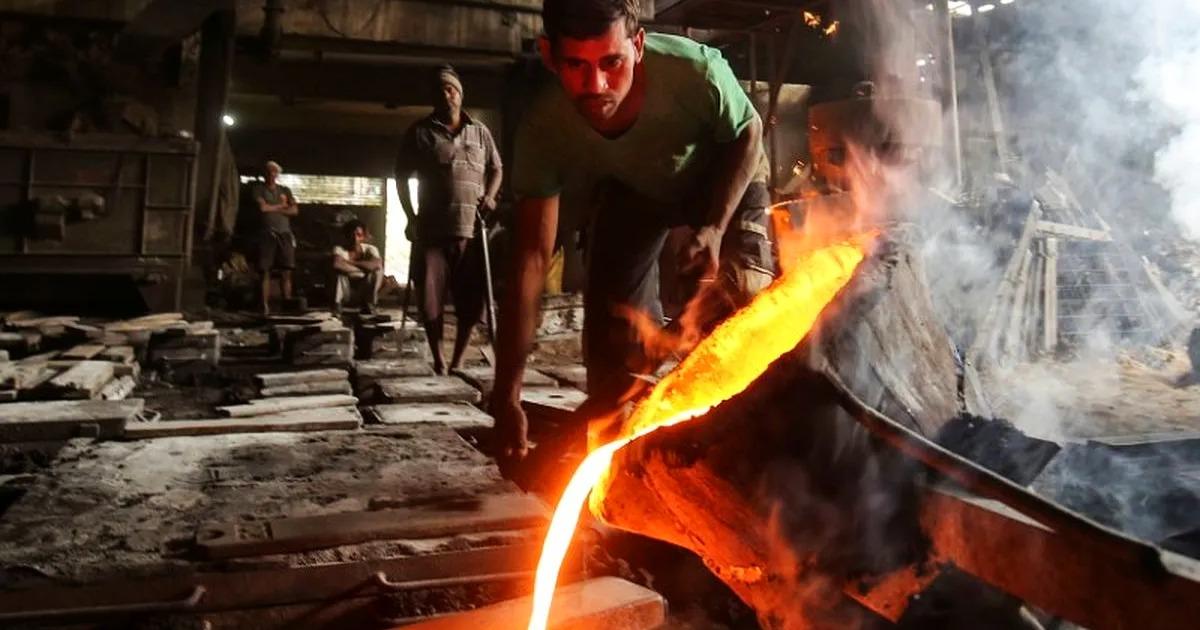
Kindly note the image have only been published for representational purposes. Photograph: Amit Dave/Reuters
Key Points
- Kerala, Tamil Nadu, Karnataka are experiencing significant labour shortages, impacting manufacturing, construction, services sectors.
- Factors contributing to the delay in workers’ return include concerns over job losses due to the West Asia conflict, cooking gas shortages, the approaching monsoon, and rising temperatures.
- The expansion of infrastructure and industrial activity in states like Bihar, Jharkhand, and Uttar Pradesh is creating more local employment, reducing the need for migration to the South.
- Wage expectations are rising, with welding jobs now commanding ₹30,000 to ₹33,000 monthly, up from ₹20,000, further challenging employers in the South.
Free air tickets, luxury bus journeys, and even salary increments — employers across South India’s manufacturing, construction, and services sectors are offering a range of incentives to lure migrant labourers back from states such as West Bengal and Assam, where many had travelled to cast their votes in the recent assembly elections.
According to industry sources, businesses across Kerala, Tamil Nadu and Karnataka are facing significant worker shortages as many labourers remain hesitant about returning immediately.
Employers attribute the delay to a combination of factors, including concerns over possible job losses linked to the economic effects of the West Asia conflict, cooking gas shortages, the approaching monsoon season in the South, and rising temperatures.
Changing Labour Market Dynamics
The current situation is also reflecting broader changes in the labour market: Infrastructure and industrial activity in states such as Bihar, Jharkhand, and Uttar Pradesh have expanded in recent years, creating closer-to-home employment opportunities that are reducing the need for migration to southern states.
“Unlike previous years, almost all the workers from West Bengal and Assam went back home to cast their votes,” said Benoy Peter, executive director, Centre for Migration and Inclusive Development (CMID).
“This was largely because of concerns related to the SIR (Special Intensive Revision) of electoral rolls, and the labour movement was reflected in the voter turnout figures in both states.”
West Bengal recorded a voter turnout of 92.47 per cent, the highest since Independence, while Assam registered 85.96 per cent.
According to rough industry estimates, nearly 13 million migrant labourers from northern and eastern India are employed across Kerala, Tamil Nadu and Karnataka.
Peter said the return of workers may take more time because of school holidays, the approaching monsoon in Kerala, Bakrid festivities, and the agricultural season in their home states.
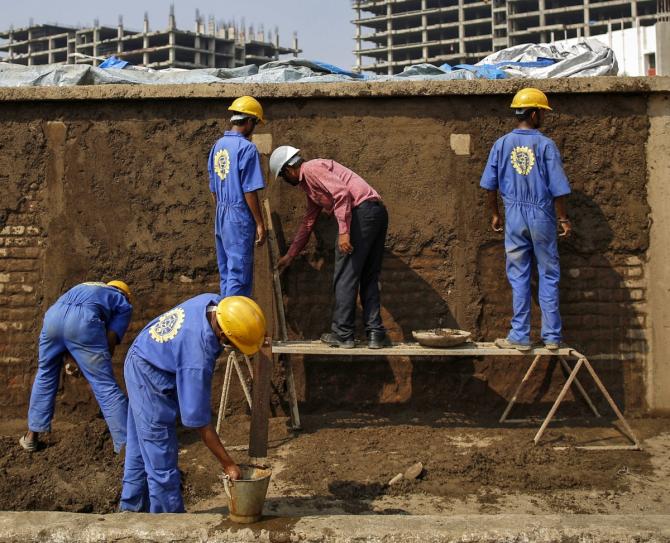
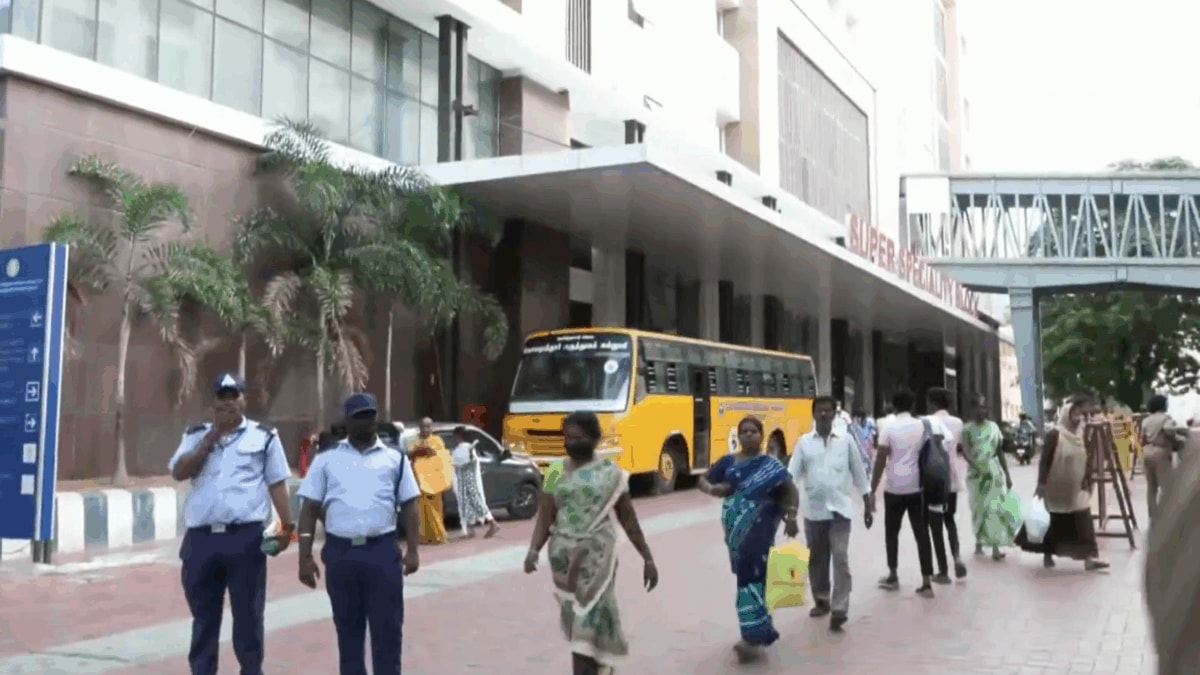
Kindly note the image has only been published for representational purposes. Photograph: The Late Danish Siddiqui/Reuters
Impact of Global and Local Factors
At the same time, supply disruptions linked to the crisis in West Asia are beginning to affect sectors dependent on imported materials.
Shortages of products such as tiles used in construction and resin used in the plywood industry have slowed activity in some sectors, adding to concerns among workers about possible layoffs or reduced work opportunities.
Kerala is among the states most affected by the labour shortage, particularly in sectors such as hospitality, hotels, and real estate.
“The impact is high in Kerala because a large share of the workforce comes from West Bengal and Assam,” said Raju John, director general, Builders Association of India.
“Employers have offered flight tickets, salary hikes, and in some cases arranged luxury buses to take workers home for voting and bring them back. Even then, many are reluctant to return.”
According to CMID data, Kerala employs around 4 million migrant labourers, nearly 70 per cent of whom are from West Bengal and Assam.
Revisiting Labour Strategies
Industry representatives say the shortages are forcing companies to reconsider their labour strategies amid changing migration patterns.
“Every industry in South India is affected by this,” said G Ramesh, chairman of the Layam group, which supplies skilled manpower to more than 65 companies across India.
“The developments taking place in states such as Uttar Pradesh, Bihar, and Jharkhand will have a cascading impact. Governments and industries in the South may have to revisit the way labour is managed.”
If industrial and construction activity continues to expand in eastern and northern states, Ramesh added, attracting workers to the South could become increasingly difficult.
“West Bengal, Jharkhand and Odisha are among our biggest labour markets,” he said.
“If manufacturing and construction activities increase further there, it will become a concern for industries in the South.”
Wage expectations, Ramesh added, are also rising. According to him, workers being scouted for welding jobs are now seeking monthly salaries of ₹30,000 to ₹33,000, compared with the average salary of around ₹20,000 previously offered in the South.
The effects are visible in Tiruppur, Tamil Nadu’s knitwear hub, where exporters say labour shortages are affecting production capacity.
K M Subramanian, president, Tiruppur Exporters Association and promoter of KM Knitwear, said companies had sent executives to villages in northern and eastern India to encourage workers who left during the festival season and elections to return.
“We are operating at around 70 per cent capacity now,” he said.
M Muthurathinam, president, Tiruppur Exporters and Manufacturers Association, said weak global demand was also affecting the sector.
“Orders are already low because of the West Asia crisis,” he said. “Workers may also be concerned about a possible slowdown in demand and fewer job opportunities in the coming months.”
Labour drift
- Kerala, Tamil Nadu, and Karnataka together employ nearly 13 million migrant workers.
- Kerala has around 4 million migrant labourers; nearly 70% are from West Bengal and Assam.
- Tiruppur’s knitwear units are operating at 70% capacity amid labour shortages.
Feature Presentation: Rajesh Alva/Rediff