














![Asla – Watan Sahi [Official MV] Latest Punjabi Song – K Million Music](https://i.ytimg.com/vi/sCuLojys0n4/maxresdefault.jpg "Asla – Watan Sahi [Official MV] Latest Punjabi Song – K Million Music")



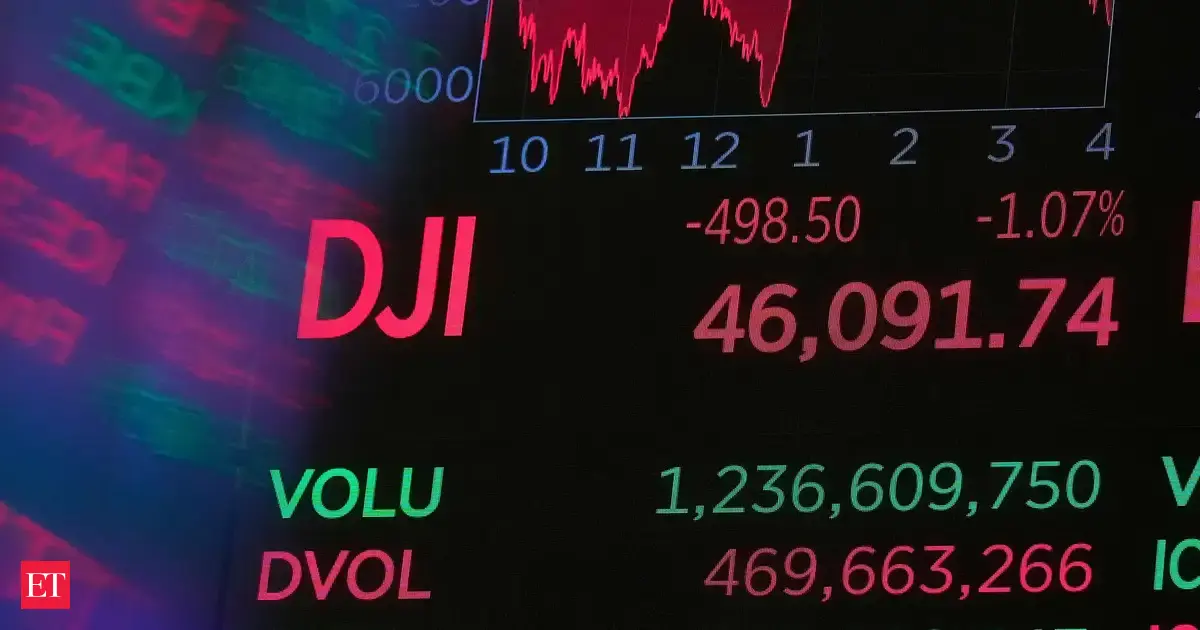
Within the first 20 minutes of trading, the Dow Jones dropped 902.95 points, or 1.88%, to 47,051.79. The broader S&P 500 fell 111.65 points, or 1.63%, to 6,719.06, while the tech-heavy Nasdaq Composite slid 340.03 points, or 1.49%, to 22,408.95. The sudden market reaction reflected a powerful mix of economic uncertainty, geopolitical tension, and rapidly rising energy prices.
The biggest shock came from the February US nonfarm payrolls report, which revealed that the economy lost 92,000 jobs, a dramatic reversal from January’s revised gain of 126,000 jobs. Economists had expected around 50,000 new jobs, making the data far weaker than forecasts. At the same time, the US unemployment rate rose slightly to 4.4% from 4.3%, reinforcing fears that economic momentum may be slowing faster than expected.
Meanwhile, the global energy market added fuel to the sell-off. West Texas Intermediate crude oil surged above $89 per barrel, while Brent crude climbed past $90, levels not seen in almost two years. The rally intensified after geopolitical tensions escalated in the U.S.–Iran conflict, with strong statements from President Donald Trump signaling that diplomatic resolution could remain distant. Rising energy costs, weak labor data, and geopolitical risks combined to trigger heavy selling across major stock indices.
Why the US stock market crashed today as weak jobs data signals a slowing US economy
The biggest trigger behind the US stock market crash today was the unexpected weakness in the latest US jobs report, a key indicator of economic health.

The February nonfarm payrolls report showed a decline of 92,000 jobs, surprising economists who had predicted job growth. This sudden drop raised fears that businesses may be slowing hiring amid rising costs and global uncertainty.
A weakening labor market often signals trouble ahead for consumer spending, which drives nearly 70% of the US economy. When companies reduce hiring or cut jobs, household income growth slows, which eventually impacts retail sales, corporate earnings, and economic expansion. The increase in the unemployment rate to 4.4% added to investor concerns. Although the rise looks small, markets often react strongly to early signs of labor market weakness. Traders immediately reduced exposure to equities as they reassessed economic growth expectations for the rest of the year.
Financial stocks, travel companies, and consumer-sensitive sectors faced heavy selling pressure during the opening session as investors moved toward safer assets.
US Stock Market Crashes Today: Oil prices surge to two-year highs as US-Iran conflict drives global energy market fears
Another powerful driver of the stock market sell-off came from the sudden spike in global oil prices, which reached their highest levels in nearly two years.
West Texas Intermediate (WTI) crude oil jumped to $89.22 per barrel, gaining $8.21 or more than 10% in a single trading session. Meanwhile, Brent crude rose to $85.62 per barrel, climbing $4.58 or about 5.65% as investors priced in potential supply disruptions.
Energy markets reacted sharply after tensions escalated between the United States and Iran, raising fears that oil exports from the Middle East could face disruptions. The region remains one of the most critical energy supply hubs for the global economy.
Oil prices surged even further after President Donald Trump stated on Truth Social that any agreement to end the conflict would require “unconditional surrender” from Iran. The strong statement signaled that negotiations may remain difficult, increasing uncertainty around global energy supplies.
Higher oil prices create immediate pressure on the economy. They increase fuel costs for transportation, raise manufacturing expenses, and push inflation higher. As businesses face rising costs, corporate profits often decline, which typically weighs on stock prices.
US Stock Market Crashes Today: Kuwait oil production cuts raise fresh global supply concerns and push energy markets higher
Adding to the surge in energy prices, Kuwait has started cutting production at several oil fields after reaching storage limits for excess crude.
Reports indicate that the country is now considering reducing production to levels needed only for domestic consumption, a move that could tighten global oil supplies even further.
Kuwait currently produces about 2.6 million barrels of oil per day, and any sustained production cut could remove a significant amount of supply from the global market.
Energy analysts say the situation could worsen because oil storage facilities across several Gulf countries are approaching maximum capacity. When storage tanks fill up, producers often reduce output to avoid oversupply.
Another concern is the time required to restart oil production. Once oil wells shut down, restarting operations can take several days or even weeks, which could keep supply constrained and prices elevated.
This combination of geopolitical conflict, supply cuts, and limited storage capacity has pushed global oil markets into one of their most volatile phases in recent years.
US Stock Market Crashes Today: Biggest stock market movers today as energy stocks surge while airlines and tech fall
Despite the broad decline in the Dow Jones, S&P 500, and Nasdaq, several individual stocks experienced dramatic price movements during the volatile trading session.
Day One Biopharmaceuticals surged 65.53% to $21.16, making it one of the most actively traded stocks of the day with more than 32 million shares traded. Meanwhile, Battalion Oil Corporation jumped 51.82% to $28.84, benefiting directly from the surge in crude oil prices.
Energy-linked companies attracted strong investor interest. Indonesia Energy Corporation climbed 22.38% to $6.18, reflecting growing demand for oil exploration firms as energy prices rise.
However, several large companies moved lower. NVIDIA slipped 1.31% to $180.93, while SoFi Technologies dropped 4.78% to $18.33 as technology and fintech stocks faced broader selling pressure.
Airline companies were among the biggest losers because higher fuel prices directly impact operating costs. American Airlines fell 5.13% to $11.19, highlighting how rising oil prices can quickly pressure travel and transportation sectors.
Interestingly, Marvell Technology rose 15.74% to $87.59, showing that investors are still selectively buying technology stocks with strong growth potential.